President Trump said Monday that God is on the side of the U.S. as Iran faces the looming zero hour on the president’s ultimatum to make a deal to end the war or suffer even worse destruction.
The president asserted divine support for the U.S. effort at a pivotal juncture in the war that Mr. Trump launched in late February to prevent Tehran from gaining a nuclear weapon.
Asked by a journalist if he believes God favors the U.S. in the fight, the president replied, “I do, because God is good.”
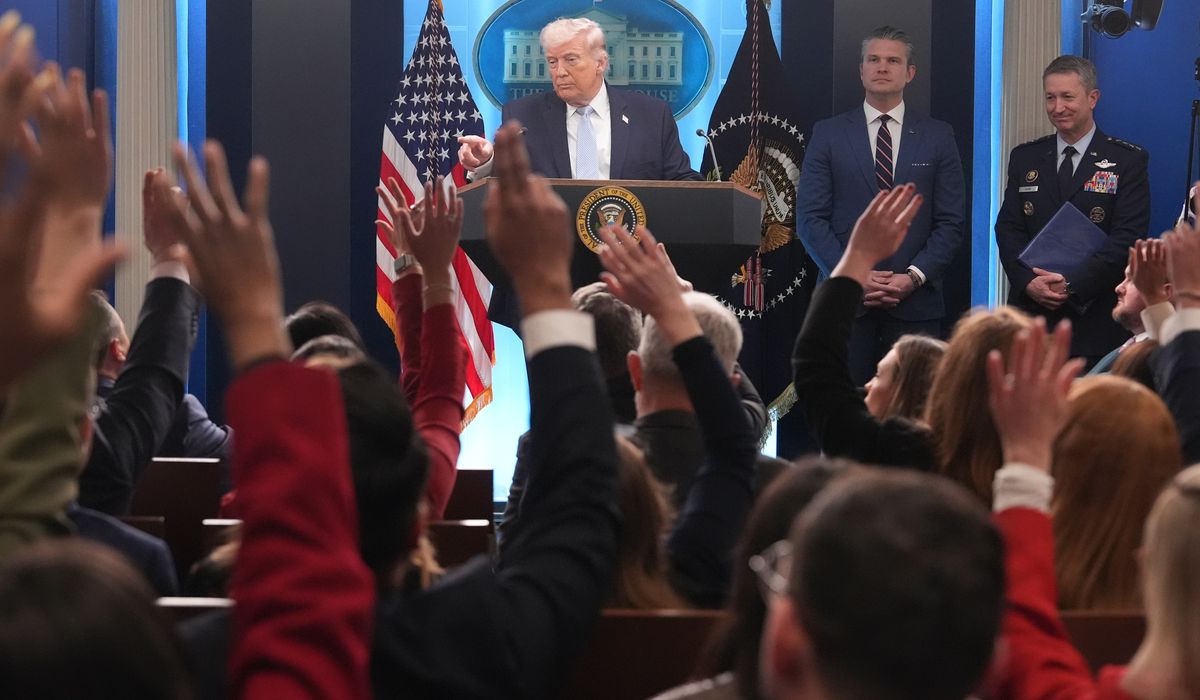
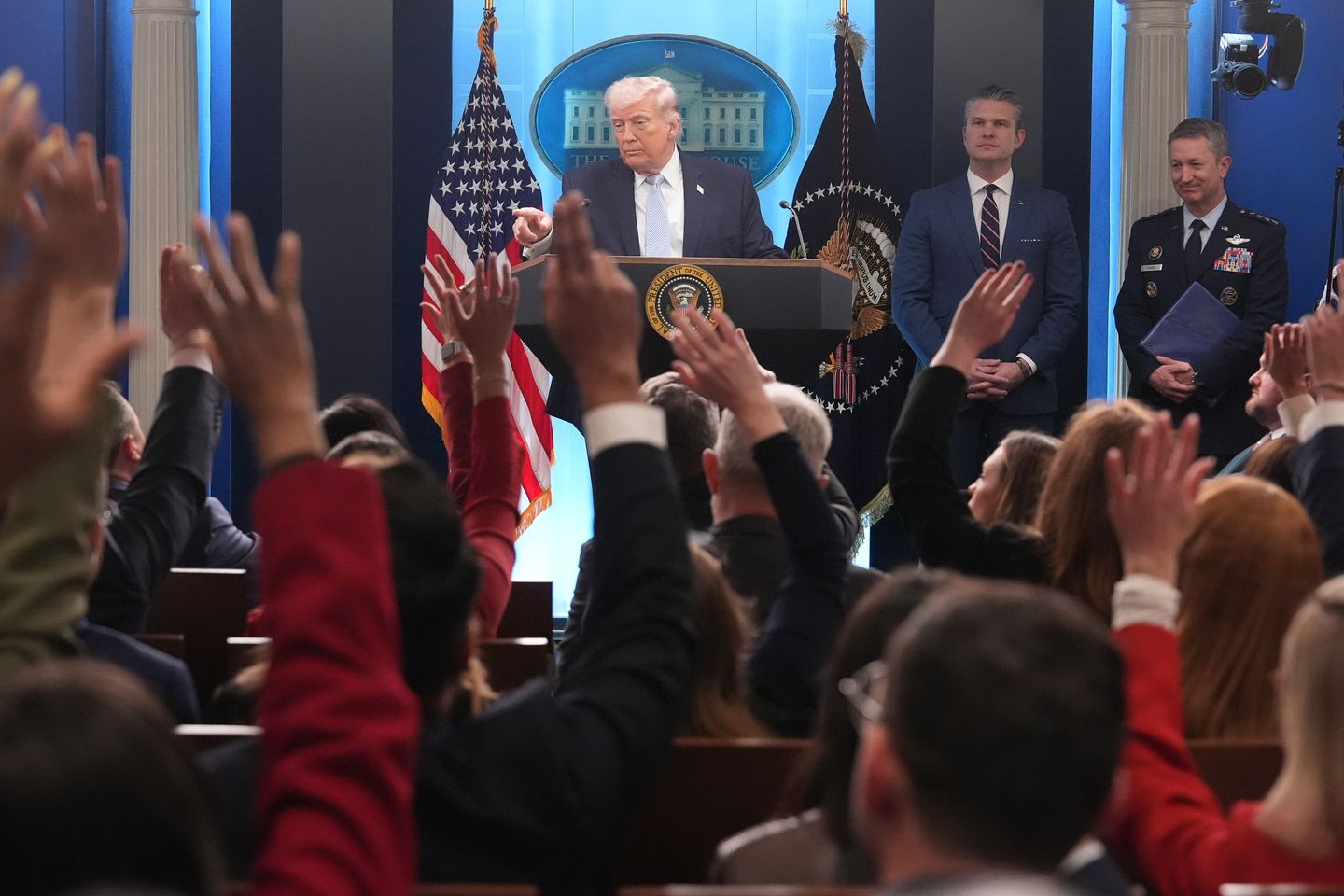
“God wants to see people taken care of,” Mr. Trump said in a White House press conference that focused on a weekend rescue mission of two U.S. military aviators in Iran.
Mr. Trump repeated his threat to wipe out Iranian bridges and power plants late Tuesday if the Iranians side does not negotiate a suitable deal that includes freedom of navigation, including oil shipments, in the vital Strait of Hormuz.
Flanked by top defense officials, Mr. Trump said Iranian civilians would accept devastating attacks on their power plants and bridges if it meant being liberated from the Islamic republic’s brutal regime.
“They would be willing to suffer that in order to have freedom,” Mr. Trump said.
Mr. Trump said he is ready to authorize major strikes against Iranian infrastructure to begin at 8 p.m. Tuesday if Tehran does not open the Strait of Hormuz, the strategically important waterway off Iran’s coast. He predicted the “plan” for the attacks would be carried out in four hours and would “decimate every single power plant” in Iran.
“Do I want to destroy their infrastructure? No,” Mr. Trump said. “The entire country can be taken out in one night, and that night might be [Tuesday] night.”
Iran has effectively closed the strait to commercial ship traffic since the start of the U.S. military campaign in late February.
The narrow waterway is a crucial maritime corridor for moving goods out of the Persian Gulf, especially oil. About 20% of the world’s oil flows through the strait. Its closure has driven rapidly rising fuel prices around the world.
On March 26, Mr. Trump gave Iran 10 days to open the strait or face strikes. That 10-day window expires Tuesday.
Earlier Monday, the president said Iran was reluctant to “cry uncle.”
“But they will. And if they don’t, they’ll have no bridges, they’ll have no power plants, they’ll have no anything,” he said.
Democrats and foreign officials have accused Mr. Trump of effectively threatening to commit war crimes.
“Any targeting of civilian infrastructure, namely energy facilities, is illegal and unacceptable,” European Council President Antonio Costa posted on X. “This applies to Russia’s war in Ukraine, and it applies everywhere. The Iranian civilian population is the main victim of the Iranian regime. It would also be the main victim of a widening of the military campaign.”
The European Council provides political direction for the European Union, making Mr. Costa a leading voice on the continent.
The White House stood by its threat on Monday, saying the outcome would depend on Iran’s willingness to come to the negotiating table.
“It depends on what they do,” Mr. Trump said.
Mr. Trump said Iran had to make a deal that is acceptable to him, and that would include the free flow of oil.
At the same time, Mr. Trump said Iran’s willingness to mull a ceasefire plan was a “significant step” and he is dealing with more cooperative leaders in Iran after the U.S. killed previous leaders.
“We think they’re actually much smarter,” the president said.
Yet Iran on Monday issued a defiant response to the U.S.’s 45-day ceasefire proposal, rejecting a temporary pause to the war and calling for a lasting resolution that considers Tehran’s security.
In a 10-point response, Iran asserted through Pakistani intermediaries that any temporary ceasefire would be unacceptable, citing prior experiences with the U.S. and Israel, and called for a comprehensive peace agreement that would permanently end hostilities.
The state-affiliated IRNA news agency was the first to report on the Iranian proposal. IRNA said the proposal was drafted after “comprehensive reviews at the highest levels of the system” and “submitted following developments over Saturday and Sunday.” The full text of the response has not been released.
In addition to a comprehensive peace agreement, Iran’s counteroffer demands the lifting of Western sanctions, reparations for domestic reconstruction efforts, and protocols to ensure the safe passage of ships through the Strait of Hormuz.
Iran’s reported proposals are consistent with the demands of Iranian officials since the start of the war and indicate that Iran may be preparing for a U.S.-led escalation in the conflict.
In the meantime, Iran and Israel continued to trade missile attacks on Monday. A strike on the northern Israeli port city of Haifa killed four people.
Defense Secretary Pete Hegseth said the U.S. planned to pound Iran harder on Monday than on any other day since the start of the war.
“Tomorrow, even more than today,” Mr. Hegseth said. “And then Iran has a choice. Choose wisely, because this president does not play around.”
U.S. stocks rose slightly on Monday on news of a possible ceasefire, though Wall Street has been on an up-and-down ride since the war began on Feb. 28.
Iran’s stranglehold on the Strait of Hormuz and its strikes on neighboring nations in the Gulf have resulted in higher oil prices and increased costs at the gas pump for everyday Americans.
The national average price of a gallon of gas reached $4.11 on Monday, an increase of over $1 from the start of the conflict, according to the AAA motor club. It is the highest level since 2022.
The president defended the duration of the war, saying it has lasted several weeks while other wars lasted years, and he repeated the central goal of the conflict.
“We can’t let Iran have a nuclear weapon,” Mr. Trump said. “For 47 years, they’ve been bulls——— other presidents.”
Mr. Trump spent much of his press conference on Monday recapping a successful effort to retrieve American servicemen behind enemy lines.
Both crew members of an F-15 Strike Eagle, believed to have been brought down by Iranian air defenses, were successfully extracted.
Mr. Trump said the rescue mission involved dozens of aircraft and efforts to fool the Iranians.
“A lot of it was subterfuge,” Mr. Trump said. “We wanted them to look in different areas.”
Mr. Trump said, at one point, the U.S. struggled to get planes off the ground after rescuing the serviceman. Those planes were destroyed so Iran would not get them, and the American side brought in faster, lighter planes.
The president also fumed over the leak of information that revealed there was one serviceman still missing after the first one was retrieved.
“We are going to go to the media company that released it, and we are going to say, ‘National security, give it up or go to jail,’” Mr. Trump said.
• Vaughn Cockayne and Ben Wolfgang contributed to this report.