Republicans are hoping to deliver a one-two legislative punch before the midterm elections this fall using a filibuster-proof process to steamroll Democrats who have obstructed much of President Trump’s legislative agenda.
First up will be a measure to plus up immigration enforcement funding as Democrats continue to filibuster annual appropriations for U.S. Immigration and Customs Enforcement and much of Customs and Border Protection.
President Trump has said he wants that bill on his desk by June 1. Republicans should be able to deliver if they can keep the measure focused on funding the administration’s deportation agenda.
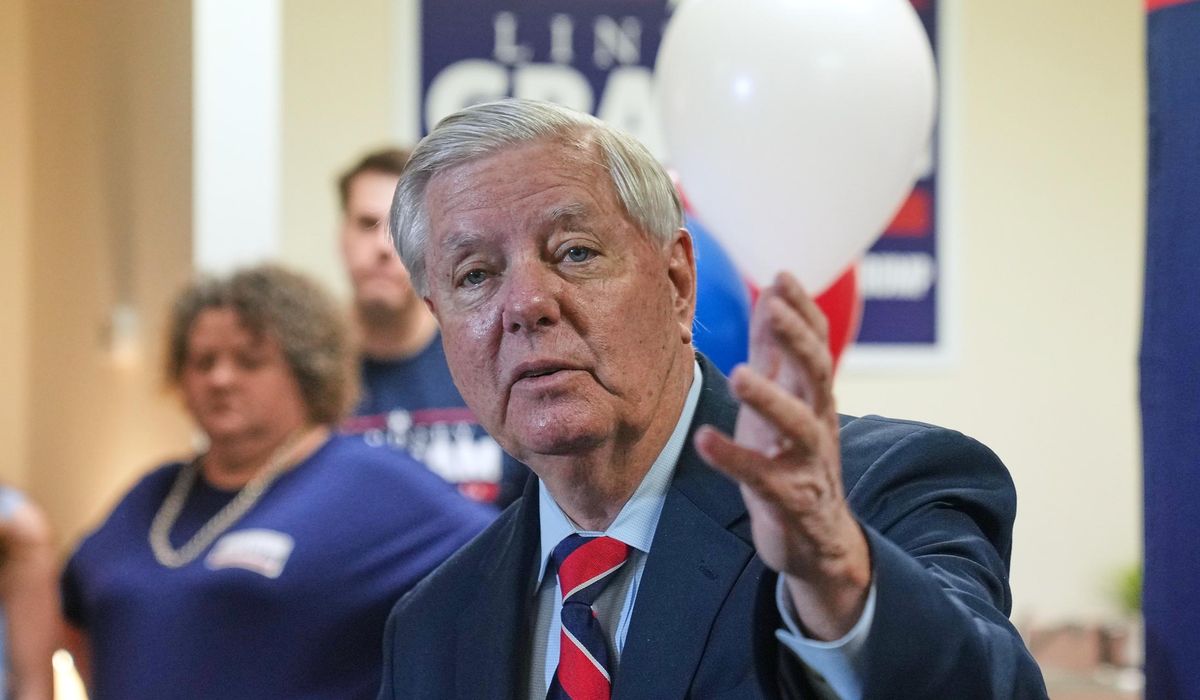
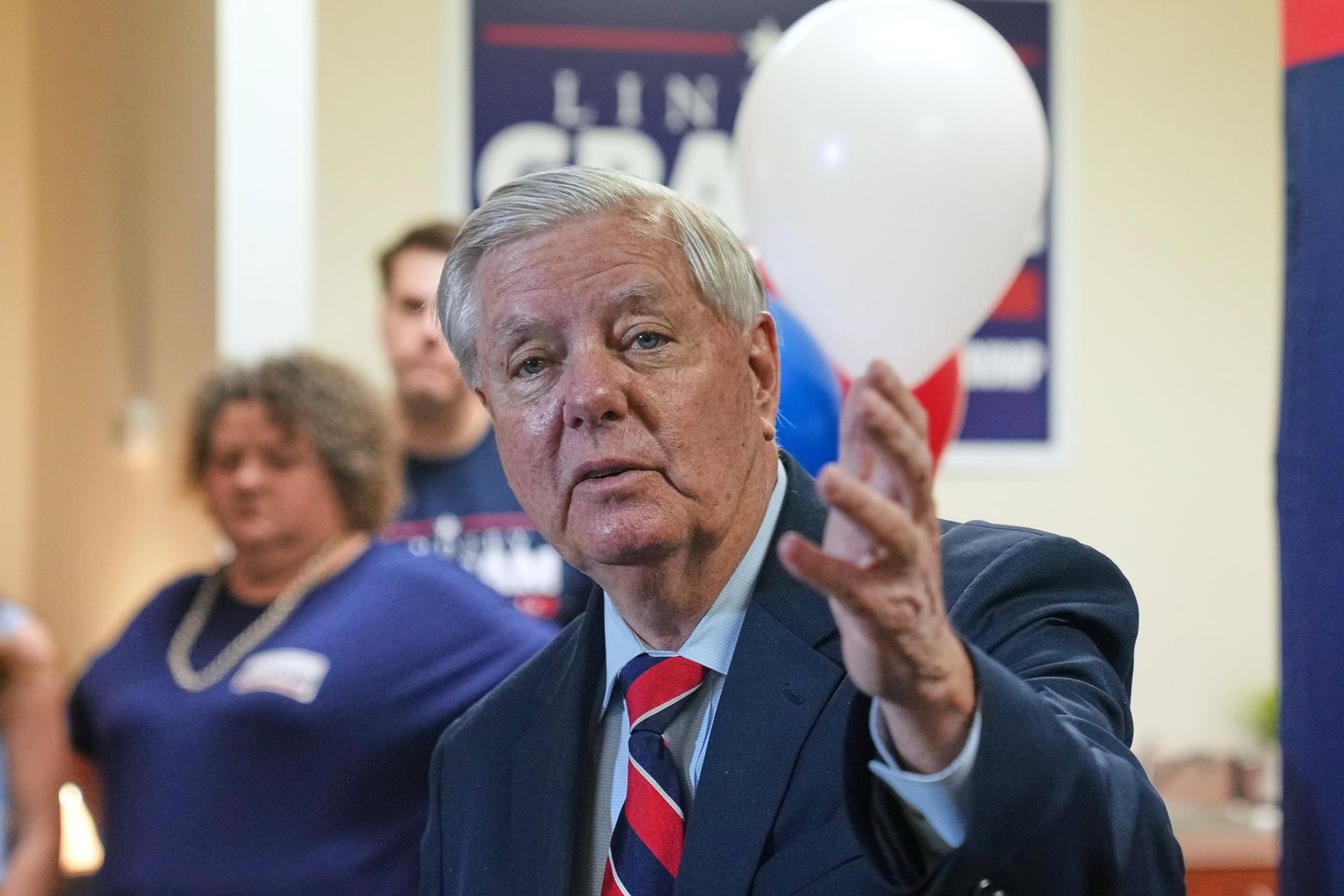
“Wouldn’t you hate to be the Republican that went home and said I voted against giving money to ICE and to border patrol?” said Senate Budget Chairman Lindsey Graham.
Speaking at an event in his home state of South Carolina last week, Mr. Graham said he wants to pass that bill quickly and then use the filibuster-proof budget reconciliation process again in the fall to codify more of Mr. Trump’s priorities.
“That’s going to be about going after fraud,” Mr. Graham said of the second bill. “It’s going to be about voter integrity, a down payment on the SAVE [America] Act.”
Republicans have also discussed including defense funding in the second package.
The fiscal 2027 budget proposal Mr. Trump sent to Congress last week envisions a $1.5 trillion defense budget, including $350 billion of mandatory funding that Republicans can use the budget reconciliation process to pass.
Pursuing a second, larger reconciliation package close to the election is a major gamble given Republicans’ narrow margins in both chambers.
“It’s going to have to be a well-coordinated exercise,” House Budget Chairman Jodey Arrington, Texas Republican, told The Washington Times. “You need all the incentives and all the motivating factors in play to get the vote.”
He said the SAVE America Act, a bill to require proof of citizenship to register to vote and a photo ID to cast a ballot, is a unifying measure for the GOP that should serve as an incentive – if it can survive the process.
The Senate rules for budget reconciliation that exempt the process from the filibuster also come with strict requirements that any policy changes must have more than a “merely incidental” budgetary impact.
The SAVE America Act likely would not meet that requirement, but Mr. Arrington argued that it could be rewritten to create a significant budget impact.
“I think there are ways to put money behind [it] and a way to incentivize states to clean up their voter rolls, to implement voter ID initiatives,” he said.
Mr. Graham also floated potential ideas for restructuring SAVE America Act provisions to meet the reconciliation requirements.
“If you’re not willing to purge your voter rolls, then maybe some federal grants won’t come your way,” he said, suggesting other election provisions can also be drafted to “incentivize the right thing and punish the wrong thing.”
The budget chairmen are also aligned in their interest in using reconciliation to crack down on fraud and prevent theft in government benefit programs, as occurred in several high-profile cases in Minnesota.
“How many dollars do you think have gone out the door based on just made-up people?” Mr. Graham said. “All they require is if you send the bill, you don’t even have to list the people who got SNAP benefits. That’s how Minnesota happened.”
Mr. Arrington views the anti-fraud effort as key to winning over fiscal conservatives like himself who will want to offset much of the new spending on defense or the SAVE America Act.
“The centerpiece of our offsets and reforms should be on ridding the government of what GAO says is upwards of $500 billion a year in fraud, which is, by the way, more than the entire economic output of Denmark,” he said, referring to the nonpartisan Government Accountability Office.
Republicans used their last reconciliation bill, the One Big Beautiful Bill Act, to add work requirements to Medicaid and the Supplemental Nutrition Assistance Program and ensure benefits would not go to illegal immigrants. Mr. Arrington said the GOP should do the same for other government programs.
“There are 78 other means-tested programs that should have the same program integrity measures,” he said, adding that the collective savings could exceed $1 trillion.
GOP leaders have at times sent conflicting messages on the viability of using budget reconciliation a second or even a third time this Congress after last year’s laborious effort to pass the One Big Beautiful Bill Act.
Senate Majority Leader John Thune, South Dakota Republican, has said repeatedly that there has to be a good reason to do it, one that will unify the party around the effort. Last year, it was the GOP’s desire to permanently extend expiring tax cuts from Mr. Trump’s first term that drove support for the OBBB.
Mr. Thune, after months of indifference to a second reconciliation bill, now says one is needed to fund ICE and CBP through the remainder of Mr. Trump’s term since Democrats are refusing to support any money for immigration enforcement.
But he is hoping rank-and-file Republicans will resist the urge to push for other additions to that bill that could implicate multiple committees of jurisdiction and complicate the process.
“Our theory of the case behind all this was to keep that thing as narrow and focused as possible,” he said. “And that maximizes, I think, the speed at which we can do it and the support for it.”
House Speaker Mike Johnson, Louisiana Republican, has been pushing for a second sizable reconciliation package for months despite doubt from others in his conference.
But when the Senate first pitched a two-track plan for funding the Department of Homeland Security that would fund most agencies through regular appropriations and ICE and CBP through reconciliation, Mr. Johnson suddenly changed his tune.
He called the reconciliation effort “a very difficult task” and “a high-risk gamble.”
That likely stems from House Republicans’ distrust of the Senate. Mr. Johnson has since gotten on board with the two-track funding plan, amid Mr. Trump’s urging. But a majority of his conference is pushing for a reordering of the two tracks.
“I’m fine with the two-track approach, as long as the first approach that we make is funding ICE and CBP,” Rep. Beth Van Duyne, Texas Republican, said on Fox News’ Sunday Morning Futures.
The Senate has already passed a bill to fund the rest of DHS by voice vote, but the House lacks consensus to follow suit. That’s partly why House Republicans want to be on record funding ICE and CBP first.
“Just expecting us to all put our names on a vote that would fund out to a zero level ICE and CBP after the Senate just had to do it by a voice vote – not one single senator is on the record – I don’t think that’s right,” Ms. Van Duyne said.