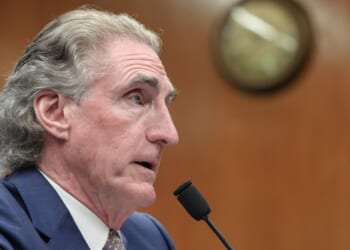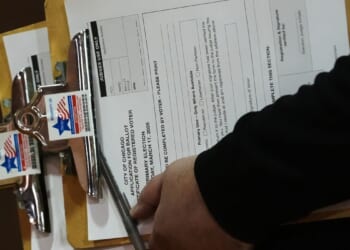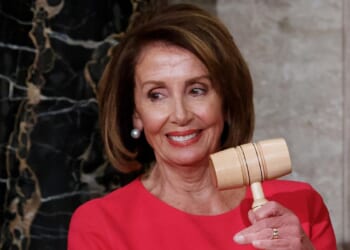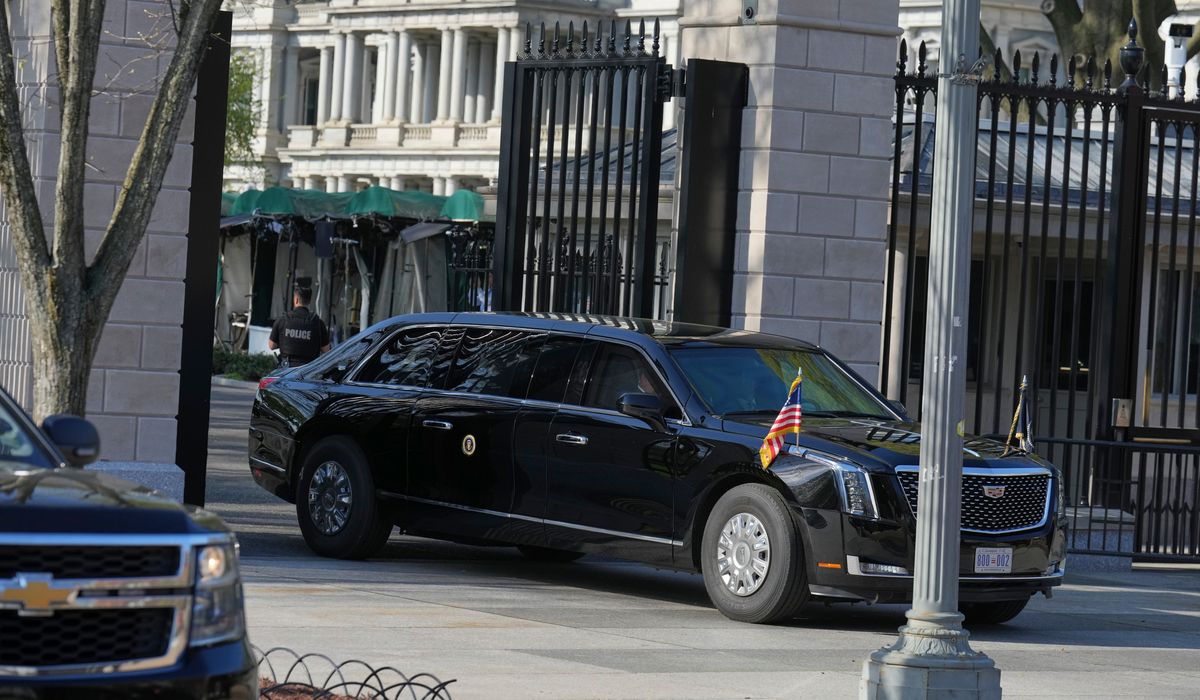
President Trump arrived at the Supreme Court on Wednesday to watch the justices hear oral argument on his executive order trying to carve illegal immigrants and temporary foreign visitors out of America’s expansive grant of birthright citizenship.
Experts have found no record of a president attending an oral argument before, and the groundbreaking move by the iconoclastic president underscored the weighty issues at play.
Mr. Trump’s opponents feared he was attempting to intimidate the justices.
Mr. Trump revealed his plans to attend the argument on Tuesday, telling reporters he’d been following the legal back and forth over the last year and figured he would observe the denouement in person.
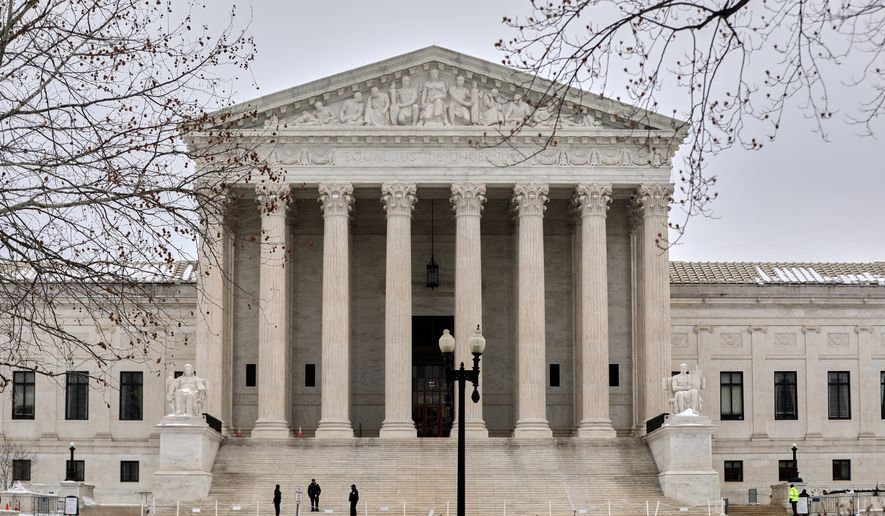
The Supreme Court is photographed, Feb. …
more >
“I do believe I’m going,” Mr. Trump said.
The event marks a unique convergence of differing branches of government.
SEE ALSO: Supreme Court case reopens 160-year-old battle over birthright citizenship rights
Mr. Trump regularly sees the justices at State of the Union speeches, which occur on the somewhat neutral ground of Congress, the third branch. But on Wednesday, Mr. Trump will be on the Supreme Court’s territory.
The American Civil Liberties Union, which is arguing the case against Mr. Trump and the Justice Department, said it hopes the president gets a legal education during his time in court. But ACLU Executive Director Anthony Romero suggested the appearance was just a stunt.
“Any effort to distract from the gravity and importance of this case will not succeed,” he said. “The Supreme Court is up to the task of interpreting and defending the Constitution even under the glare of a sitting president a couple dozen feet away from them.
Mr. Trump has long been focused on birthright citizenship, which is the near-automatic grant of American citizenship to anyone born on U.S. soil.
It traces back to the 14th Amendment to the Constitution, which was ratified in 1868 and guaranteed the former slaves full citizenship. But the expansive language applied beyond them, to include children of immigrants and some visitors.
Just how broad it runs is one question before the justices.
An 1898 ruling by the high court seemed to say that children of immigrants, even those with only a tenuous link to the U.S., are covered. But Mr. Trump’s lawyers say the ruling never actually reached the specific question of children of illegal immigrants or short-term visa holders.
Complicating Mr. Trump’s case is the fact that he acted through executive order, seemingly in contravention of a 1940 law that adopted the 1898 Supreme Court ruling’s version of birthright citizenship. Courts have held that executive orders can’t trump laws.