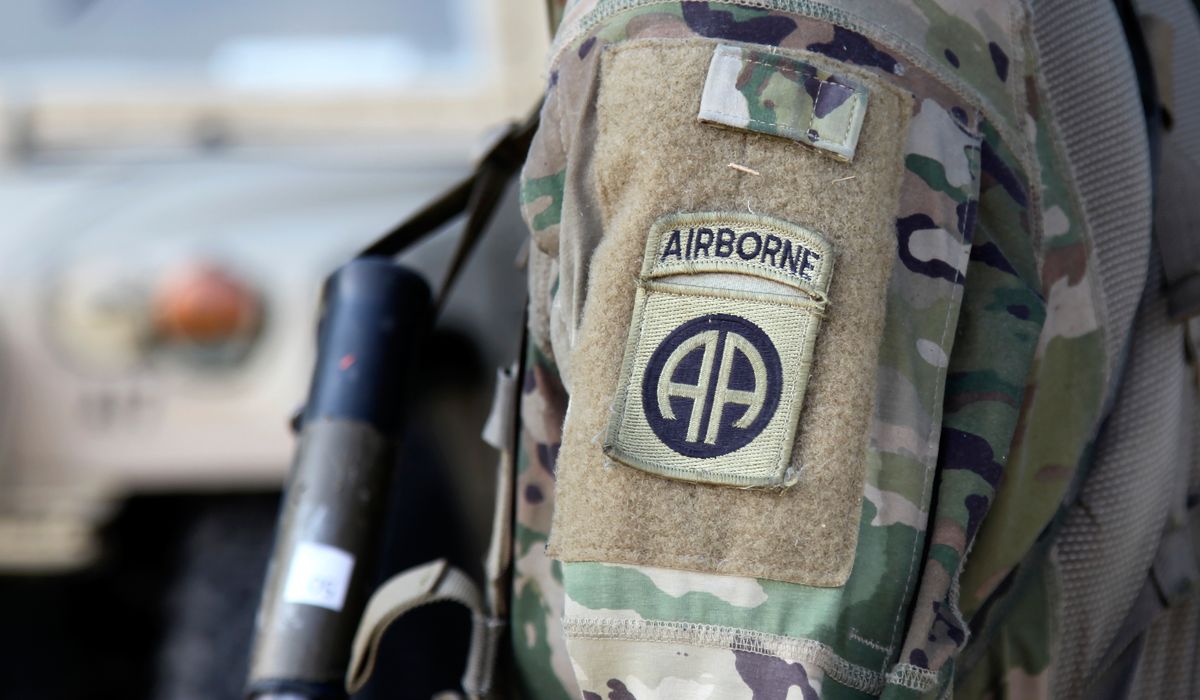
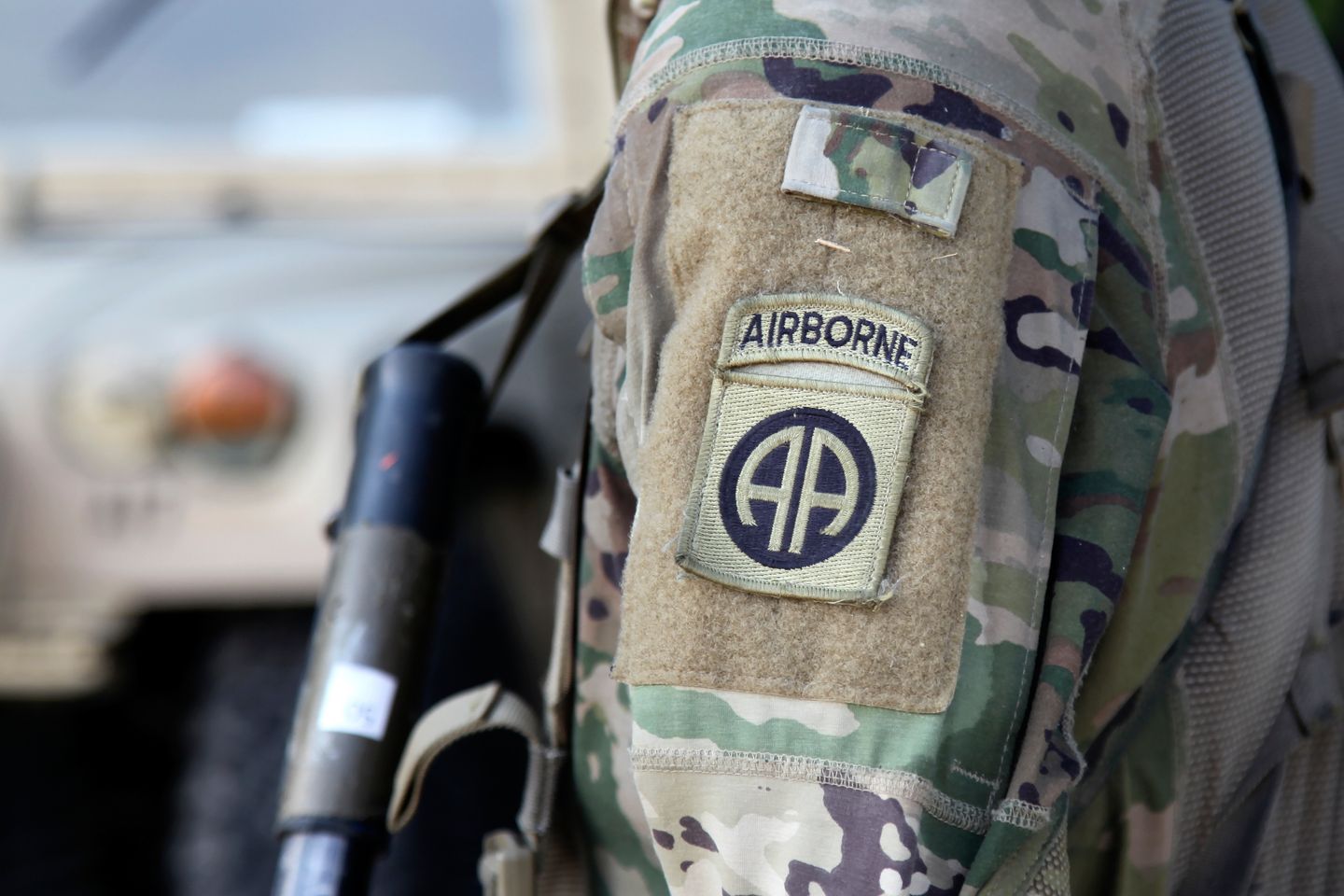
The Pentagon is deploying the full spectrum of military forces for “maximum optionality” in the Middle East, giving President Trump virtually unlimited options in deciding how far to push the U.S. campaign against Iran.
From secretive special operations forces to the Army’s 82nd Airborne and U.S. Marines, new detachments of American troops are headed to bases in the Persian Gulf in preparation for a possible high-stakes “finale” to the conflict, now in its second month. The full menu of missions available to the commander in chief will range from the possible seizure of key Iranian islands crucial to the country’s energy sector to more complex operations targeting Iran’s nuclear materials.
It’s a clear shift by the administration away from a purely bombing and clandestine campaign against Iran and toward a full-spectrum warfare approach, according to military analysts and insiders familiar with the unfolding deployments. The 82nd Airborne, 75th Ranger Regiment and elements from the fabled Delta Force are already in the region. U.S. Navy SEALs and two Marine Expeditionary Units are also forward deployed.
Adm. Brad Cooper, the head of U.S. Central Command and the man in charge of those forces, said Tuesday in a recorded message that his troops are making progress. The current operations have been “systematically dismantling Iran’s drone, missile and naval capabilities,” Adm. Cooper said.
But he didn’t mention Iran’s nuclear capabilities, a critical objective for the Trump administration.
“Admiral Cooper is basically creating that optionality,” said Jonathan Hackett, a former special operations capabilities specialist and Marine who is now a military special operations analyst. “These forces likely will not all be used, but they have to be ready to go.”
The expanding mission in Iran
The goal, according to Mr. Hackett, is to eliminate the gap in time between a presidential order and the moment an operation starts.
“Forces are already there,” he said. “We’re just waiting for the president to actually make that political decision to do it.”
The prolific array of specialty forces isn’t restricted to the top echelons of what are known in the military as “tier 1” units. Operations requiring the support of conventional elements already deployed are also on the table, according to analysts who have spoken with some of those units.
That could indicate that a crescendo is approaching, one in which a combination of forces deliver a final, massive blow to the Islamic republic of Iran.
“It feels like the administration wants to end this on a high note, a finale,” said Michael Knights, the head of research for the strategic intelligence platform Horizon Engage and an adjunct fellow at the Washington Institute for Near East Policy.
“You could do it with something that’s just so mind-blowingly complex but effectively carried out that everyone in the world is like, ’Wow, holy s—-, there really is no capability like that in the world,’” Mr. Knights said in an interview.
The 82nd Airborne has already been deployed to the region and may act as an emergency reaction force or a security cordon to support other delicate missions.
“You want the 82nd as a sort of a security wrapper for some other kind of mission,” Mr. Knights said. “When you deploy this much special operations capability you’re indicating that you want all the options you can possibly have on the table.”
Similar to the 10th Mountain Division’s responsibilities during Operation Gothic Serpent, known from the movie “Black Hawk Down,” special operations forces traditionally rely on large conventional Army units to be both their reaction force and to create a large security perimeter around their target.
The recent deployment of the 75th Ranger Regiment into the theater provides yet another force option, capable of securing areas through multiple “raid” type missions while also able to support a more clandestine operation.
It reflects what White House press secretary Karoline Leavitt earlier this week called “maximum optionality.” The U.S. could use the 82nd Airborne, 75th Ranger Regiment and the two Marine Expeditionary Units deployed to the region as tools to either hit multiple targets at once or conduct a very robust special missions operation.
The uranium question
The next steps by the U.S. would likely be more targeted missions rather than a full invasion of Iran, specialists say, counter to what Iranian political figures have suggested in recent days. The Trump administration and top defense officials are reportedly weighing whether to send ground troops into Iran to retrieve the country’s highly enriched uranium, with the goal of eliminating the country’s nuclear weapons capability for good.
The Wall Street Journal first reported that such deliberations are underway.
A seizure of Iran’s uranium would force the military to conduct a complex and dangerous operation, most likely relying on elite clandestine and special operations teams already in the region that are specifically trained in the removal of radioactive material. Those teams would be tasked with conducting that mission while in the middle of a conflict zone.
The removal operation would be much larger and more difficult than past special operations missions.
U.S. operators would need to remove more than 1,300 pounds of material: Nearly 440 pounds of 20% uranium fissile material in Iran and another 880 pounds of 60% highly enriched uranium. There is also the weight of the special casks needed to properly contain the radioactive yellow cake, making the potential mission incredibly difficult from a logistical perspective.
“The canisters are massive — they’re like twice the height of a person,” Mr. Hackett said.
“There’s at least 18 containers in Isfahan. You’re going to need heavy equipment,” he said, referring to the Isfahan nuclear site, one of the country’s most important nuclear facilities and one that was hit by a U.S. bombing mission in June.
Analysts said that operation could take days or even weeks. Previous instances of such radioactive material heavy lift options took nearly a month, even with another government’s cooperation.
Project Sapphire, the historic removal of 1,300 pounds of weapons-grade enriched uranium from Kazakhstan in 1991, reportedly took from Oct. 14th to Nov. 11 of that year.
“The military planners, joint staff, CENTCOM, everyone else, spends their whole life planning for these contingencies,” Mr. Knights said. “I’m sure some of it is really very cutting edge. Whether it’s North Korea or Iran or somewhere else, they’ve been thinking for a long time about getting out nuclear materials … but what I don’t think we’ve done is try and remove material from a devastated facility.”
June’s Operation Midnight Hammer, Mr. Knights said, may have made it much harder to actually remove nuclear material because it may be buried or in destroyed facilities.
At great risk, forces could put containers on a pallet to load into a fixed-wing aircraft, or to be picked up by helicopters. There is also the more straightforward but dangerous option of loading the material onto trucks and driving it toward northern Iraq.
A potential ground removal operation could be made far easier — and safer — with the cooperation of Kurdish militias, who could help secure a land corridor through which U.S. forces would transport the nuclear material.
A Kurdish role?
Sources have provided The Washington Times unverified information that the U.S. has given small arms ammunition and equipment to Kurdish forces in northern Iraq.
Zagros Rojhelat, the spokesperson for the Free Life Party of Kurdistan, known as the PJAK — a U.S. designated terrorist group — would only say that his forces had not coordinated with the U.S. military, not the larger U.S. government or intelligence agencies.
“We haven’t had any contacts with U.S. military or Israeli military,” he said. When pressed, Mr. Rojhelat again would only reference the military.
“To win the war, the U.S. and Israel need forces on the ground and we haven’t seen that yet,” he said.
The PJAK has one of the largest forces in the Kurdish coalition and has a presence in far northern Iran, though Mr. Rojhelat said there “isn’t a large Kurdish force on the ground” there.
“We have been less hurt than other groups,” Mr. Rojhelat said of Iranian strikes in the region. “A substantial number of our forces were not in known bases, but in the field.”
War planners would prefer an air extraction, according to Mr. Hackett, but palletizing and moving 1,300 pounds of radioactive material while possibly under enemy fire has no modern precedent.
“There’s a relatively safe partner force corridor that we could activate,” Mr. Hackett said. “That’s probably where you’d see the 82nd [Airborne], working with partners to secure the ground lines of communication to get it over to Kurdistan, into Erbil, then fly it out.”
Multiple teams at the highest levels of the military are trained in radioactive materials handling, but the risk of an operation remains high, according to experts.
Weighing the risks
None of the options at the president’s disposal are without cost. One government official familiar with the situation told The Times that casualty estimates are part of the options being provided to the president and his National Security Council, which Mr. Hackett confirmed.
Joint Special Operations Command is estimating “to lose at least a squadron worth of people in casualties — KIA and wounded — if they do this against Isfahan only,” Mr. Hackett told The Times, referring to the 50- to 75-person Delta Force squadrons. “This is an exceptionally high-risk mission. It’s possibly the most complicated special operations mission to be planned.”
Isfahan may not be the only target if the goal is to entirely eliminate Iran’s nuclear capabilities. There are about 10 other sites that intelligence professionals have identified, according to Mr. Hackett. He also said Iran has a uranium mine in the village of Saagand, meaning Iran’s access to uranium could continue even after a U.S. extraction mission.
“Neither neutralizing nor exfiltration actually stops the problem,” Mr. Hackett said.
That could create a possible endless mission for U.S. troops while also ratcheting up a tit-for-tat dynamic across the Gulf. Mona Yacoubian, director of the Middle East Program at the Center for Strategic and International Studies, said such a dynamic is already unfolding.
When U.S. and Israeli strikes expanded to include petrochemical and desalination facilities, Iran responded within 24 hours by hitting similar infrastructure in Bahrain and Kuwait. America’s Gulf partners are absorbing that retaliation.
Ms. Yacoubian recently wrote an analysis that pointed to the “wide-ranging retaliation” of Iran and the “eye for an eye” approach of its military.
“One senior Gulf official said to me, ’The U.S. and Israel launch the tit and we get hit with the tat.’ That about sums it up,” Ms. Yacoubian said. “Gulf countries are really looking for strikes that degrade, significantly, Iran’s ballistic missile and drone capabilities. They want things to be done that put Iran back in the box.”
She argues that the more removed from blatant military targets the U.S. and Israel are in their operations, the more Iran will expand its strikes to civilian and industrial targets against Gulf partners.
“It is playing directly, directly into Iran’s hands and by extension its strategy,” she said, pointing to Mr. Trump’s recently expanded list of possible targets in a Truth Social post on Monday. “When we hit those types of targets, then Iran seizes upon it and says ’OK, you’ve just opened up that target as being legit, so now we’re going after it.’”
Ground operations, even with highly trained and skilled military operators, would escalate the dynamics rapidly, she said. Iranian officials have already publicly signaled their response to a possible ground incursion.
“They understand that this could be a contingency in the immediate future — and that they will respond by unrestrained fire on these forces,” Ms. Yacoubian said.
That fire would most likely be the 82nd Airborne or 75th Ranger Regiment’s responsibility to contain so that special operations forces could conduct their mission.
“When you’ve done what you’ve done so far in this war, it’s hard to ratchet up more. This is one of the few ways you can visibly ratchet up,” Mr. Knights said. “We’re doing a reverse Pottery Barn, by design. We come in, we break it, we don’t buy it.”
“It’s what [former Defense Secretary Donald] Rumsfeld and others wanted to do back in 2003 in Iraq. Just walk into the shop, smash things up, and walk out again.” Mr. Knights said.
• Joseph Hammond contributed to this story.