In the remote expanse of Alaska, U.S. and Canadian forces are preparing for conflict in one of the harshest environments on Earth.
In this exclusive two-part series, Threat Status was given access to the 11th Airborne Division and 10th Special Forces Group, as they train for a possible future on the front lines of global competition — and well below zero.
[SEWARD] I spent time embedded with the 10th Special Forces Group’s premier military freefall team. What I found was a unit that had been quietly rewriting the rules of what’s possible in one of the most unforgiving environments on Earth.
In the first part of this series, we looked at the broad picture — what the Arctic means strategically, how Allied forces are training together, and why the equipment gap between what the Pentagon wants and what actually works at minus 40 degrees is one of the most important questions in modern defense.
[SHEA] It’s not as simple as just bringing southern military technology up into a northern space and expecting it to work.
[SEWARD] This is Neil Shea, an author and Arctic explorer.
[SHEA] We don’t, as a nation, have a lot of Arctic combat experience. So these things would obviously be learning it on the fly, if it ever were to come to that. Everything takes so much longer, and everybody is so much slower. And equipment malfunctions happen so much more often. But I don’t think people really account for that.
[SEWARD] The 10th Special Forces Group not only conducted their reconnaissance missions here in the Arctic, they also conducted a high altitude, low opening military freefall parachute jump.
This specific jump was actually experimental — to try to understand and develop techniques to allow those sorts of jumps in these types of conditions.
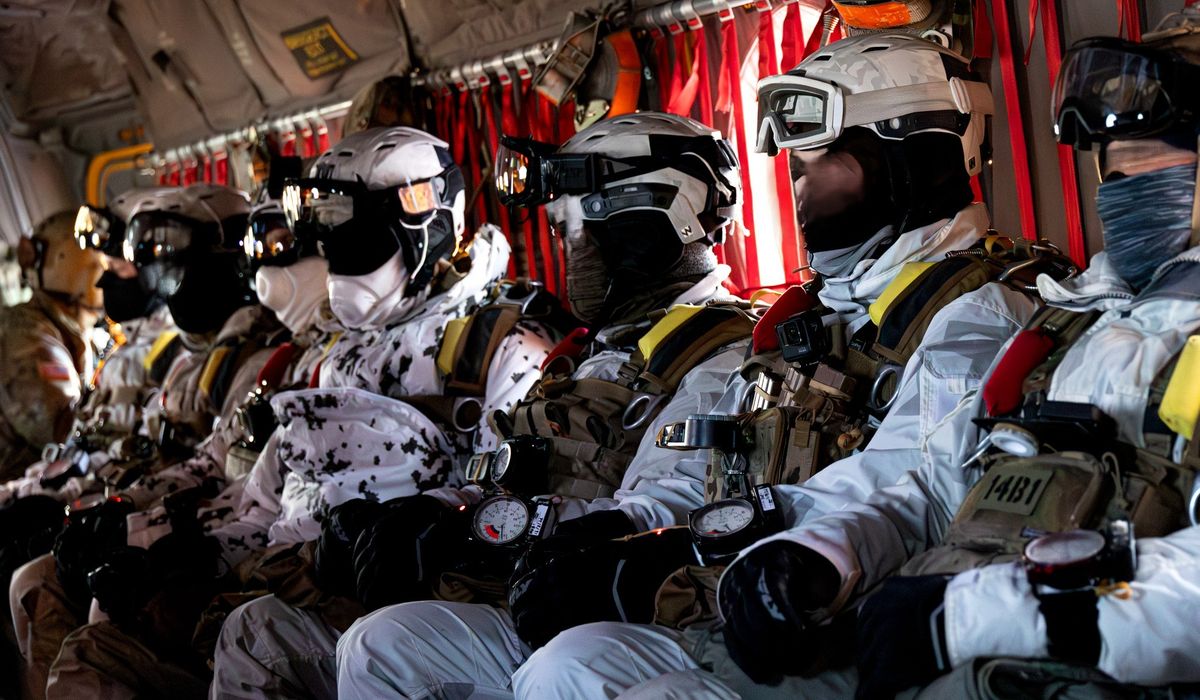
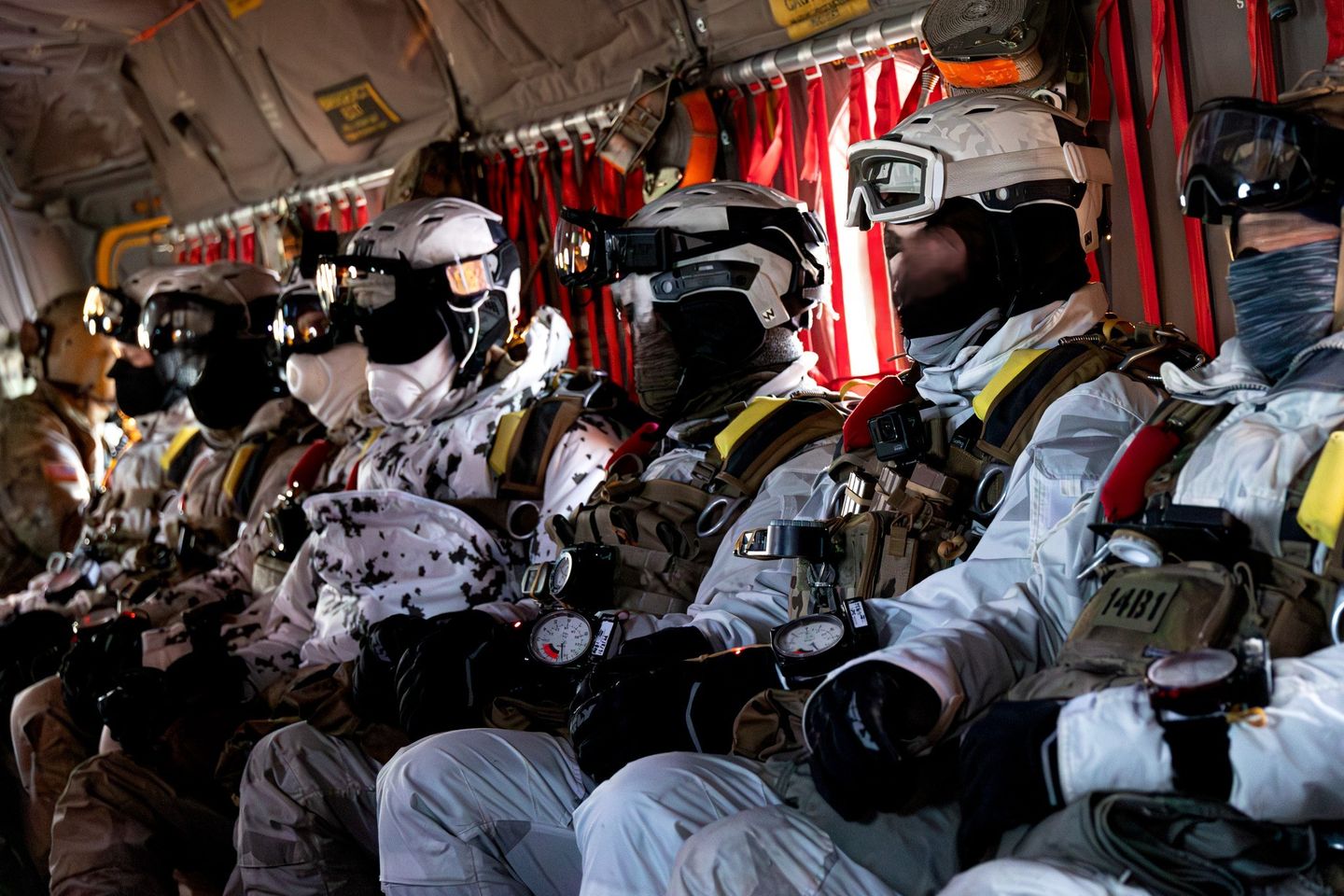
Jumping from a warm aircraft into subzero temperatures had been a persistent problem. The drastic temperature change from a heated cabin to minus 35 degrees at 13,000 feet had caused equipment faults on previous attempts. Parachute systems, electronics — things that could get an operator killed and represented a go/no-go criteria.
I sat down with Major Scott Ratzer, a company commander with the 10th Special Forces Group from Fort Carson, Colorado, to talk about what his soldiers were doing to overcome that challenge. And they tried something a little counterintuitive.
[RATZER] Our military freefall team, they’ve been training for this for about 10 months now, specifically building up to this. They were jumping skis into Mojave Desert a few months ago in November.
[SEWARD] Instead of avoiding the cold, the team leaned into it. Usually, aircraft would stay heated, keeping operator equipment from freezing before stepping out onto the objective. But the solution here was to keep the aircraft cold rather than warm.
It let the gear slowly get colder on the way up, avoiding the thermal shock of going from a conditioned space into 13,000 feet above a ground temperature of negative 35 degrees.
[SAM] To be honest, it wasn’t terrible. We layered up. A lot of dudes, I think, overheated because we wanted to be on the extreme side of comfort rather than be flying through the air and be frozen.
[SEWARD] This is Sam, a team leader with the 10th Special Forces Group. Maintaining his identity as a secret is for security reasons, as he’s on an active ODA team.
[SAM] We were able to exit a CH-47 with a successful jump at 13,000 feet AGL in order to test the capabilities — not only the personnel, but the equipment — and be able to provide feedback to manufacturers as well as, you know, the regiment as a whole.
[SEWARD] The team used heated gloves, goggles, and other equipment to make sure that while they were warm enough for the jump, the equipment that they were using wasn’t going through that shock.
[RATZER] These guys did a fantastic job. They jumped in, testing a lot of new TTPs. We’ve had experience previously with equipment faulting. Our free-fall detachment, they took ownership of that problem, and they tried off some new equipment, some new techniques, and they had a wildly successful experimentation jump the other day that they were going to share with the whole regiment.
[SEWARD] After proving the concept, the planned jump into the training area was scrubbed due to weather — but that meant that I could link up with the team as they conducted their operations by a different means of transportation. After a two-hour drive from Fairbanks down to the Conley training area across from Fort Greeley, Alaska, I needed to hop on a snowmobile and ride another 30 minutes deeper into the snow.
I asked Sam about some of the unique challenges of training in this kind of Arctic environment.
[SAM] Quickly, your body starts fighting against you to stay alive. This environment is an environment where you’re not only battling an enemy who’s trying to find you, but the environmentals and the weather that are also trying to kill you.
Boiling water is how we stay hydrated out here, and that takes a long time, especially with this dry snow. And in kilowatt intake, you burn a lot shivering and trying to keep your body warm. So you need to take more in, which is really hard.
While I was with them, between the team that I was with and one of their connected units, three soldiers had to be pulled out of the training exercise. They’d started to show severe signs of hypothermia and needed medical attention.
Both personnel and equipment were getting intensely tested by the elements.
[SAM] The problem with tents in this environment is over time — the longer you stay out in these Arctic conditions, the more condensation and frost and snow that gets on the inside. That’s a huge consideration that I don’t think we took into account before coming out here. You can definitely start feeling a difference in temperature inside the tent over nights three, four, and five when frost and moisture in the air is adhering to the exterior as well as the interior
[SEWARD] Effectively starting to sleep in a case of ice.
Watch the video for the full conversation.