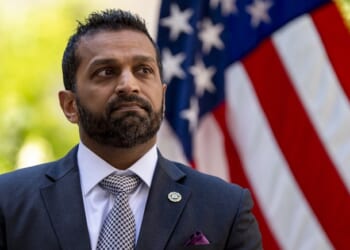
Hackers linked to Iran broke into FBI Director Kash Patel’s personal email account. The group known as Handala HackTeam claimed responsibility and posted images along with what appears to be an older résumé and email material from 2010 through 2019.
Handala, which calls itself a group of pro-Palestinian vigilante hackers, is considered by Western researchers to be one of several personas used by Iranian government cyberintelligence units. Handala recently claimed the hack of Michigan-based medical devices and services provider Stryker on March 11, claiming to have deleted a massive trove of company data. Reuters was not able to independently authenticate the Patel emails, but the personal Gmail address that Handala claims to have broken into matches the address linked to Patel in previous data breaches preserved by the dark web intelligence firm District 4 Labs. A sample of the material uploaded by the hackers and reviewed by Reuters appears to show a mix of personal and work correspondence dating between 2010 and 2019.
A Justice Department official confirmed that the account was compromised and said that the released material appears authentic.
The breach isn’t an isolated event; federal authorities had just seized four domains tied to the same group, sites that served as hubs for claiming attacks, leaking stolen data, and issuing threats. One post even offered cash bounties tied to cartel violence.
The hack comes days after Handala claimed that US aerospace and defence company Lockheed Martin had been compromised.
“The manufacturer of the F-35, F-22, Thaad missile defence system and advanced electronic warfare systems could not even protect its own identity,” the group said on Wednesday.
In a statement to The National, a Lockheed Martin representative did not confirm that its systems had been compromised.
“Lockheed Martin continues to carry out its mission-critical work in support of American and allied warfighters around the world,” the statement read.
“We are aware of the reports and have policies and procedures in place to mitigate cyber threats to our business.” It said that Lockheed Martin remained confident in its “multi-layered information systems”.
The seizure disrupted part of the operation, but it didn’t end it. Days later, the group struck the personal account of the man leading the effort against them. That alone shows how quickly these actors adjust. Lose one platform and shift to another target. That move wasn’t random. It sent a signal.
The breach also highlights a problem that still doesn’t get enough attention, regardless of the number of IT training videos people are forced to watch.
Personal email accounts remain a weak point, even for top officials. Many people still reuse passwords or rely on simple ones that are easy to guess.
Others skip two-factor authentication. Hackers don’t always need advanced tools when basic security falls short. One compromised account opens the door to far more than old messages.
As head of the FBI, Patel oversees the agency responsible for tracking threats against the United States; any exposure tied to his communications carries weight. Even older emails can reveal contacts, patterns, or details that adversaries can use to build future attacks. Information like that fuels phishing attempts, identity theft, and targeted operations aimed at others inside government networks.
Handala HackTeam presents itself as a pro-Palestinian group, but security analysts have tied its activity to Iranian cyber operations. Its past claims include attacks on infrastructure and private companies. Now it’s gone after Patel’s personal account and breached it, which raises the stakes.
The breach shows how the line between personal and professional security has blurred. Private accounts often hold information that connects back to official roles. Contacts overlap, conversations carry context, and one weak account exposes more than expected.
Security professionals have warned for years that foreign actors probe American systems every day. This case shows those efforts reach the highest levels. The response can’t stop at securing official networks. Personal accounts require the same level of discipline: strong, unique passwords; password managers; and two-factor authorization aren’t optional anymore; they’re baseline protection.
The domain seizures showed progress by disrupting part of Handala’s online presence and limiting how the group broadcasts its activity. But the follow-up attack makes something clear: disruption isn’t the same as defeat.
Patel has said the effort to track down those responsible continues. What matters just as much is closing the gaps that made the breach possible in the first place.
The lesson isn’t complicated; the threat isn’t distant or abstract; it’s active, adaptive, and willing to target anyone, including the boss of the organization leading the charge.
That’s how close it really is.
If you want more straight reporting that cuts through noise and focuses on what actually affects people, consider joining PJ Media VIP. Use promo code FIGHT to save 60% today.