NASA has been a disaster of an agency pretty much since the last man walked on the moon.
It’s not that it has no achievements since then, but rather that, for the most part, it has done the leastest with the mostest when it comes to manned space flight. Its bureaucracy is sclerotic, its manned space program has been adrift, its partners, aside from SpaceX, have become flabby and frankly incompetent, and its plans have been inspired by Rube Goldberg and executed by the Keystone Cops.
Boeing, which has been its biggest partner for as long as it has been in existence, can’t build a spacecraft that works, but it can sure spend a lot of money failing, and even building a mobile launcher is beyond its capacity. Mobile Launcher 2, being built by Bechtel, is SEVEN times over budget.
Gavin Newsom would blush. Well, maybe not, but you get the idea.
I can’t recall how many times Presidents have promised manned missions to Mars, and we have been planning to go to the moon to build a permanent presence, and unless something changed, we might get there sometime in the 2100s, at the cost of many trillions.
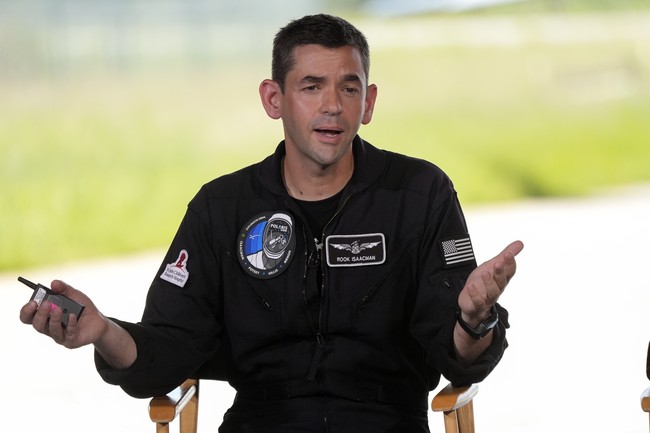
Changes are coming. Finally. And it’s thanks to Jared Isaacman, who is tossing out the old plan and rebuilding it almost from scratch. It should be faster, cheaper, and most importantly, not rely on highly complicated, bespoke spacecraft that cost billions of dollars apiece, and so finicky that each is unique enough to require relearning how to launch for each.
We’ve announced a series of transformative initiatives to achieve America’s National Space Policy, reflecting upcoming opportunities for world-changing science and discovery.
Learn more about our plans for the Moon, Mars, and beyond: https://t.co/bc4pf4GPS9 pic.twitter.com/xZa9tBoRXY
— NASA (@NASA) March 24, 2026
As with so many things, none of this could have happened but for Donald Trump’s presidency.
NASA’s big problem is that it is less a goal-oriented technology-driven organization than a bureaucracy that exists to keep existing. Which is quite remarkable, in its own way, because sending men and scientific experiments into space is inherently exciting. We still thrill to images from the Hubble telescope, and the James Webb telescope is rewriting our understanding of the universe and physics itself.
BREAKING: NASA Administrator Jared Isaacman announces plans to build a PERMANENT U.S. base on the Moon—the plan rolls out in three phases: rover and tech deployments, semi-habitable infrastructure for astronauts, and ultimately a permanent human presence on the lunar surface.… pic.twitter.com/5wansZv09f
— Breaking911 (@Breaking911) March 24, 2026
As Elon Musk is rapidly developing Starship and building a GigaFactory to produce up to thousands, and eventually a million Starships a year, NASA takes years to build one disposable Space Launch System at billions of dollars a pop.
Elon Musk and SpaceX pretty much IS the American space program, and has been for over a decade. At rock bottom prices.
Right now, the United States is losing the race to put men back on the moon, as China races ahead to build its own moon base and, much more importantly, put down stakes in the most resource-rich region of the moon. It’s no longer a matter of pride that is at stake, but access to resources in what will soon be one of the most strategically important pieces of real estate in the 21st and 22nd centuries.
Because there are no California politicians on the moon https://t.co/YYi5ij1iIE
— memetic_sisyphus (@memeticsisyphus) March 25, 2026
There’s water on the moon, and that means we can make air and rocket fuel there, and launch from a low gravity environment to the asteroid belt, where one asteroid can provide more minerals than we can mine on earth in centuries.
If Isaacman succeeds, he will rewrite America’s future in space, and help set the stage for a resurgence of American power and prosperity for decades or centuries. The payoff will take some time, but it will be huge.
NASA still has some of the best engineers and even dreamers in the world, but one engineer can spend his entire career on one spacecraft or experiment, hampered by a bureaucracy that is so slow and often incompetent that progress is glacial.
In the 60s we went from rockets that couldn’t leave the launchpad to landing on the moon in less than a decade. Since then, we have barely left low earth orbit. In fact, SpaceX has sent private citizens farther from the earth farther than NASA has since then.
Jared Isaacman himself was the farthest man from earth since 1972, did a spacewalk, all on a commercial Space Dragon.
NASA couldn’t do that. Soon, it will be able to go to the moon again.
There is plenty of reason to doubt that Isaacman’s goal of reaching the moon with men before Trump’s term ends is too far a stretch, but no doubt at all that the path we were on wasn’t going to get us to the moon before the mid-2030s. Move fast, break things, and iterate has proven to be a far better strategy than what we were doing.
Revitalizing and even reinventing NASA will be one of Trump’s legacies, although he will no doubt get no credit for doing so.
It’s a shame, because in the long run it could be one of his longest-lasting achievements. We need a space program that actually does something.
Editor’s note: If we thought our job in pushing back against the Academia/media/Democrat censorship complex was over with the election, think again. This is going to be a long fight. If you want to join the conversation in the comments — and support independent platforms — why not join our VIP Membership program? Choose VIP to support Hot Air and access our premium content, VIP Gold to extend your access to all Townhall Media platforms and participate in this show, or VIP Platinum to get access to even more content and discounts on merchandise. Use the promo code FIGHT to join or to upgrade your existing membership level today, and get 60% off!