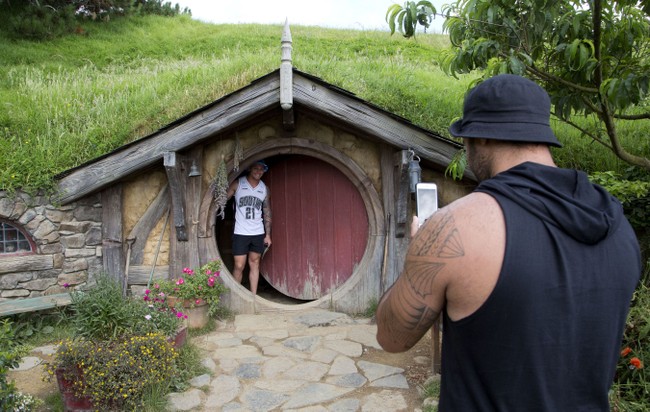
“In a hole in the ground there lived a hobbit.”
So begins one of the most beloved stories of the twentieth century, a tale that quietly reshaped genre literature, popular culture, and the imaginations of millions. Professor J.R.R. Tolkien, that humble Catholic philologist and Oxford don, never set out to become a cultural titan. Yet through his deep love of language, myth, and the old northern tales, he gave the world something far greater than mere entertainment: a secondary world so rich and consistent that it feels, to many of us, almost like a real one.
Tolkien treated Middle-earth with profound reverence. He called his work “sub-creation”: an act of making in imitation of the divine Creator, a humble participation in the gift of creativity itself. To him, this was no frivolous hobby. It was a serious, almost sacred endeavor, rooted in his faith and his scholarly soul. He could not have foreseen that a single line scribbled in an exam booklet would grow, through bedtime stories told to his own sons, into an epic embraced by readers in more than 57 languages, with his major works selling well over 600 million copies worldwide. He could not have imagined how many later writers, from fantasy authors to filmmakers, would trace their inspiration directly back to him, or how his legendarium would help define an entire genre.
Today, on Tolkien Reading Day, observed on the day in Middle-earth Frodo destroyed the Ring and the Dark Lord was cast down, we celebrate that extraordinary gift. We remember the unlikely heroes who populate his pages: the small, ordinary folk — hobbits with no great power or lineage — who rise to face impossible darkness through courage, friendship, loyalty, and simple decency. Their stories remind us that true strength often wears no crown and carries no sword, only a quiet determination to do what is right and the strength and faith to continue even when it seems all hope is lost.
Yet with that celebration comes a responsibility. Middle-earth is not raw material for anyone to reshape at will. It is a carefully wrought tapestry of language, history, morality, and wonder woven with philological precision and a deep sense of eucatastrophe, the sudden joyous turn that echoes divine grace. When new adaptations or extensions are announced, many of us feel a natural unease. We have seen how easily a beloved world can be altered in ways that dilute its spirit, inject modern agendas, or simply miss the profound respect with which Tolkien approached his own creation.
The recent news that Stephen Colbert will co-write a new Middle-earth screenplay (set after the destruction of the Ring) has stirred understandable dismay among fans (including me). While Colbert is a vocal admirer of the books, so are millions of people. Colbert brings no prior experience writing fiction or feature screenplays of this scale. For many, the fear is not mere gatekeeping. It is a protective love for something precious. We worry that an immortal story, born of deep scholarship and quiet faith, might be bent toward contemporary politics or treated as just another franchise to be “updated.” Tolkien’s sub-creation deserves caretakers who share his humility before the material, not those who see it primarily as a platform.
But like the hobbits who set out from the Shire in the midst of fear and urgency, we have little power over the Great Doings in the world. Our small voices are overshadowed and drowned out by the voices of the powerful, whether they mean good or evil. All we can do is our duty, and hope and pray that it is enough, and that glorious eucatastrophe might set in to right things that have gone awry.
Let us honor the professor today in at least a small way by returning to the books themselves. Read aloud a favorite passage. Share it with a child or a friend. Discuss what makes these stories endure: their moral clarity, their love of the natural world, their celebration of the small and the steadfast. Let us remind ourselves and anyone who would adapt or extend the legendarium that this gift was given to us in trust. It should be received, enjoyed, and passed on with the same reverence that created it.
For in the end, as Tolkien wrote in his poem Mythopoeia:
Man, Sub-creator, the refracted light
through whom is splintered from a single White
to many hues, and endlessly combined
in living shapes that move from mind to mind.
May we who love Middle-earth prove worthy sub-creators in our own small way by guarding the light that Tolkien kindled, so that it continues to shine, undimmed, for generations yet to come.
Happy Tolkien Reading Day. May your road go ever on.
Editor’s Note: PJ Media is free to bring you this kind of cultural content because our loyal subscribers help support us in a media and online environment hostile to what we stand for. Join PJ Media VIP and use the promo code FIGHT to get 60% off your VIP membership!