Greetings, and welcome to Friday, March 20, 2026. Today, in case you don’t know, is the first day of Spring, which officially begins at 10:46 a.m. ET. This means that for most of you, it’s already here by the time you read this. Today is also National Oral Health Day.
1760: The Great Fire of Boston destroys 349 buildings.
1815: Napoleon Bonaparte enters Paris after he escapes from Elba and begins his 100-day rule.
1816: The U.S. Supreme Court affirms its right to review state court decisions.
1852: Harriet Beecher Stowe’s anti-slavery novel Uncle Tom’s Cabin is published in Boston.
1854: Anti-slavery activists within the U.S. Whig political party opposed to the Kansas-Nebraska Act form a new Republican Party; notable politicians who switched allegiance include Abraham Lincoln, Rutherford B. Hayes, Chester A. Arthur, and Benjamin Harrison.
1868: The Jesse James Gang robs a bank in Russellville, Ky., stealing $14,000. That’s about $319,000 in today’s money.
1920: The first flight from London to South Africa lands (took 1½ months).
1922: USS Langley is commissioned, the U.S. Navy’s first aircraft carrier.
1930: American fast food restaurant chain Kentucky Fried Chicken (KFC) is founded as Sanders Court & Café by Colonel Harland Sanders in North Corbin, Ky.
1942: General Douglas MacArthur vows, “I came through and I shall return,” after escaping Japanese-occupied Philippines.
1973: NBC TV premieres pilot episode of Police Story, based on Los Angeles Police Dept. SGT. Joseph Wambaugh’s writings.
1981: A court in White Plains, N.Y., sentences Jean Harris (57) to 15-to-life in prison for the 1980 slaying of her ex-lover, “Scarsdale Diet Doctor” Herman Tarnower (69).
Birthdays today include: pianist, composer, and conductor Sergei Rachmaninoff; Edgar Buchanan, American actor (Petticoat Junction); Abraham Beame (Mayor of New York City, 1974-77, first Jewish mayor of the city); actor/band leader Ozzie Nelson; singer Vera Lynn (“We’ll Meet Again”); game show host Jack Barry; comedian Carl Reiner; band leader Larry Elgart; Nixon aide John Ehrlichman; TV host Fred Rogers; actor Hal Linden; country star Jerry Reed; drummer Carl Palmer (Emerson Lake & Palmer); hockey hall of famer Bobby Orr; Star Trek’s John De Lancie (Q); actor William Hurt; guitarist Guy Perry (The Motels); director Spike Lee; and model Kathy Ireland. If today is your day, have a good one. You only get so many.
* * *
There’s a very interesting article in European Business Magazine this morning. This extensive quote explains what’s been happening:
For over 300 years, Lloyd’s of London has underwritten maritime insurance for the tankers and cargo ships that carry the world’s oil, gas, and goods. Its dominance over the Strait of Hormuz — the narrow chokepoint through which approximately 30% of the world’s seaborne oil supply passes — represented one of the most quietly powerful financial monopolies in history. Control the insurance, and you control who can sail. Control who can sail, and you control the flow of energy that powers the global economy.
Then Iran’s attacks on Gulf shipping spiked maritime insurance rates by 400% overnight. Lloyd’s panicked. Coverage was pulled. The energy market consequences of the Iran conflict had just produced an entirely unexpected second-order effect — and into the vacuum stepped America.
The 48-Hour Shift
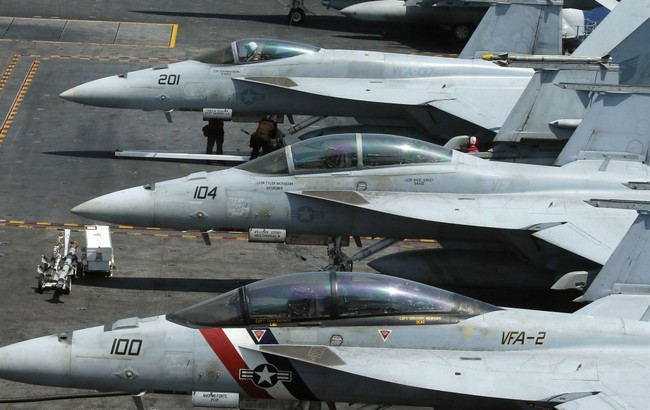
Within 48 hours of Lloyd’s withdrawal, two things happened simultaneously. The US Navy, operating through US Naval Forces Central Command, expanded its escort operations across the Gulf — effectively offering the physical protection that insurance underwrites. And American insurers began moving to replace Lloyd’s coverage entirely, stepping into a market that British financial infrastructure had monopolised since the reign of William III.
The Crown’s 300-year chokehold on global energy insurance was severed — not by war, not by sanctions, but by filling a vacuum created by an institution that blinked at the wrong moment.
The geopolitical message was unmistakable. America now controls both the physical escort corridor through the world’s most critical oil shipping lane and the financial infrastructure that makes commercial shipping through it possible. The strategic and economic stakes of the Middle East conflict have just acquired an entirely new dimension that most market analysts are not yet fully pricing.
The Oldest Playbook in the World
This is not a new strategy. It is the oldest playbook in geopolitics, applied with modern speed and precision. Britain understood it for three centuries — control the supply chain, control the insurance, control the financial flows, and you hold invisible leverage over every nation that depends on what moves through that supply chain. The British Empire was built as much on Lloyd’s and the City of London as it was on the Royal Navy. The two worked in concert, and together they made Britain the indispensable nation for global trade.
Now, for Lloyd’s, my read is that this withdrawal was not an action the insurer specifically wanted. It was a risk management decision. More than any other factor, what drove that decision is the feckless Labour Government being unable to manage the Royal Navy, and the Navy, in turn, being unable to protect British assets and the British people in places like Cyprus.
It is perhaps unfair to dump all this in the laps of Labour, because the Navy has been seeing a steady decline for decades under the guidance of both major British political parties. That said, it would be foolish not to note that they didn’t do anything about it, either. The administrations of the UK decided that other priorities were of greater importance. And Britain’s Reform UK party, with Nigel Farage leading the charge, has been having a field day with all of this. Farage in particular wrote on social media that “the Prime Minister needs to change his mind on the use of our military bases and back the Americans in this vital fight against Iran!” He said he prayed “for the right outcome for the wonderful Persian people” as “attacks against this evil regime in Iran begin.”
All this is going to play large in the next election, should England even manage to have one.
Promethean Updates gives us some background on all of this, with particular emphasis on how the bit with Lloyds has played out thus far.
There’s no kind way to put this: The state of the British Navy is nothing short of embarrassing.
The UK currently can’t even protect its base in Cyprus. The last permanently stationed warship in the Middle East, HMS Lancaster, was retired in December 2025 — and that constituted the first time no ship was permanently deployed there since 1980. So the UK was by definition weak in the region before any of this started. But the biggest factor in that weakness was a conscious decision on the part of the Labour government, not to get involved in Epic Fury. It finally altered that stance after intense pressure from the opposition at home, from the likes of Reform UK, and even from within the ranks of Labour back benchers.
HMS Dragon was sent only after Iran attacked that base in Cyprus. As of the last I knew (March 17), she was at the British base at Gibraltar, doing a logistics stop, taking on fuel and supplies. She left there on March 20, with her destination, according to the Royal Navy, being Cyprus. (See also: horse, barn door.)
For the first two weeks of Epic Fury, the Brits essentially sat on their hands, largely because PM Keir Starmer didn’t want to be seen as supporting President Donald Trump. With the increasing numbers of Muslim voters in the UK, Starmer likely feels himself under pressure not to get Londonistan involved in Iran. Doubtless, there’s also pressure from Buckingham Palace, which has had a controlling hand in oil shipments from the region for as long as they’ve existed.
Critics, most notably in the House of Commons, have been pointing out that the Unites States was massing assets in the region for well over a month, and that should have been a signal to prepare. Starmer’s government didn’t. Even France, who also is playing international politics by holding back on support for the efforts against Iran, had an aircraft carrier in the region before Dragon even left port.
As regards Iran’s threat to deploy mines, the UK is totally unable to respond. They operate (usually) a total of seven mine hunters. Of these, four are unavailable, and the remaining three are supposed to be protecting home waters and UK submarines.
And so, with all of this happening, Lloyds, which has been dependent on the Royal Navy for the last 300 years, to keep Lloyd’s charges safe, has had to withdraw it’s financial backing. So now, for the first time in those 300 years, insurance and the free flow of oil from the Gulf is no longer controlled from a little coffee shop in London, but by the United States. The positive economic impact for the U.S cannot be overstated. Lloyds was carrying about 30% of shipments through the Strait of Hormuz. No longer. Not only will the U.S. benefit, but so too will the seven different allies that stepped in to fill the gap that Britain’s fecklessness has left. Lloyds of London certainly will not.
It should also be noted that the Starmer government is currently all tied up in its scandal involving Peter Mandelson and Jeffry Epstein. Wikipedia I tend not to use, but in this case, they’ve got it right, so:
The relationship of the British politician Peter Mandelson with the American child sex offender Jeffrey Epstein has resulted in an ongoing political scandal in the United Kingdom with significant ramifications for the governing British Labour Party and Prime Minister Keir Starmer. Their friendship spanned at least from 2002 to 2011, continuing after Epstein’s first conviction in 2008. While their friendship had been public knowledge for some time, a fresh wave of scrutiny and public outrage erupted in September 2025 following the release of US court documents and a cache of private emails between the two men by the US House Oversight Committee, which ultimately led to Mandelson’s dismissal as the British Ambassador to the United States and his resignation from the Labour Party and from the House of Lords.
The released documents revealed the depth and nature of their relationship, particularly after Epstein’s 2008 conviction in Florida for soliciting prostitution from a minor. Among the most damaging early revelations were a 2003 birthday book message where Mandelson called Epstein his “best pal,” and emails from 2008 where he expressed support for Epstein, told him he “thought the world of him,” and advised him to “fight for early release” from his 18-month sentence. It also emerged that Epstein had paid for Mandelson’s travel in 2003 and that Mandelson had reportedly sought Epstein’s help with a banking deal while serving as a cabinet minister in 2010. In February 2026 there were further reports that Mandelson and his husband had received payments from Epstein, and that in 2009 and 2010 Mandelson allegedly passed government information to Epstein amid the 2008 financial crisis, while Mandelson was business secretary in the Gordon Brown ministry.
So, you can imagine that Starmer’s attention is divided at least, while he scrambles for his political life.
Finally, I pondered a while ago whether the British Monarchy would survive. With all this happening, that question gets amplified. Certainly Starmer’s slipping on proverbial banana peels. The British monarchy on the world stage is being diminished by these events as well, and my suspicion is that its recovery will not be a fast one, if it manages it at all.
Thought of the Day: Two things are infinite: the universe and human stupidity; and I’m not sure about the universe. — Albert Einstein.
Take care. Come back tomorrow and bring a friend or two. I’ll see you then.
Related: Iran and the Sick Cat
PJ Media’s investigative reporting and honest analysis, which you can’t get anywhere else, are why it’s important to become a VIP. Not only do you support the reporters and writers who support YOU, but you also get 60% off the regular price by going to this link and using the promo code FIGHT.