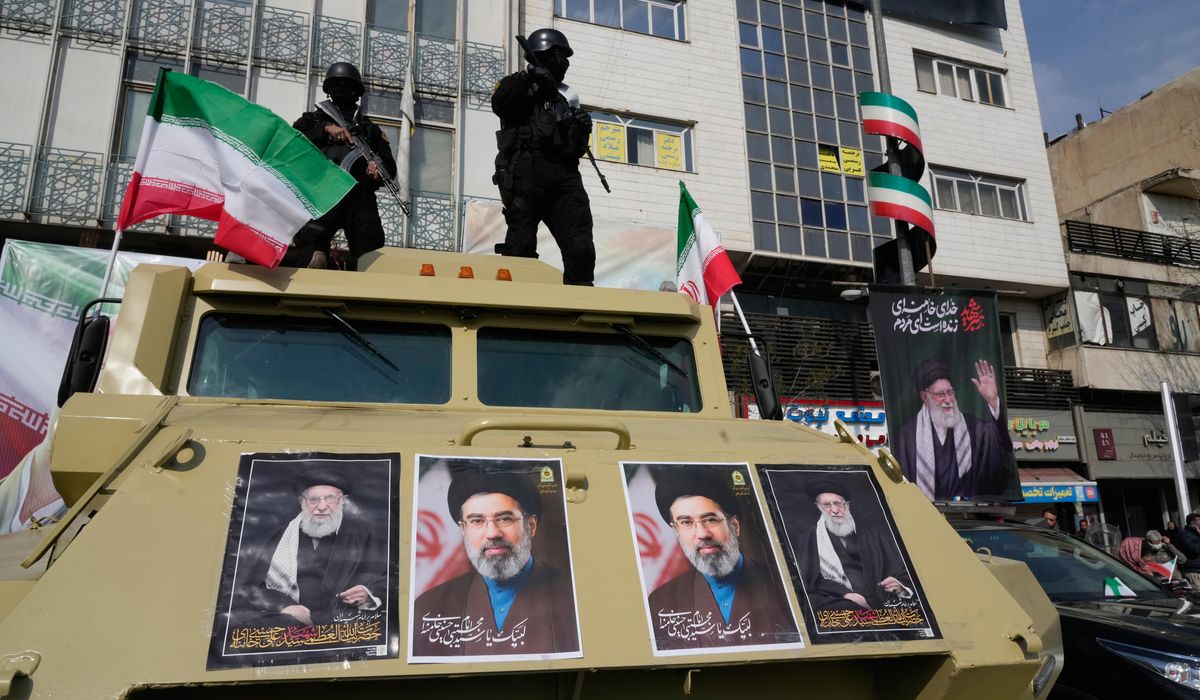
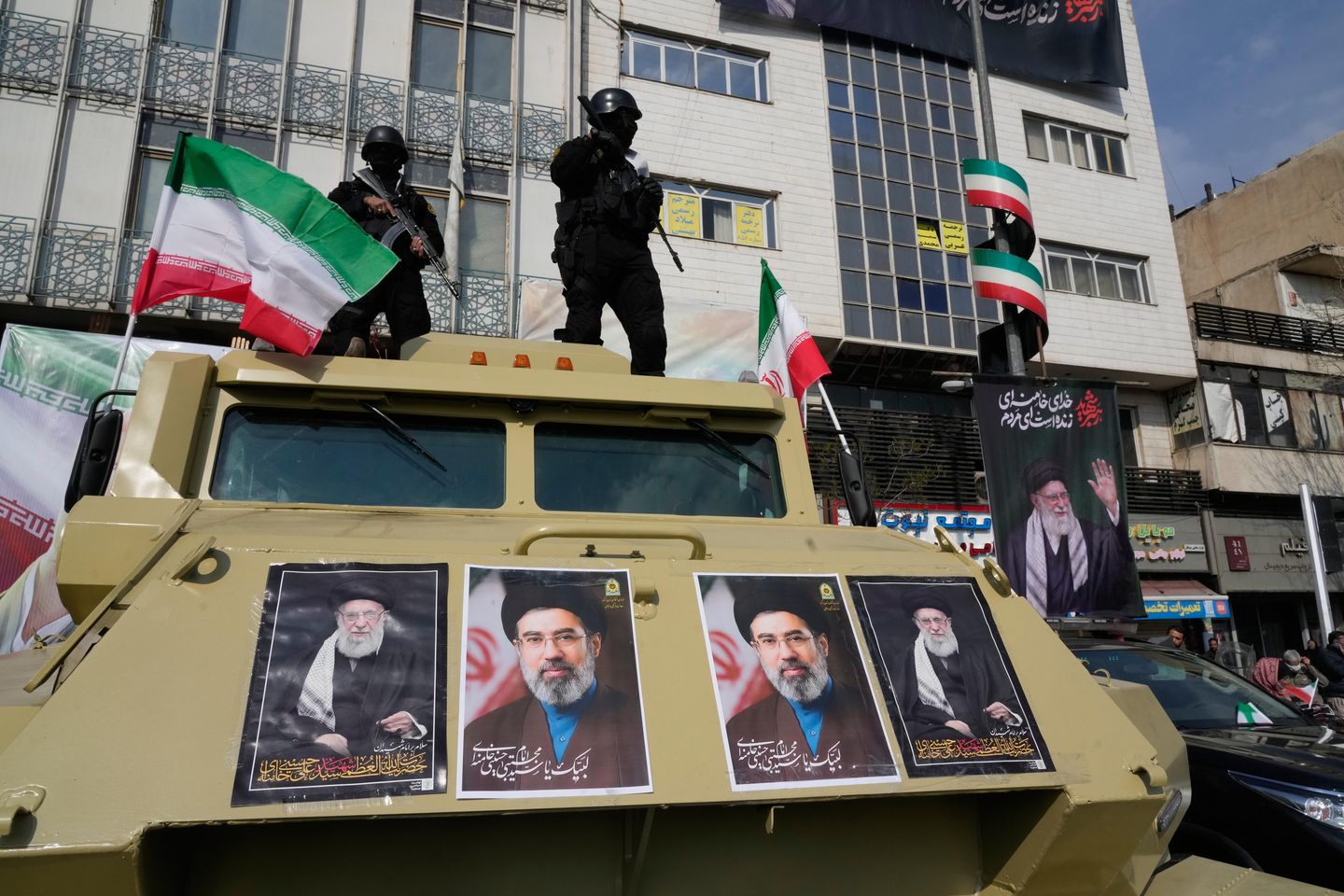
LONDON — Mojtaba Khamenei’s appointment to succeed his father as Iran’s supreme leader is unlikely to settle the question of who ultimately holds power in post-war Tehran.
For Iran’s divided opposition groups — many based outside the country — the decisive struggle is not clerical succession but whether the Islamic Revolutionary Guard Corps, the regime’s enforcers, can be dislodged.
Some analysts say Mr. Khamenei is a figurehead with the real power held by IRGC leadership. The IRGC has lost key commanders in the war, too, so loyalties and priorities may be in flux for Iran’s most ruthless military force.
Against that backdrop, a wide array of Iranian opposition groups — monarchists, republicans and ethnic movements — are positioning themselves for a post-Islamic republic future. The opposition remains fragmented, divided by ideology, and in some cases rivalries dating back decades.
The irony of Mojtaba Khamenei’s ascension is not lost on the country’s opposition: a revolution that overthrew the monarchy now appears to have produced one of its own
“The regime’s power base has narrowed further, relying primarily on the IRGC and intelligence apparatus making it more more fragile and vulnerable,” Mohammed Mohaddessin, a senior official in the National Council of Resistance of Iran, said in Washington on Thursday.
SEE ALSO: Iran targets energy infrastructure in across Gulf after Israeli attack on South Pars
Mr. Khamenei’s appointment has also faced internal opposition.
“Over 30% of the Assembly of Experts boycotted the vote,” Mr. Mohaddessin said. “And only 44 members, half of the Assembly’s members, support him.”
Mr. Mohaddessin is the chair of the Foreign Affairs Committee of the NCRI. Its principal member is the Mujahedin-e-Khalq (MEK). The NCRI announced the formation of a provisional government-in-exile in Paris on February 28th and held rallies across Europe. The NCRI is led by Maryam Rajavi, perhaps the only woman leading a national resistance movement in the region.
Founded in 1965 by three Muslim university graduates in opposition to the the-shah’s regime, the MEK is widely regarded by many analysts as one of the most well-funded and organized Iranian opposition groups.
While Baluchi and Kurdish militants have largely waged rural insurgencies, the MEK resistance units pursued a predominantly urban campaign against Iran’s IRGC and paramilitary Basij units.
Video clips shared with the media reportedly show MEK fighters attacking a governor’s office in Khuzestan province on March 16.
The group claims that on Feb. 23, it carried out an attack on then Supreme Leader Ali Khamenei’s compound in the heart of Tehran. Iranian state media at the time quietly acknowledged an attack had occurred but downplayed its significance.
Among exiled opposition figures, growing attention is being paid to Reza Pahlavi. As the son of the last shah of Iran, Mr. Pahlavi is a crown prince and has cast himself as a contender for the Iranian throne.
Ukrainian President Volodymyr Zelensky met with Mr. Pahlavi in Paris on March 13 to discuss the U.S.-Iran war.
“The Crown Prince and his team briefed me on signals they are receiving from inside the country,” Mr. Zelensky said on the social media platform X after the meeting, “The regime’s hierarchy has indeed already suffered significant losses, and it is crucial that the Iranian regime gains nothing from this and that the people of Iran have greater protection for their lives and more opportunities to determine their own fate.”
Monarchist groups that long to install a new shah and Kurdish groups demanding independence are just some of the key Iranian opposition groups. Other factions advocate transforming Iran into a secular republic, while nationalist movements tied to ethnic minorities — including Baluch and Arab groups — seek greater autonomy and cultural rights.
“I don’t know whether or not his country would accept his leadership,” U.S. President Trump said in the Oval Office when asked about Reza Pahlavi on Jan. 15. “Certainly, if they would, that would be fine with me.”
Analysts caution, however, that recent chants of “Javid Shah” (“Long live the shah”) during protests in Iran may reflect anger at the current regime more than organized support for a restored monarchy in any form.
Still, the return of a monarchy, even a constitutional one, would likely be more palatable to America’s Gulf Arab allies.
“Instinctive longing for the monarchy among protestors does not translate into an organized structure,” said Norman Ricklefs a former senior adviser to the Iraqi Ministry of Defense who is now the chairman of the NAMEA Group consulting firm. In an interview with The Washington Times, he said, “Opposition, both Kurdish and more general anti-regime, is divided and is not organized into a unified entity.”
Some analysts are skeptical of the prospects for regime change.
“An aerial campaign alone, even one as devastating as the current operation, is insufficient to dismantle a deeply entrenched autocracy. While the regime’s power was severely weakened by the loss of its top-tier leadership on Feb. 28, the IRGC’s structure remains capable of withstanding additional attacks,” said Ali Safavi, a member of the Foreign Affairs Committee of the Paris-based National Council of Resistance of Iran. “Overthrowing the clerical regime must come from within, achieved by the Iranian people and their organized resistance.”
The MEK’s military history offers a cautionary tale.
In 1988, at the end of the Iran-Iraq War, the group launched an incursion into Iran from Iraqi territory with the support of Saddam Hussein. The operation initially achieved surprising military success and penetrated deep inside Iran. The Iranian Army and the Revolutionary Guards, who often operated independently during the Iran-Iraq War, coordinated a quick response mobilizing tens of thousands of troops.
The incursion was beaten back before most Iranians knew what was happening.
The anticipated popular uprising against the Islamic republic failed to materialize.
Instead Iran used the moment to massacre thousands of political prisoners held in its dungeons. Mostly members of the MEK but also members of the Communist Party and other groups.
More than three decades later, the shadow of 1988 hangs over Iran’s fragmented opposition. As Kurdish militants and other groups again contemplate similar armed action, history offers a sobering reminder: regime weakness alone has never guaranteed regime collapse.