The U.S.-Iran war is certainly a modern fight, but many of its overarching themes feel familiar, deeply reminiscent of past Middle East wars and, in some ways, unaffected by massive leaps in military technology.
Oil prices, economic fallout and domestic politics are at the heart of the conflict and the decision-making processes of all major players. Controlling territory, including the strategically vital Strait of Hormuz, is paramount. Capturing key assets, such as Iran’s enriched uranium stockpiles, appears necessary.
Building international coalitions, as the Trump administration is now racing to do, is vital. Targeting an enemy’s leadership is a pivotal step toward achieving one’s goals.
Long-range missiles are irreplaceable for both offensive and defensive missions. Traditional airpower, featuring tried-and-true fighter jets piloted by the world’s best-trained crews, has been the deciding factor in giving the U.S. and its ally Israel the upper hand.
Analysts say the Iran war shows that many fundamentals of military clashes remain constant, no matter how many drones, robots, space-based capabilities, laser weapons or artificial-intelligence-powered cyber tools are introduced. At the most elemental level is what former White House National Security Adviser H.R. McMaster called the “continuities” of war: that conflict is inherently human, political, uncertain and subject to a contest of wills between the combatants.
Some specialists argue that the way the Iran war has unfolded could be a blow to “futurists” in Western military-industrial circles who believe the latest technology alone will define modern wars and single-handedly determine the victor.
“So-called futurists, technologists, technocrats … push unproven and habitually failed visions of the future of war while casting aside the steady march of the continuities in war,” said Amos Fox, a retired Army officer and Arizona State University professor who studies military technology and strategy extensively.
“Continuities include the fact that winning a war typically takes an army to control the terrain, governance, and population in the area being fought over,” Mr. Fox told The Washington Times. “It takes an army to defeat an army.”
Mr. Fox and other “futurist” critics say cutting-edge technology plays a crucial role in modern warfare, but the distinctions they draw center on whether that technology, in and of itself, can fundamentally alter the nature of war or whether core principles of warfare should be rewritten solely because of technological advancements.
No substitute for humans
Multiple examples are unfolding in real time.
Israel said Tuesday that it killed top Iranian security official Ali Larijani in an airstrike, and other key Iranian decision-makers also have been killed in recent days. Yet some key leaders, especially those whom analysts describe as in the “second tier” of the country’s leadership structure, have at times been difficult to track down.
The U.S. and Israel have no easy way to find and remove all of Iran’s enriched uranium or other key components of its nuclear program using only drones, robots or cyber tools.
Fully addressing both issues seems to require the most traditional of all military assets: troops on the ground inside enemy territory.
“We don’t appear to be easily finding the second tier of leadership, nor is the nuclear material easily or robotically accessible,” Michael O’Hanlon, senior fellow and director of research in foreign policy at the Brookings Institution, told The Times, explaining the limits of a technology-only approach to the war.
President Trump has been reluctant to commit U.S. ground troops to the Iran campaign, though the administration reportedly is considering dispatching Special Forces units to locate Iran’s enriched uranium stockpiles.
The value of alliances and the importance of domestic politics, both deeply important in conflicts throughout history, were also on display this week. Mr. Trump has struggled to assemble a coalition to help break Iran’s blockade of the Strait of Hormuz. That closure is severely limiting the flow of oil, which has driven up gasoline prices in the U.S. and put political pressure on the White House to clearly articulate its endgame in Iran.
The president said he was disappointed that European allies and others haven’t immediately signed up to help. Still, he said he doesn’t need those allies to achieve his objectives in the waterway.
“We don’t need too much help; we don’t need any help, actually,” Mr. Trump said Tuesday.
War of the future
One of the war’s highest-profile incidents so far harked back to the World War II era: A U.S. submarine used a torpedo to sink an Iranian warship. American fighter jets, Tomahawk missiles and other mainstays of the American military arsenal also have been central parts of the campaign.
That’s not to downplay the role of more modern tools. American space-based capabilities allow military personnel worldwide to communicate instantly and target Iranian military installations with pinpoint accuracy. Defense officials told The Times that Anthropic’s Claude AI is aiding American troops in the fight, despite an ongoing political and legal fight between the company and the Pentagon over how the tool should be used.
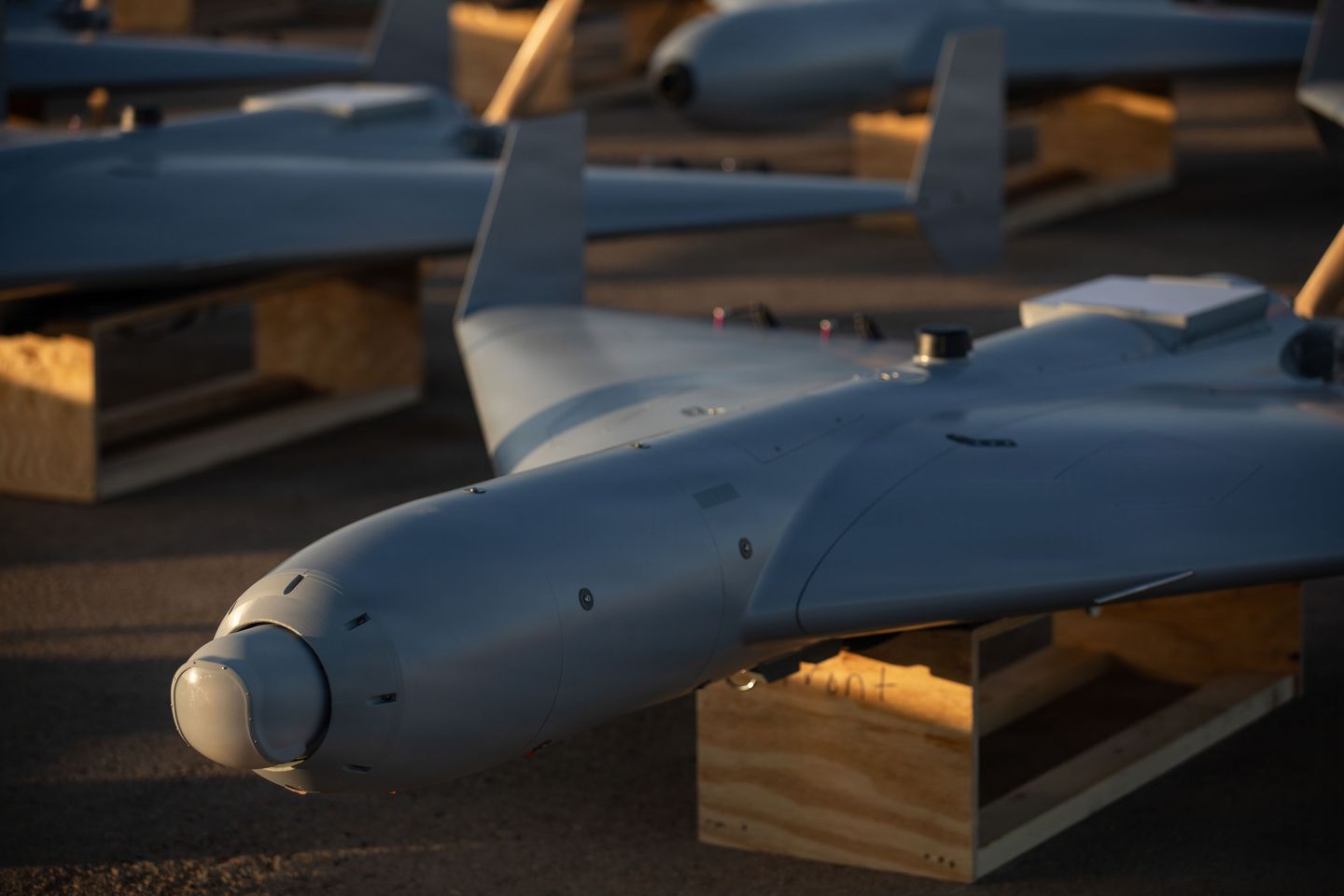
In the early days of the war, the U.S. used one-way attack drones, or “suicide” drones, for the first time ever in combat. The employment of the Low-cost Uncrewed Combat Attack System, known as LUCAS, marked a milestone for the American military.
Defense Secretary Pete Hegseth and other Pentagon leaders have made clear they believe American dominance of those technologies and others is crucial.
“Simply put, the United States must win the strategic competition for 21st-century technological supremacy: artificial intelligence, autonomous systems, quantum, hypersonics and long-range drones,” Mr. Hegseth said during a January speech at the SpaceX Starbase site in Texas. “Space capabilities, directed energy and biotechnology are the new areas of global competition.”
The question for military strategists is the extent to which those technologies can alter the continuities of war. Mr. McMaster, who served as Mr. Trump’s national security adviser during his first term, addressed that tension more than a decade ago.
“I think the American tendency … is to emphasize change over continuity,” Mr. McMaster said in a 2013 interview with McKinsey & Co. “We’re so enamored of technological advancements that we fail to think about how to best apply those technologies to what we’re trying to achieve. This can mask some very important continuities in the nature of war and their implications for our responsibilities as officers.”
• Tom Howell Jr. and Vaughn Cockayne contributed to this report.