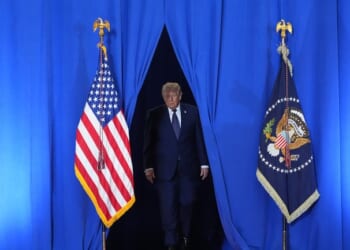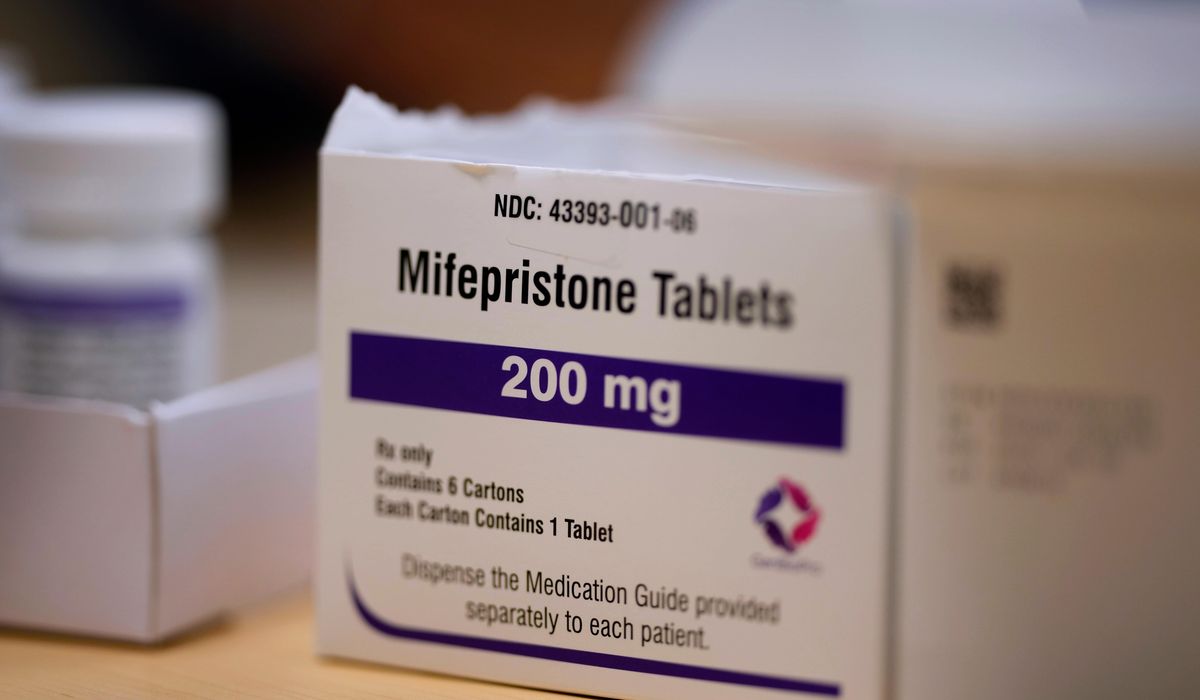
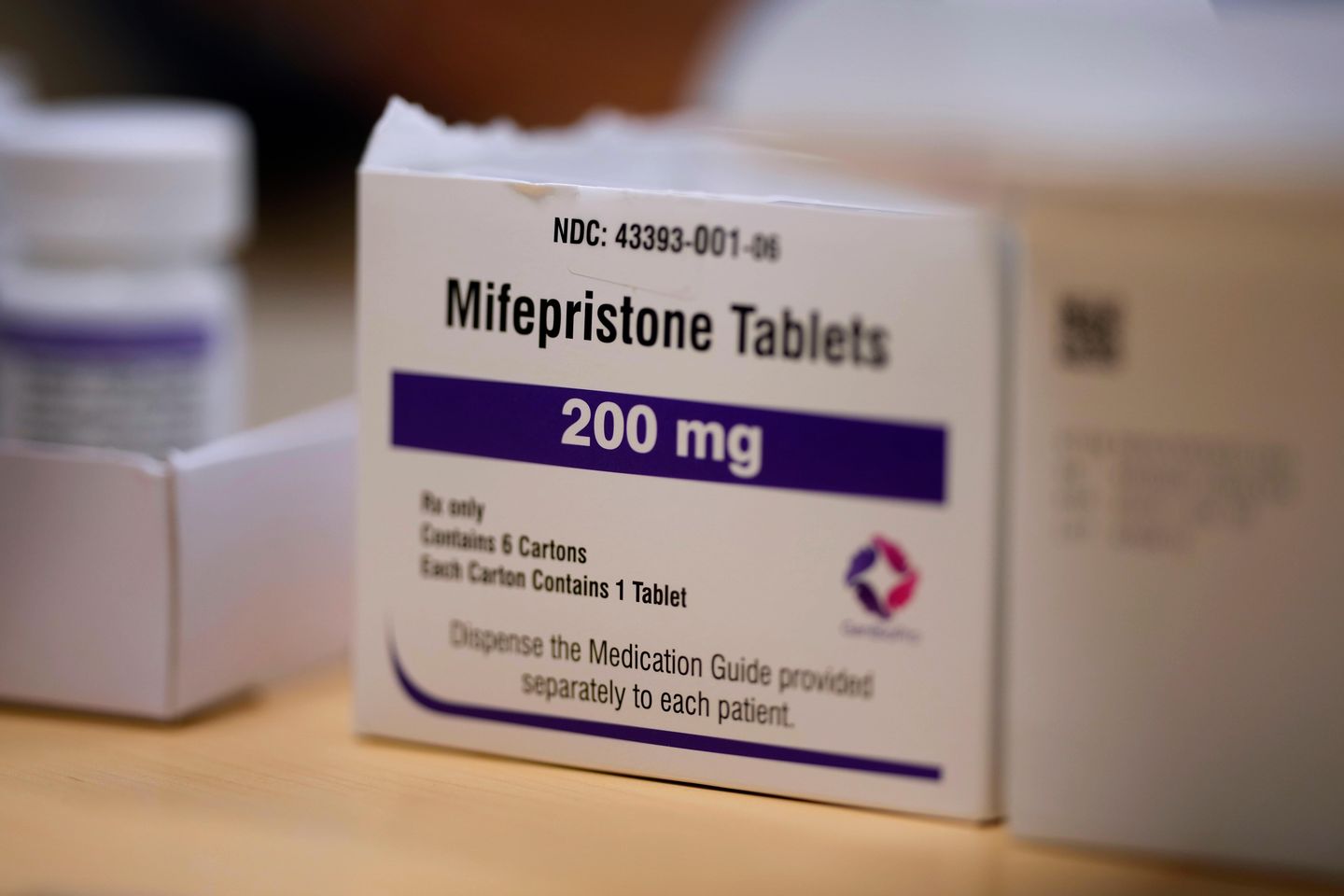
Pro-life advocates are accusing the Trump administration of selling out unborn children by asking a federal court to block Florida and Texas officials from keeping mail-order abortion pills out of their states.
The Department of Justice on Friday petitioned the U.S. District Court for the Northern District of Texas to postpone indefinitely a lawsuit from the states pending the outcome of a federal review of mifepristone, a key abortion drug.
Failing that, the Trump team requested the case’s dismissal, insisting the two states lack standing to sue because the Food and Drug Administration’s indefinite timeline for the review does not harm them.
“Florida and Texas threaten to short-circuit the agency’s orderly review and study of the safety risks of mifepristone,” government attorneys Brett Shumate, James Harlow and Noah T. Katzen wrote in the memorandum.
The number of abortions reported nationwide has grown steadily since the Supreme Court returned jurisdiction to the states in 2022, even as clinics shuttered in areas with restrictions.
Multiple studies attribute the trend to shield laws allowing doctors in liberal states to prescribe mifepristone for women in restrictive states after a virtual appointment.
Friday’s legal filing marked the third time this year that Justice Department lawyers sided against abortion-restricting states on the issue, following petitions to block similar lawsuits from Louisiana and Missouri.
“They think that limiting access to chemical abortions in pro-life states would hurt Republican candidates during the 2026 midterms,” said Michael New, a social research professor at the Catholic University of America and affiliated scholar at the pro-life Charlotte Lozier Institute.
“President Trump wants to keep Republican majorities partly because he is afraid of being impeached by a Democrat-controlled Congress,” Mr. New added in an email.
In a January court filing responding to Louisiana’s lawsuit, the Trump administration shifted from providing no timeline for the FDA review to announcing that it will take “a year or more to conduct.”
Additionally, the FDA has ignored conservative pleas to reverse a Biden-era policy that allows women to obtain the pills without an in-person medical examination, despite having the power to do so.
“You can’t make America great again by wading through the blood of innocent children and mothers,” Randall Terry, founder of the anti-abortion group Operation Rescue, said Monday.
Susan B. Anthony Pro-Life America, which has allocated $80 million to support pro-life Republicans in November’s midterm election, called Friday’s memorandum “a disgrace.”
“The Trump-Vance DOJ has clearly established a policy of siding with the abortion industry as it breaks laws, kills babies and harms women and girls,” said Marjorie Dannenfelser, the group’s president.
Conservatives note that 51 senators, 175 House Republicans and 21 state attorneys general have petitioned the FDA to overturn the Biden policy.
“In this case, justice delayed truly is justice denied,” said attorney Erik Baptist, director of the Center for Life at Alliance Defending Freedom, a Christian legal advocacy group suing to overturn the FDA policy.
In an email Monday to The Washington Times, the White House touted President Trump’s efforts to restrict federal funding for abortion and his appointment of the Supreme Court justices who voted to return jurisdiction to the states.
“President Trump is the most pro-life and pro-family President in history,” said Olivia Wales, a White House spokeswoman.
“President Trump and his entire administration will continue to boldly advance policies that protect the most vulnerable among us and promote the growth and success of America’s families,” Ms. Wales added.
Legal analysis
Medication abortions, also known as chemical abortions, commonly involve a two-drug regimen of mifepristone and misoprostol.
The pro-choice Guttmacher Institute estimates that 63% of abortions reported in the U.S. used this regimen in 2023, up from 53% in 2020 and 24% in 2011.
The Biden administration lifted in-person dispensing requirements during the pandemic. It further expanded access after the Supreme Court’s ruling.
Legal scholars note that Mr. Trump has never voiced interest in reversing these moves, despite his zeal to end federal abortion subsidies.
“He is carrying through on what he believes,” said Josh Blackman, a constitutional law scholar at the South Texas College of Law in Houston.
Jessie Hill, a reproductive rights legal scholar at Case Western Reserve University, said Friday’s news reinforces the theory that the White House wants “to wait until after the midterm elections” to devise a policy.
“While pro-life groups are unhappy with this move, pro-choice groups likely see it as an ominous sign that the administration is preparing to impose new restrictions in the near future,” Ms. Hill said in an email.
Legal scholars say the Trump administration’s recent moves leave pro-life activists with few options for curbing pill access.
Sen. Josh Hawley of Missouri and Rep. Diana Harshbarger of Tennessee, both Republicans, introduced legislation last week that would revoke the FDA’s approval of mifepristone.
Given the GOP’s thin legislative majorities, their bills are expected to fail.
Mary Ziegler, a leading historian of the legal abortion debate, said the only wild card will be if any courts refuse to dismiss the state lawsuits.
“It’s not outside the realm of possibility that the FDA review could last the rest of President Trump’s term,” said Ms. Ziegler, a law professor at the University of California, Davis.