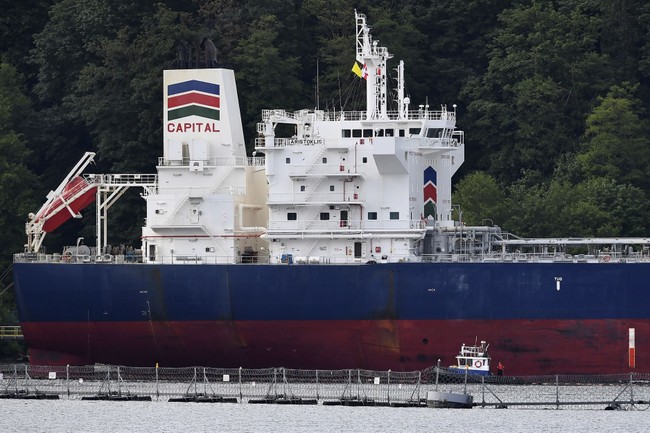
President Donald Trump approved a limited waiver that allows some Russian oil shipments to reach buyers after months stuck at sea. Around 130 million barrels have been floating in tankers with nowhere to go because sanctions blocked normal sales channels.
The waiver allows that oil to move into global markets for a short period while energy prices face pressure from the conflict in the Middle East.
The decision came as oil markets tightened following the confrontation with Iran and disruptions in regional shipping lanes. Energy traders have warned that sudden supply shocks can push gasoline and heating costs sharply higher. The oil already sitting on tankers represents existing production instead of new drilling, and allowing those barrels to move simply puts supply into circulation that otherwise would remain stranded.
Treasury Secretary Scott Bessent described the waiver as temporary and narrowly targeted, and structured the policy to only last a few weeks while markets stabilize. The approach attempts to prevent a sudden price spike without permanently weakening sanctions aimed at Moscow.
Oil that’s already been produced can’t be put back underground, and leaving it floating offshore does nothing to reduce Russia’s revenue while tightening global supply.
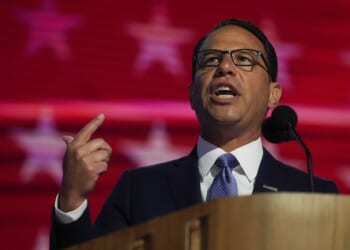
The move immediately triggered criticism from Sen. Adam Schiff (D-Calif.), who argued that any easing of sanctions benefits Russian President Vladimir Putin. Schiff’s response frames the issue as a simple choice between punishing Moscow and allowing any Russian oil into the global market.
Schiff, a longtime critic of President Trump and his administration, said the Treasury Department’s policy change will ultimately benefit Moscow.
“And you’re darn right when you asked the secretary about this: It is rewarding Russia, and it is punishing Ukraine,” he added, referring to an earlier “Meet the Press” segment with Energy Secretary Chris Wright. “And for the president, when he’s criticized about lifting the sanctions on Russia, to somehow turn around and blame [Ukrainian President Volodymyr] Zelensky, blame Ukraine.”
“No, Russia is the problem here,” he continued. “And we’re enriching our adversary, Russia, at Ukraine’s expense.”
The real world rarely works that neatly; oil prices respond to supply and demand across a global market. When a large volume of oil becomes trapped outside normal trade channels, prices rise everywhere. American drivers pay more at the pump, and businesses face higher transportation costs.
That ripple moves through the entire economy.
Trump’s decision stands in sharp contrast to what happened during President Joe Biden’s presidency. Biden ordered large releases from the Strategic Petroleum Reserve in an attempt to lower gas prices, a decision based entirely on political strategy. Those drawdowns pushed hundreds of millions of barrels out of the nation’s emergency stockpile, creating a short burst of additional supply but also draining a reserve designed to protect the country during true supply emergencies.
Energy specialists warned at the time that repeated releases from the reserve weakened a critical safeguard: the SPR exists for disruptions that threaten the nation’s energy security, and selling those barrels to influence short-term gas prices left fewer supplies available for a genuine crisis.
Trump’s approach works from a different premise. Instead of tapping America’s emergency stockpile again, his administration chose to unblock supply that already exists in the global system. The oil sitting in tankers has already been pumped, transported, and paid for. Allowing those barrels to reach refineries increases available supply without touching domestic reserves.
The decision also recognizes a broader economic reality. Energy prices influence nearly every sector of the economy. Higher fuel costs raise the price of shipping, manufacturing, and food production. Even small increases at the pump affect household budgets across the country.
Schiff’s criticism treats the situation as a simple moral equation while ignoring those broader pressures. Global oil markets operate through complex interactions between supply, transportation, geopolitics, and financial speculation, forcing presidents to weigh all those forces when making policy decisions that affect millions of families.
Trump’s waiver doesn’t eliminate sanctions against Russia, and it doesn’t open a permanent channel for Russian exports. The measure simply allows oil already stranded on the ocean to enter the market while Middle East tensions create new supply risks. Once the waiver expires, sanction rules return to normal.
The contrast highlights two very different governing philosophies. One approach drains America’s own emergency supply to shape short-term prices, while the other releases oil that already exists in the global system while preserving domestic reserves for future crises.
Energy policy rarely offers perfect choices. Leaders must decide which option protects American consumers while maintaining long-term security.
President Trump chose a step designed to keep fuel affordable without weakening the country’s strategic backup.
If you enjoy columns that break down complicated policy decisions without political theater, become a PJ Media VIP member today and use promo code FIGHT to save 60% on your subscription and gain full access to exclusive commentary and analysis.