Iran is routinely called the most zealous sponsor of terrorism, both in the Middle East and throughout the world, for good reason. The grim clerics who have ruled the country with an iron fist since the fall of the Shah of Iran are thought to have greenlit wave after wave of bombings, assassinations and political kidnappings for nearly 50 years.
President Trump and top White House officials cited Iran’s status as a state sponsor of terrorism and its support of militant proxies in the region as a central justification for Operation Epic Fury, the ongoing U.S. military campaign against Tehran.
In his statement Saturday announcing the start of the mission, Mr. Trump called the Iranian leadership “a vicious group of very hard, terrible people.” He said Iran’s malign activities directly endanger the U.S., both at home and abroad, along with allies around the world.
“For 47 years, the Iranian regime has chanted, ‘Death to America,’ and waged an unending campaign of bloodshed and mass murder, targeting the United States, our troops and the innocent people in many, many countries,” the president said. “Iran is the world’s No. 1 state sponsor of terror, and just recently killed tens of thousands of its own citizens on the street as they protested.”
Sen. Lindsey Graham, South Carolina Republican, said the U.S. and Israeli airstrikes Saturday that killed Iran’s supreme leader, Ayatollah Ali Khamenei, were a turning point for the Middle East.
“The mother ship of terrorism is sinking. The captain is dead,” Mr. Graham said Sunday on NBC’s “Meet the Press.” “The largest state sponsor of terrorism, Iran, is close to collapsing.”
The takeover of the U.S. Embassy in Tehran in 1979 by loyalists of Ayatollah Ruhollah Khomeini can be pinpointed as the origin of the enmity between the U.S. and Iran. Iran wasn’t added to the list of state sponsors of terrorism until 1984 during the Reagan administration, after a series of major attacks that the U.S. traced back to Iranian support.
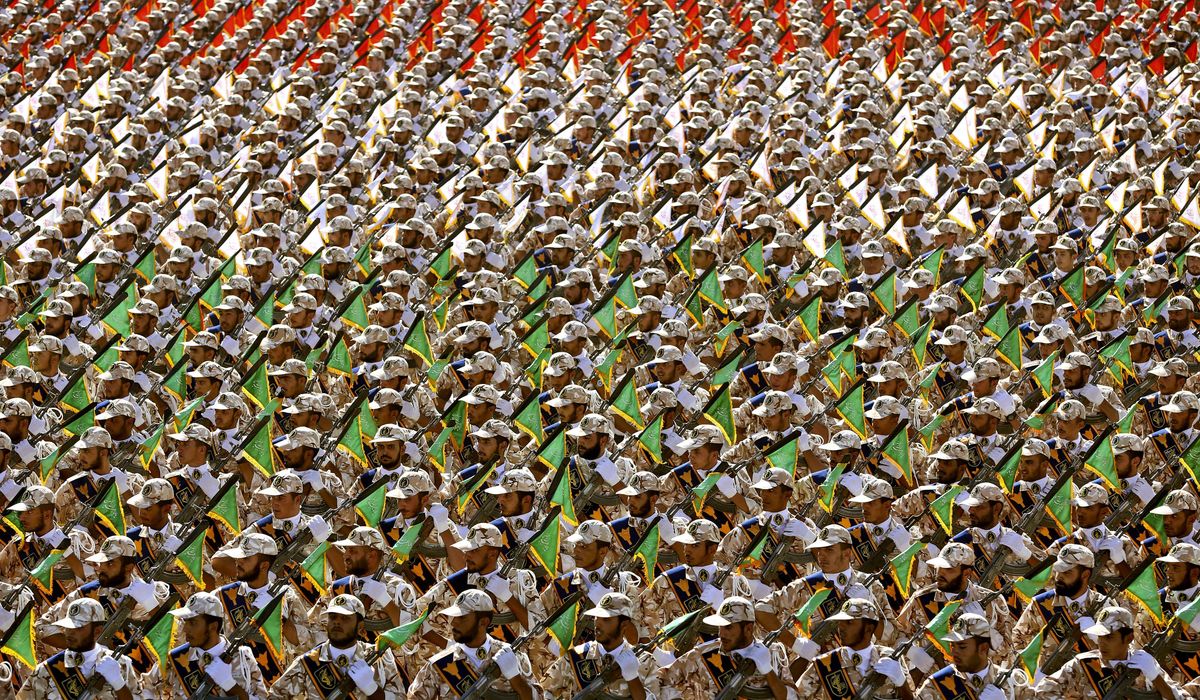
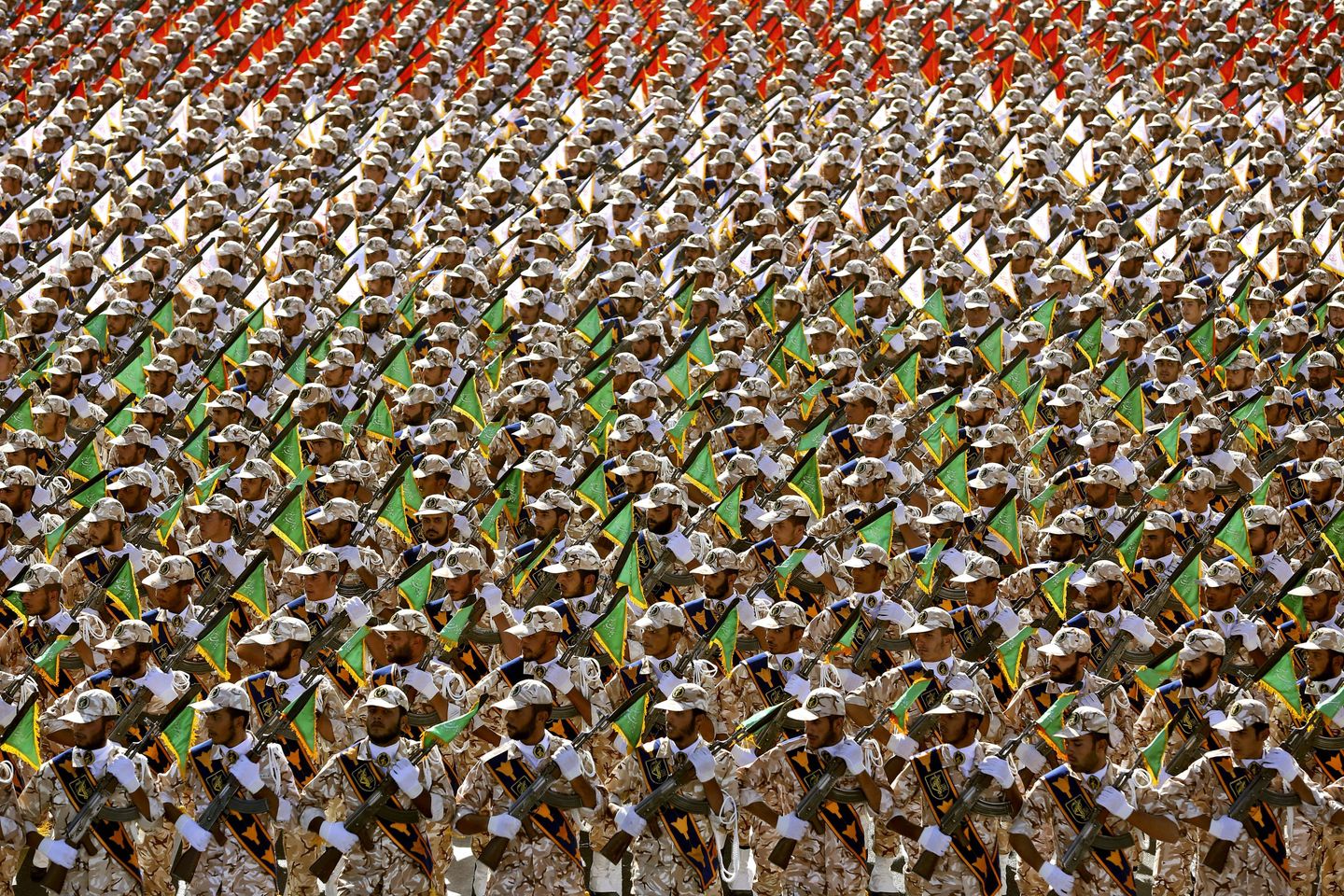
Tehran was linked to the 1983 Marine barracks bombing in Beirut that killed 241 U.S. service members, mostly Marines, and the bombing of the U.S. Embassy in Lebanon that killed 63 people, including 17 Americans. Iran relied on the Islamic Revolutionary Guard Corps’ Quds Force to provide support for terrorist groups such as Hezbollah to create instability in the region.
The State Department said the Iranian regime’s policy of “exporting the Islamic Revolution” by training and arming militant groups across the Middle East was meant to undermine Western economic influence and secular Arab governments.
Priti Patel, the British shadow foreign minister, said the “brutal and barbaric regime” had killed tens of thousands of its own people and threatened Iran’s neighbors.
“Iran commits barbarities against foreign civilians through their terrorist surrogates, Hezbollah, Hamas and the Houthis,” Ms. Patel said last month at the Hudson Institute think tank. “They are united in seeking to destroy the international order built by us and by our allies.”
She said Iran backed and funded antisemitic demonstrations in Britain meant to intimidate the country’s Jewish community.
“They support the proliferation of nuclear weapons and conspire to develop nuclear arsenals that threaten us,” Ms. Patel said. “They are committed to undermining our democracies and weakening the resolve of the West.”
The 1979 hostage crisis, in which Iranian revolutionaries held 52 Americans for 444 days, established the Islamic republic’s precedent for violating diplomatic norms. Iranian agents were also linked to the killings of dissidents, including the 1992 slaying of a group of Iranian-Kurdish opposition leaders at a restaurant in Berlin. High-ranking Iranian officials were behind the 1994 bombing of the AMIA Jewish community center in Argentina, officials said.
Several countries, or groups of nations such as the European Union, officially declared either Iran itself or the Islamic Revolutionary Guard Corps as state terrorism sponsors. Australia sanctioned the IRGC in November after it determined that Iranian officials had orchestrated attacks against the country’s Jewish community.
“Listing the IRGC is an important deterrent and disruption to terrorist activity, and puts members of the public on notice that [it] is a state sponsor of terrorism under Australian law, and certain dealings with them are now criminal offenses,” Australian officials said. “This listing is a reminder that terrorist activity does not stop at our borders.”
Australian lawmakers said the designation of the IRGC will empower security officials to stamp out hatred and violence.
“All Australians deserve to feel safe, welcome, and at home. It is this view that underpinned the legislative changes which have enabled the listing of the IRGC,” said Home Affairs Minister Tony Burke. “The Australian government is committed to keeping Australians safe and restricting the operation of extremists in our country, no matter their place of origin.”