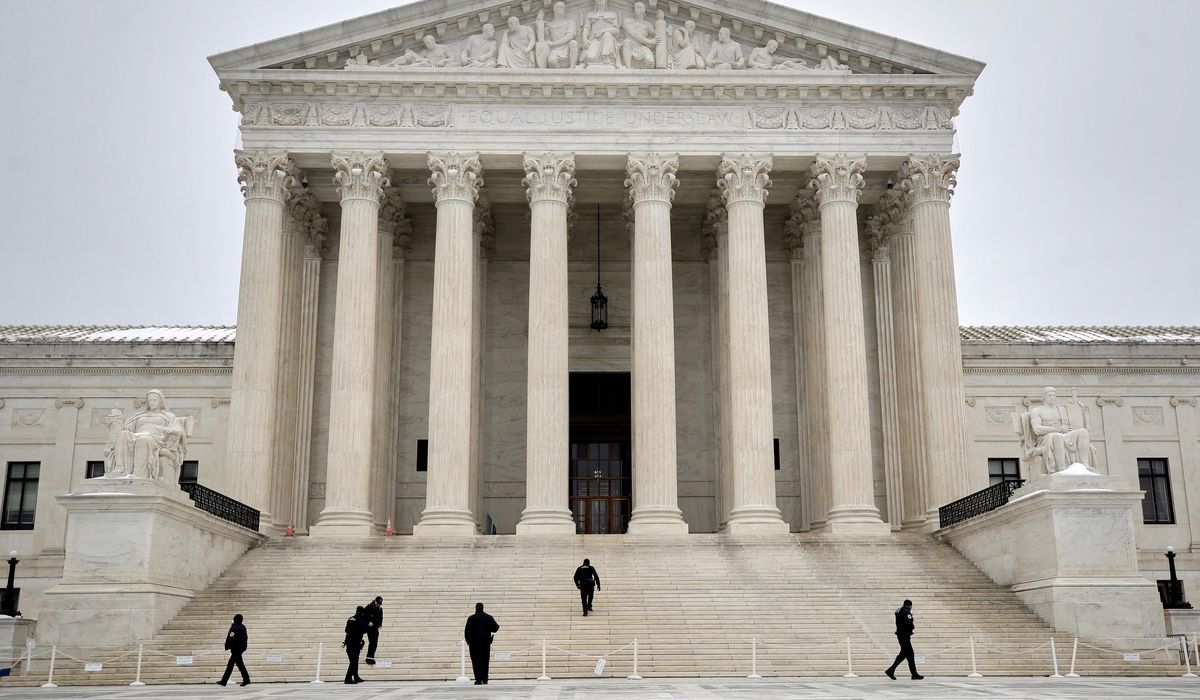
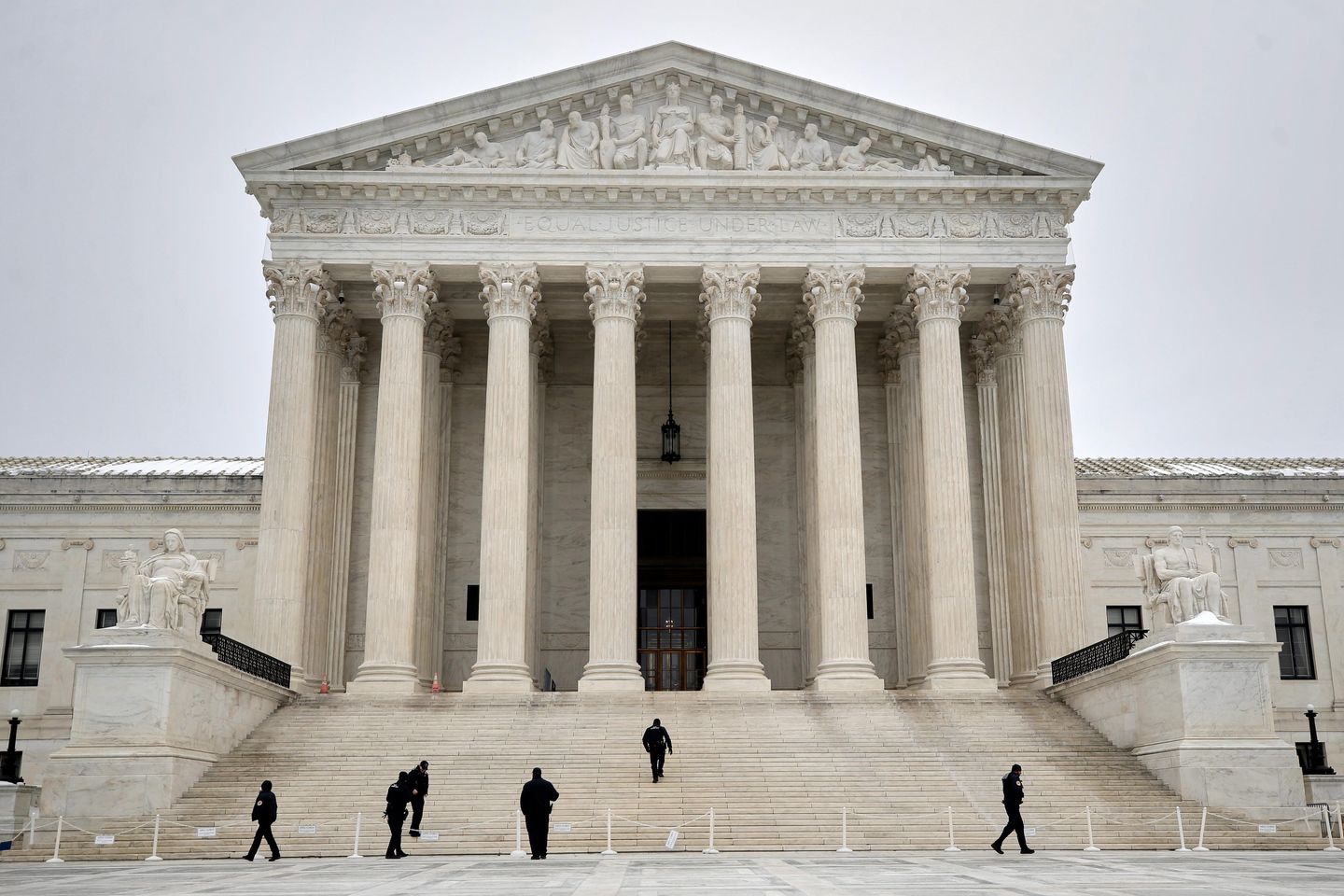
The Supreme Court on Monday stepped into the intersection of drug use and gun ownership, trying to sort out what level of marijuana use makes someone so dangerous that they lose their right to possess a firearm.
Justices seemed sympathetic to the plight of the casual marijuana user but worried about issuing a ruling that opens the door for gun possession by users of heroin, methamphetamine or strong hallucinogens.
Some of the justices used the case to attack the broader state of gun jurisprudence, saying the high court’s 2022 Bruen decision, which said only gun restrictions that would have been countenanced by the nation’s founding era can survive constitutional scrutiny.
Given that there were no drug laws to speak of at the founding, the Department of Justice argued that laws allowing gun restrictions on public drunkards were a good enough comparison to justify modern bans on drug users.
“When you habitually used intoxicating substances, you can present special dangers,” Deputy Solicitor General Sarah Harris told the court.
But Justice Ketanji Brown Jackson said the founders only applied those restrictions to people who were “falling down drunk in the streets.”
“That’s what it means to be a habitual user back then,” said Justice Jackson, a Biden appointee. “That’s not what we have here.”
The case involves Ali Hemani, a dual citizen of the U.S. and Pakistan, whom U.S. authorities have suspected of a propensity to radical Islam and of being a drug dealer.
The FBI searched his home and found drugs. He was charged with being in possession of a gun while being a habitual user of marijuana.
Justices said the evidence in the case points to Mr. Hemani using marijuana a few times a week. It’s not clear what his actual usage is, but most justices struggled to see where the presented facts would make him the kind of public danger who should be barred from possessing a gun.
Complicating matters is that the status of marijuana law is uncertain. Nearly half of the states have decriminalized recreational use, and others allow expansive medicinal use.
At the federal level, cannabis remains a Schedule 1 drug, deemed the most dangerous, but the administration has proposed lowering its status to Schedule 3.
Chief Justice John G. Roberts Jr. kept prodding Erin Murphy, Mr. Hemani’s lawyer, to draw lines that would prevent a ruling for her client from opening the door to challenges involving other drugs.
“Why doesn’t it apply to any drug?” Said Chief Justice Roberts, a George W. Bush appointee.
The ban on drug users possessing guns is part of a longer list of so-called “prohibited persons” in the Gun Control Act. Also on the list are felons, fugitives, those adjudicated as a “mental defective,” illegal immigrants and those who have been convicted of misdemeanor domestic violence or are the subject of a court-issued protection order.
The justices in 2024 upheld that latter prohibition, though said it requires an individualized determination of someone’s danger.
Cases are working their way through the courts challenging some of the other areas, including nonviolent felony convictions and illegal immigrants. Ms. Harris told the justices that they could unwind a number of those bans if they side with Mr. Hemani in this case.
The search for workable lines to draw dominated the argument.
Justice Amy Coney Barrett, a Trump appointee, focused on the fact that some drugs can be legal when taken by one person but illegal for others, and why one would be deemed too dangerous to possess a gun.
She hypothesized one couple in which a husband has been prescribed Ambien and his wife takes it occasionally without a prescription. She also posited the case of a college student during exams who raided his roommate’s supply of Adderall.
“What is the government’s evidence that using marijuana a couple times a week makes them dangerous?”Justice Barrett asked.
Justice Brett M. Kavanaugh, another Trump appointee, wondered about the limits of sanctions. He asked Ms. Harris if the government could ban a drug user from owning a car.
Justice Elena Kagan, an Obama appointee, raised ayahuasca, a psychedelic brew used in South America that she called an “intense hallucinogenic” that can last a long time but that is not addictive.
She said Congress would have a good reason not to want someone to possess a gun while tripping on the drug, but lawmakers might struggle to craft that law if the court rules for Mr. Hemani.
Justice Neil M. Gorsuch pointed out the founders never dealt with illegal drugs. Cocaine was first produced in 1855 and heroin in 1874. Marijuana wasn’t used as a drug in any significant sense until the 20th century.
“So we don’t know what those who adopted the Second Amendment or the 14th Amendment thought about illegal drug use, per se,” said Justice Gorsuch, a Trump appointee.
Alcohol use has become a proxy for drug use, with the government pointing to laws imposing gun restrictions on habitual drunkards.
Justice Gorsuch pointed out the levels of alcohol countenanced by the founders — and that didn’t cross any lines — was pretty extreme. He said John Adams took his breakfast with a tankard of hard cider, James Madison drank a pint of whiskey a day, and Thomas Jefferson had three or four glasses of wine with every dinner.
Ms. Murphy said the founding laws didn’t apply to drinkers but rather to habitual drunkards — those whose use was so extraordinary it made them a public danger.
“Alcohol was never illegal at those times,” she said. “What you had to look at was how the use of that substance was impacting someone’s ability to function in their day-to-day life.”