1. What tariff changes did President Trump announce over the New Year holiday?
Mr. Trump delayed a planned increase in tariffs on imported upholstered furniture, kitchen cabinets and vanities for one year, keeping the current 25% rate instead of raising it to 50% for cabinets and vanities and 30% for furniture as originally scheduled for Jan. 1. Separately, the U.S. drastically reduced proposed tariffs on Italian pasta makers, lowering rates from as high as 91.74% to between 2.26% and 13.98% for major producers.
2. Why did the administration delay the furniture tariff increases?
The White House cited “productive negotiations with trade partners to address trade reciprocity and national security concerns with respect to imports of wood products.” Mr. Trump believes the tariffs will help revive U.S. furniture-making in places like North Carolina, but he has shown willingness to adjust tariff levels based on negotiations with affected countries and industries.
3. What’s behind the reduction in pasta tariffs?
The reduced pasta tariffs came as part of an anti-dumping probe by the U.S. Commerce Department, with Italian authorities crediting “constructive cooperation shown by Italian companies” and support from the Italian government. The administration clarified that the initially proposed sky-high tariff rates were preliminary assessments based on limited data, and the final reduced rates will be imposed once the dumping probe concludes in March.
SEE ALSO: Trump delays big tariffs on furniture, kitchen and bathroom cabinets for one year
4. What legal challenge threatens Mr. Trump’s tariff authority?
The Supreme Court is considering whether Mr. Trump overstepped in using the International Emergency Economic Powers Act to impose blanket tariffs, with blue states and small businesses arguing he violated the Constitution by usurping Congress’s power to raise revenue. Key justices appeared skeptical during November oral arguments, and the administration estimates it could have to refund $750 billion to $1 trillion in collected tariffs if the Court rules against the president, with companies like Costco already filing lawsuits to secure potential refunds.
5. How has Mr. Trump’s approach to tariffs evolved during his second term?
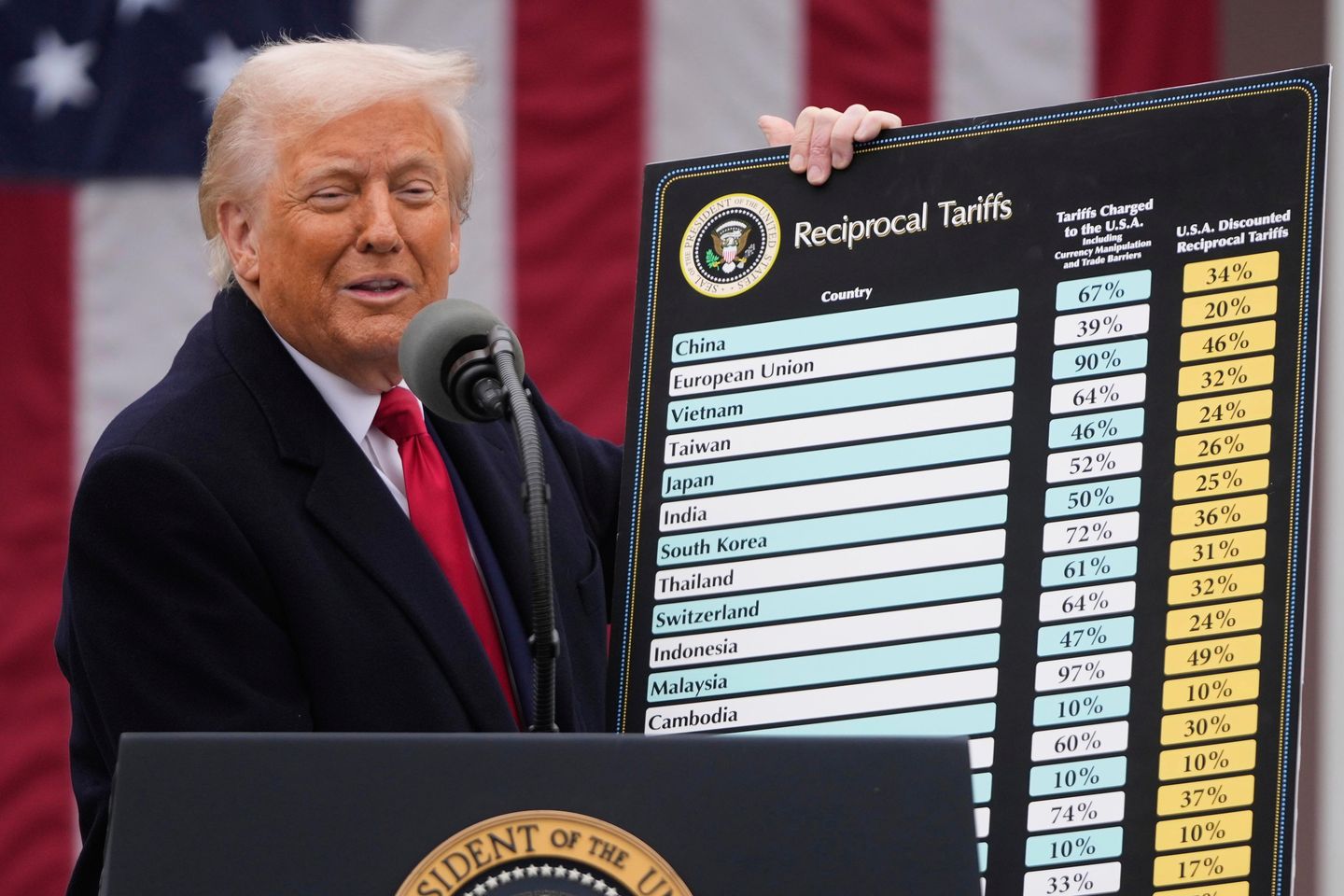
Mr. Trump has taken an on-again, off-again approach, announcing sweeping “Liberation Day” tariffs on dozens of trading partners in April before pausing them due to negative market reactions, then striking deals with foreign partners by late summer that assigned rates ranging from 10% to 50%. He also lowered tariffs on Brazilian coffee, foreign fruits and imported beef in the fall to help reduce grocery prices, with critics arguing these adjustments amount to a tacit acknowledgment that tariffs can raise consumer prices.
Read more: Donald Trump delays big tariffs on furniture, kitchen and bathroom cabinets for one year
This article is written with the assistance of generative artificial intelligence based solely on Washington Times original reporting and wire services. For more information, please read our AI policy or contact Ann Wog, Managing Editor for Digital, at awog@washingtontimes.com
The Washington Times AI Ethics Newsroom Committee can be reached at aispotlight@washingtontimes.com.