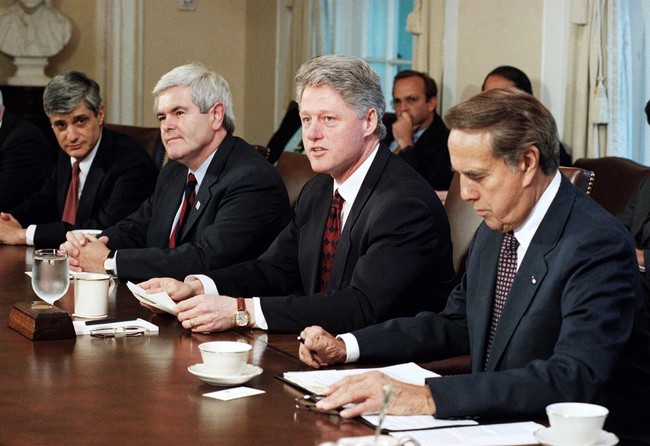
Democrats in 1995 loved this speech by President Bill Clinton, which focused on immigration, enforcement, national interest, and credibility. Speaking without apology and ideological hedging, describing illegal immigration as harmful to American workers, straining public resources, and undermining respect for the rule of law.
“Our nation was built by immigrants. People from every region of the world have made lasting and important contributions to our society. We support legal immigration, but we won’t tolerate immigration by people whose first act is to break the law as they enter our country,” Clinton said.
“We must continue to do everything we can to strengthen our borders, enforce our laws, and remove illegal aliens from our country. As I said in my State of the Union address, we are a nation of immigrants, but we’re also a nation of laws. And it is wrong and ultimately self-defeating for a nation of immigrants to permit the kind of abuse of our immigration laws we have seen in recent years,” he continued.
Those written words didn’t spark outrage but drew bipartisan agreement and little controversy.
Today? Nazi, storm troopers, extremism, etc.
Thirty years display the amazing shift in modern political culture regarding immigration policy.
What Clinton Actually Said
The 1995 version of Bill Clinton called immigration reform fair, arguing that illegal entry placed lawful immigrants at a disadvantage, you know, those that followed the rules and waited their turn. Clinton warned that unchecked illegal immigration depressed wages, while eroding confidence in government.
Looking through the YouTube time machine, you’ll see Democrats applauding the speech and Republicans largely agreeing. And why not? The language he used landed as practical governance over provocation.
Same Words, New Condemnation
Reactions dramatically changed when President Donald Trump used the same words and language decades later. Trump’s remarks drew accusations of cruelty and authoritarianism; enforcement became recast as moral failure, and familiar policy arguments suddenly carried labels once reserved for genuinely extreme ideologies.
The policies remain rooted in existing law, while the outrage reflected cultural realignment, not legal novelty.
Why the Shift Matters
If anybody tried denying Clinton’s record, the debate becomes distorted, suggesting immigration enforcement becomes controversial only when politics change, a version of history that fails basic scrutiny.
Building slowly, we find that enforcement didn’t grow harsher, enforcement tolerance narrowed, and arguments once treated as common sense became framed as something taboo because they conflicted with today’s activist priorities.
The funny thing? Clinton’s speech still exists online, and the transcript remains public, illustrating plainly spoken words, regardless of who repeats them.
Final Thoughts
Scandal’s seven letters never saw the light of day when immigration enforcement crossed party lines, as Clinton articulated clearly in 1995. When Trump echoed those words years later, he was condemned for having the gall to do so.
The difference is greater than the 30-year timeline or policy, but in political memory. As the movie line goes, “This is the West, sir. When the legend becomes fact, print the legend.”
In this case, when history becomes inconvenient, silence replaces honesty, despite facts remaining unchanged, even when reactions don’t.
Political arguments work best when grounded in memory rather than selective outrage. PJ Media VIP exists to preserve context, confront revisionism, and keep debates anchored in reality rather than narratives. Support independent analysis that refuses to erase the past.