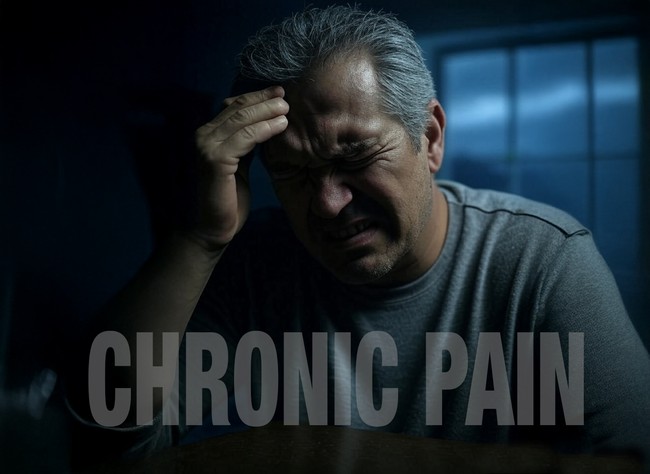
There’s one aspect of chronic pain that most people never see, and one of the hardest changes is how it shrinks a person’s social world.
It’s one of the best examples of how chronic pain reaches far beyond the body.
At first, the changes seem small; plans get canceled because a flare-up hits at the wrong time, a dinner gets pushed back, then missed, or a weekend outing turns into a quiet night at home.
It doesn’t seem significant, but those moments add up. Eventually, invitations become rare because friends stop asking, but not out of anger; the unpredictability makes it easier to move on without you.
People living with chronic pain often describe a slow drift away from others. Work relationships fade when hours are cut or jobs are left behind. Casual friendships disappear when showing up becomes uncertain. Even strong relationships feel strain when the same explanation has to be steadily repeated and when there’s no clear fix to offer.
Researchers have tracked these patterns when adults living with chronic pain report higher levels of social isolation and fewer reliable support connections. Daily physical activity drops as movement becomes harder while fatigue quickly sets in. As activity decreases, emotional strain grows, which intensifies the experience of pain itself.
The impact becomes even sharper for younger people, something Paula Forgeron has studied in Canada.
According to Statistics Canada, one in five people will experience chronic pain in their lifetime, representing 7.6 million people in Canada. Yet people living with chronic pain generally face disbelief, and their pain experiences may be invalidated by those around them, resulting in stigmatization. Research conducted by Professor Paula Forgeron, of the School of Nursing at the University of Ottawa, has demonstrated that children and adolescents living with chronic pain often deal with an added challenge. These negative social experiences occur during periods of major social and emotional development.
Fully adjusted regressions showed that lonely individuals had 2.1 times higher odds of experiencing physical pain, had 1.8 times higher odds of having health problems, and were 25.8% more likely to experience distress than non-lonely ones. Demographic characteristics and satisfaction with social support and opportunities to meet people statistically accounted for 14% of the association between loneliness and pain. Health problems statistically accounted for 18.9% of the same association, whereas distress statistically accounted for 60.2%. In formal regression models, the associations between loneliness and pain were slightly more pronounced in females than males, but similar across ages. Our findings show a strong association between loneliness and physical pain, that was to a large degree statistically accounted for by psychological distress, and to a lesser extent by physical health, and socio-economic disadvantage. Importantly, these associations varied in strength across countries, pointing towards the importance of cultural factors. These findings shed light on the necessity for further cross-cultural and longitudinal research into the relationship among loneliness, pain, and distress.
Losing simple interactions, like quick chats or an after-work drink, removes one of the few natural breaks from constant discomfort.
The numbers behind chronic pain help explain the scale of what’s happening. In 2023, 24.4% of U.S. adults lived with chronic pain, and 8.5% dealt with high-impact pain that limits work or daily life.
When adding women and adults age 65 and older, those numbers rise, but the pattern crosses all groups.
It’s a domino effect; as pain limits movement, work, and social events, daily contact with people becomes challenging, with many people describing feeling guilt for canceling plans or frustration when others don’t understand why something simple now feels unreachable.
That disconnect builds over time when the number of conversations dwindles and light conversations begin to fade. Even when people stay in your life, the gap in understanding creates distance.
The cycle becomes self-sufficient, where pain leads people to pull back to avoid discomfort or judgment. Friends and family might also step back, not knowing how to help.
Weeks turn into months, where what was temporary becomes routine, when quiet evenings replace shared experiences, and the loss isn’t just activity: it’s connection.
There have been several studies on pain and relationships that found that supportive relationships ease the strain of chronic pain, while stress within relationships makes symptoms worse.
It found that aging African Americans who reported negative or strained relationships with their children – particularly children who were demanding, critical, or irritating – were more likely to develop chronic pain over a 10-year period. However, family support characterized by warmth, reliability, and dependability saw the opposite, with the protective effects from pain exceeding the benefits gained by vigorous physical activity, as measured in other research studies.
“Next we plan to test exactly how stress influences pain,” Dr. Woods said. “We hypothesize that family relationships marked by more stress and strain show up as depressed mood, anxiety, and increased inflammation. That, in turn, perpetuates the development and persistence of chronic pain. Conversely, we hypothesize that more caring and supportive family relationships can be health-protective by promoting emotional and physiological regulation, especially in the face of stress.”
Researchers found that family, specifically among aging African Americans, plays a key role in determining risk or resilience for chronic pain.
The presence or absence of connection plays a direct role in how people manage daily life.
Living with chronic pain often means managing more than physical discomfort; it means carrying an invisible weight that changes how you move through the world and how the world responds to you. The shrinking circle of interaction cuts into something basic and necessary.
People living with pain still need connections; if anything, they typically need them more. Even the small moments—a short call, a brief visit, a simple conversation—break through the isolation and bring relief that medication alone can’t provide.
I have a difficult time mustering the energy to make a simple phone call to my daughter. There’s no question I love her, but when I’m struggling with a major pain event, I simply can’t move, talk, or think. I know it sounds ridiculous, but unless you feel the exhaustion of fighting a steady, sharp pain in your neck for 36 hours, you’ll never know.
For me, that’s the worst part, being unable to describe and illustrate just what you’re feeling to people inside your circle. They love you and would do anything for you, and that’s what makes it impossible: the inability to capture and share the depth of your chronic pain.
Awareness becomes significant when people understand what’s happening; they respond with more patience and less distance. Pain limits movement, but steady human connection still has the power to ease part of the burden and remind someone they aren’t facing it alone.
There’s more behind these stories than what makes it into print. If you want deeper columns that tell the truth about chronic pain, policy, and the lives caught in between, now’s the time to join. Get full access today and save 60% with promo code FIGHT.