The gerrymandered congressional district lines approved by Virginia voters Tuesday could be erased by the state’s judicial system, which is weighing multiple court challenges to the new map.
The Virginia Supreme Court will hear arguments Monday in a lawsuit filed by Republican state Sen. Ryan McDougle and a member of the state redistricting commission seeking to block the new congressional lines that narrowly prevailed in Tuesday’s special election and skew four new seats to the Democrats.
Judges agreed to fast-track the case and will hear Democratic House Speaker Don Scott’s appeal of a January court ruling on Mr. McDougle’s lawsuit that blocked the legislature’s initial passage of the gerrymandered lines.
The judge allowed Tuesday’s referendum to move forward while Mr. McDougle’s lawsuit is litigated.
The referendum passed 51% to 49% following one of the most expensive campaigns ever recorded in the state. Both parties dumped tens of millions of dollars into advertising and get-out-the-vote efforts, but Democrats significantly outspent the GOP ahead of the vote.
Democrats are seeking an advantage to win back the House majority, which the GOP narrowly controls. Democrat-led Virginia’s move to skew congressional lines in their favor is part of a nationwide brawl over district maps.
The new map will make Virginia’s map the most gerrymandered in the nation, likely eliminating four Republican-leaning districts to virtually ensure Virginia elects 10 Democrats and just one Republican to the U.S. House in November.
The state Supreme Court could nullify the Democrats’ victory.
At least five court challenges are winding through state courts, including the case the state Supreme Court judges will hear on Monday.
On Wednesday, Tazewell County Circuit Court ruled in a separate case that the referendum violated the state Constitution.
Judge Jack Hurley blocked certification of the election results and denied a motion for the new lines to be implemented while Democrats appeal the decision.
Judge Hurley cited several violations, among them that the ballot language was “flagrantly misleading” and did not accurately describe the gerrymandered map.
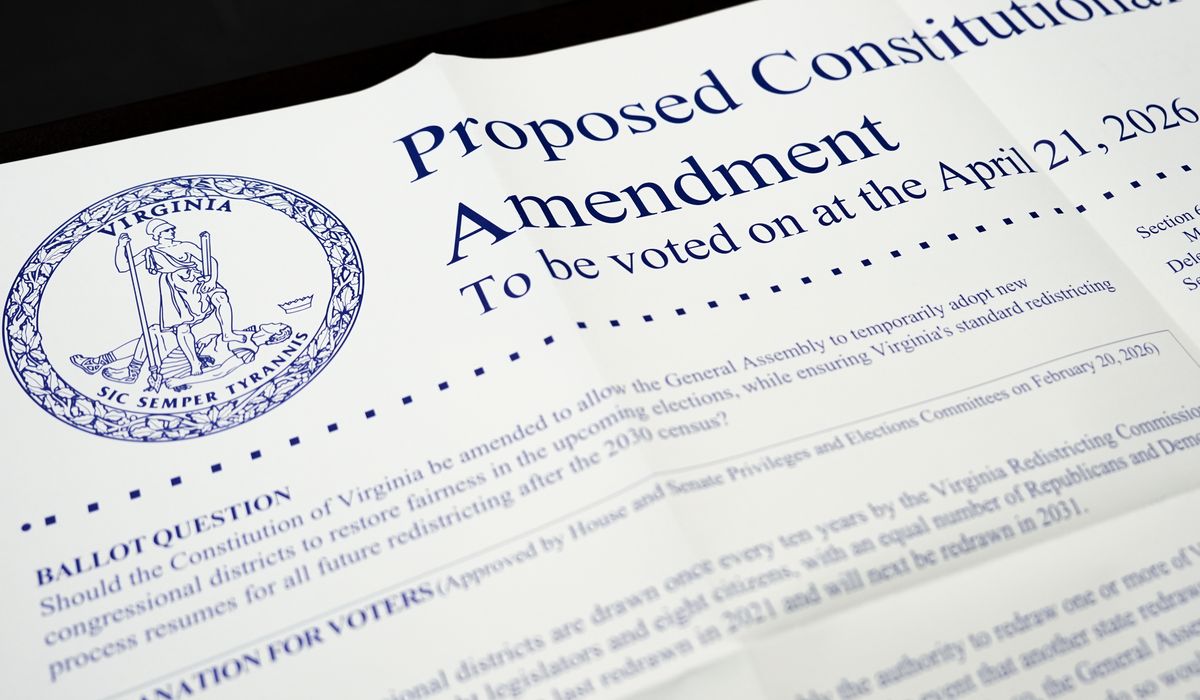
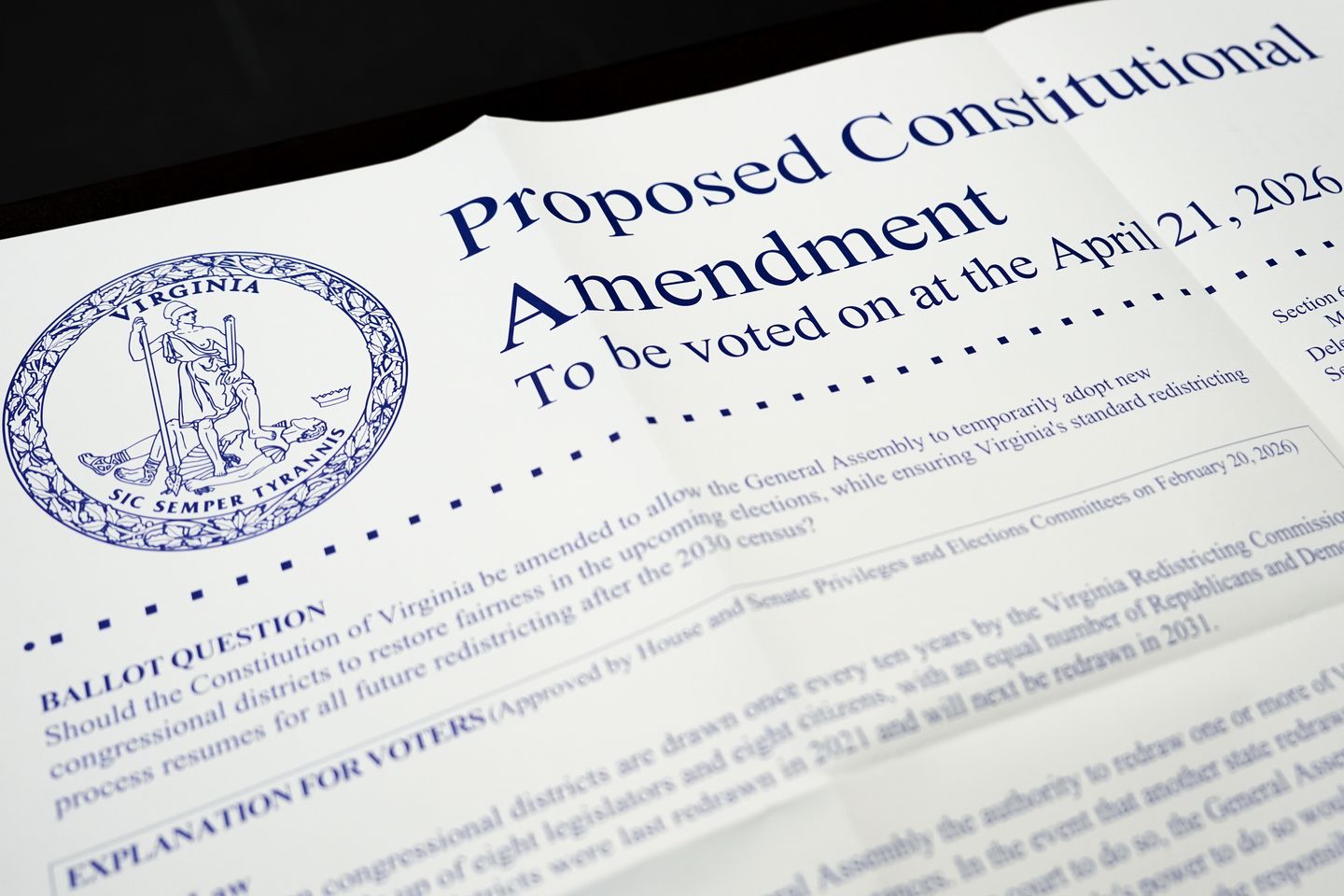
The ballot question asked voters to allow the General Assembly to temporarily redraw the districts “to restore fairness in the upcoming elections.”
The amendment would return Virginia to the standard redistricting process every decade after the 2030 census.
Virginia Attorney General Jay Jones, a Democrat, said his office will appeal Judge Hurley’s ruling.
“Virginia voters have spoken, and an activist judge should not have veto power over the People’s vote,” Mr. Jones said.
The referendum, if it survives court challenge, overrules the bipartisan Virginia Redistricting Commission, which was created in an overwhelming bipartisan vote in 2019 by the General Assembly and approved by Virginia voters in 2020.
Former Virginia Attorney General Ken Cuccinelli, a Republican, believes the Supreme Court will ultimately rule against the redistricting. He said the constitutional problems with the map include the General Assembly’s decision in 2024 to redraw the congressional lines during a special session called by then-Republican Gov. Glenn Youngkin that was supposed to be limited to the state’s budget.
Mr. Cuccinelli also pointed to a state constitutional requirement that electoral districts “shall be composed of contiguous and compact territory.” The new map may violate that clause. It stretches some districts clear across the state, which some call a “baconmander” because the districts look like strips of bacon.
“There are four clear violations of the state constitution here. They have to win on all four to make this stick. I don’t think they can,” Mr. Cuccinelli said.