
ISTANBUL — The United Arab Emirates’ OPEC withdrawal is forcing Washington into a new phase of energy diplomacy — one that requires direct coordination with Abu Dhabi as the cartel structure the U.S. has relied on for decades unravels.
The shift became visible Tuesday when Chevron signed a shale exploration memorandum with Libya’s National Oil Corp., signaling that the Trump administration is hedging against Iran’s chokehold on the Strait of Hormuz by accelerating production partnerships outside the Gulf.
The UAE’s exit from OPEC effectively dismantles the longstanding U.S. approach of working through Saudi Arabia as the cartel’s central coordinator.
“Anyone wishing to coordinate production levels with the UAE will now have to do so directly with Abu Dhabi,” said Elai Rettig, of Bar-Ilan University in Israel, who told The Washington Times the old model — where Washington could work through Saudi Arabia and the cartel — is effectively gone.
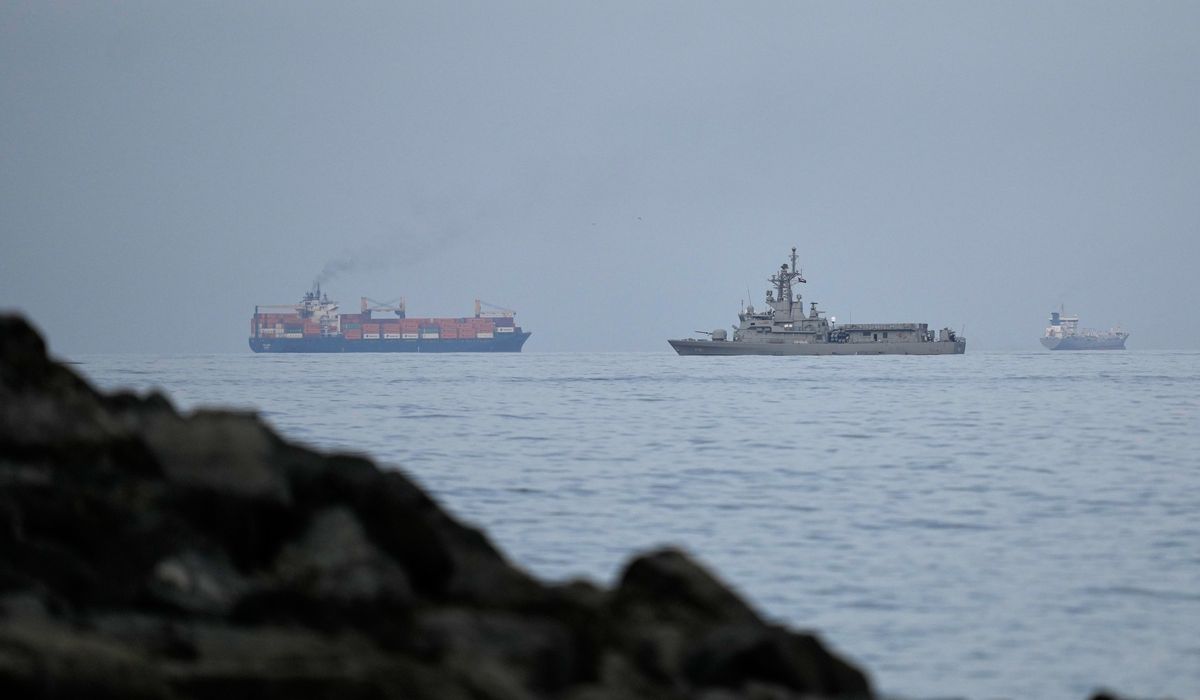
The break comes as roughly a fifth of global seaborne oil supply has been disrupted by the Iran war, exposing asymmetries among Gulf producers. The UAE retains the ability to export crude directly to the Gulf of Oman through its Habshan-Fujairah pipeline, bypassing Hormuz, while others remain constrained.
Saudi Arabia, long OPEC’s de facto coordinator, retains its own East-West pipeline to the Red Sea, but analysts say the current disruption has revealed structural limits across the Gulf system. Producers dependent on Hormuz have faced bottlenecks as storage fills and shipping routes remain uncertain.
Analysts say the UAE’s frustration with OPEC has been building for years, driven by quota disputes and uneven enforcement. While Abu Dhabi has largely complied with assigned limits, other members have exceeded them, weakening the cartel’s ability to function as a coordinated mechanism.
Marwan Alblooshi, an Emirati researcher at the Emirates Policy Center in Abu Dhabi, told The Times the decision reflects years of preparation aimed at strategic autonomy.
“The UAE has spent years preparing for a moment like this,” Mr. Alblooshi said. “It has the infrastructure, the spare capacity, and the global positioning to act alone if necessary. When collective frameworks stop functioning, Abu Dhabi will not hesitate to move decisively to protect its interests.”
The UAE currently has the capacity to produce roughly 4 million barrels per day and plans to expand to 5 million by 2027 — levels that would have been constrained under OPEC quotas.
The move is also likely to harden Saudi perceptions of the rupture.
“This is another notch in a rift that has been in the open for some time,” said Gerd Nonneman, of Georgetown University in Qatar, who told The Times that Riyadh won’t be pleased but is unlikely to respond substantively beyond expressing regret. “What it does is reinforce the view in Saudi Arabia that Abu Dhabi is playing its own game without reference to the GCC [Gulf Cooperation Council] — and that means continued efforts to contain and balance the UAE through diplomacy, finance and military means.”
For Washington, the implications extend beyond the Gulf. Sustained high oil prices are likely to accelerate investment in alternative supply zones, including Libya, where U.S. firms are reentering the market, as well as gas projects in East Africa that had previously stalled.
European demand for Libyan crude, driven by proximity and energy security concerns, has added urgency to those efforts. European producers — particularly Italy — have maintained a continuous presence in Libya’s energy sector through years of conflict, leaving Washington effectively entering a space where access, relationships and infrastructure are already contested.
Turkey, which backs authorities in Tripoli and has expanded its footprint in western Libya, is also positioning itself alongside international energy firms. “We will continue our activities through international partnerships, particularly with international oil and natural gas companies operating in Libya,” said Alparslan Bayraktar, Turkey’s energy minister, in a mid-April interview outlining Ankara’s plans to expand its role in the country’s energy sector.
The renewed U.S. push into Libya also carries risk. Armed factions have launched fresh operations in the country’s south against forces aligned with Khalifa Haftar, commander of the Libyan National Army, while U.N. officials warn that oil revenues are increasingly being “weaponised” within Libya’s fragmented political system, raising concerns about governance, transparency and the reliability of future supply.
Western involvement remains contested. Italy has pushed back on U.N. findings suggesting foreign training may have supported Libyan armed actors, highlighting the blurred lines between state institutions and militias.
At the same time, the UAE’s move risks deepening tensions within OPEC, where Saudi Arabia is expected to rely more heavily on coordination with Russia to maintain influence. Moscow, the second-largest producer in the alliance, has indicated it will remain committed to the group, a stance likely to increase its leverage over future production decisions.
On Capitol Hill, lawmakers framed the shift as both a warning and an opportunity. Sen. Chris Coons, Delaware Democrat, pointed to fragmentation within the GCC, while Sen. John Cornyn, Texas Republican, said the UAE’s ability to increase production independently could benefit global supply.
Turkish media framed the move as strengthening Washington’s hand. “The UAE exit from OPEC represents a win for U.S. President Donald Trump,” the Turkish newspaper Daily Sabah wrote, reflecting the view that Abu Dhabi’s decision weakens cartel discipline and aligns with U.S. efforts to expand supply.
Regional fallout is already visible across Yemen, Sudan and Libya, where the Saudi-Emirati rivalry has eroded the political consensus that underpinned OPEC coordination.
In Israel, analysts are reading the move as a signal that Abu Dhabi is increasingly willing to act outside established frameworks, potentially opening the door to deeper strategic alignment beyond the economic ties of the Abraham Accords.
The next OPEC ministerial meeting will be the first in nearly six decades without the UAE at the table. By then, analysts expect Abu Dhabi to begin increasing production, potentially by as much as one million barrels per day — a move that could help offset disruptions but further entrench the new energy order taking shape.
“This is not bad news for the United States,” Mr. Rettig said. “It means more flexibility to coordinate supply directly with a close partner, without having to account for Saudi or Russian constraints.”