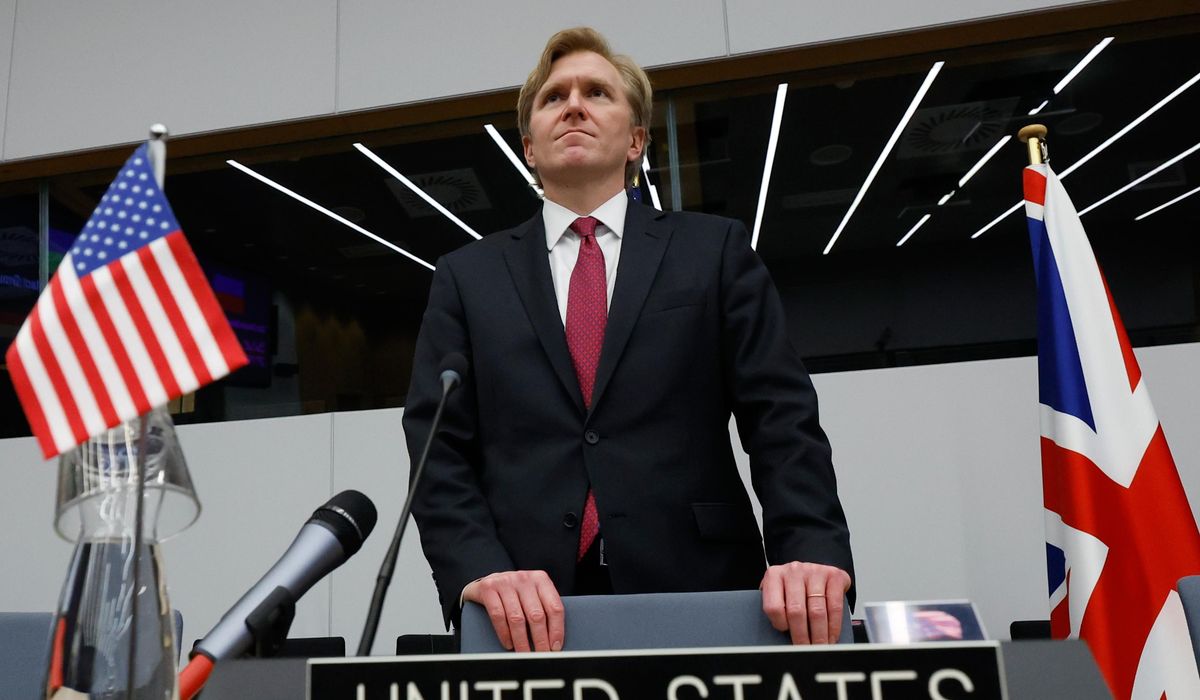
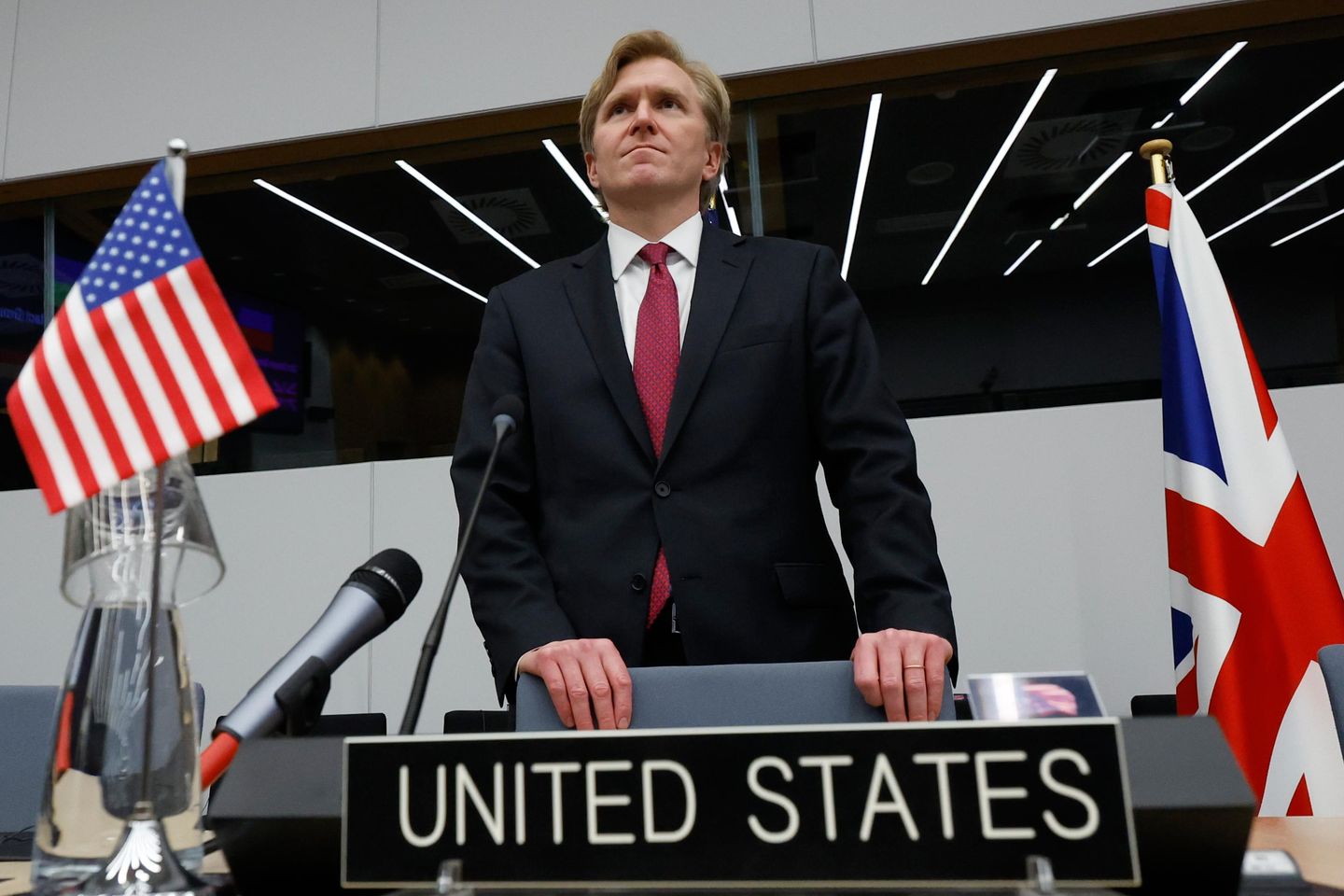
The Pentagon this week began a formal review of America’s military footprint in Europe to determine the level of U.S. troops and firepower necessary to meet its commitment as a NATO ally.
The European Posture Review is a major reevaluation of U.S. military presence and strategy in the region and is ultimately intended to shift much of the defense burden to the alliance’s European members. Secretary of Defense Pete Hegseth announced the six-month study in June at a meeting of NATO defense ministers in Brussels.
“This will be a real review, designed to ensure that NATO is moving fast and irreversibly toward Europe taking primary responsibility for its conventional defense,” Undersecretary of Defense Elbridge Colby said Monday on X. “The outcome of this review will be an acceleration of NATO’s transition to a stronger, more equitable and sustainable alliance.”
President Trump has long criticized European allies for “free-riding” on U.S. protection and called for accelerated military spending throughout the alliance. Tensions between the White House and NATO increased after several European allies restricted the U.S. from using their bases and airspace for its military campaign against Iran.
“The review will further the goal of fully restoring NATO’s character as a powerful warfighting organization — a NATO 3.0,” Mr. Colby said. “This will put NATO on the track for lasting, sustained success, especially as we confront simultaneous challenges across theaters.”
NATO officials in Brussels appear to be cautiously pragmatic about the Trump administration’s plan to restructure America’s military role in the alliance. Secretary-General Mark Rutte said last month that NATO will always be a transatlantic alliance.
“But we need a stronger Europe in a stronger NATO, through increased defense spending and defense production,” he said. “Secretary Hegseth was very clear about the need for a NATO 3.0, an alliance rebooted for the modern age. On that we all agree.”
Mr. Colby said the Pentagon review will ensure that the U.S. force posture in Europe reflects the Trump administration’s security and defense priorities.
“The review will provide a range of options along these lines based on strategic rigor, a strong empirical baseline and a clear sense of geopolitical and military realities,” he said. “I look forward to working closely with [U.S. Air Force] General Alexus Grynkewich, the Supreme Allied Commander Europe, on this critical effort.”