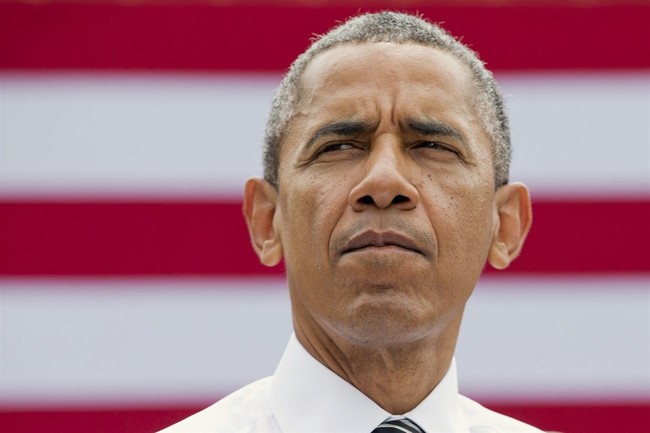
President Barack Hussein Obama’s Presidential Center opens in Chicago’s Jackson Park on June 19, and plenty of admirers will treat the moment like a civic holiday with ticketed entry.
Nobody should pretend the Obama project reached opening day after some gentle stroll through paperwork. The Obama Foundation chose 19.3 acres inside historic Jackson Park, a public space with deep civic roots, and fought years of legal challenges from Protect Our Parks over public land, process, environmental concerns, and whether the project served the public interest. The center moved ahead anyway, wrapped in the soft language of community, democracy, and uplift.
President Donald Trump’s planned presidential library in Miami now faces its own legal and political fight, and suddenly the guardians of civic virtue have rediscovered their smelling salts.
Florida approved the transfer of a valuable parcel tied to Miami Dade College for the President Donald J. Trump Presidential Library. Opponents have challenged the deal over public notice, transparency, and whether public land should move into a private presidential foundation’s hands.
Miami activist and retired professor Marvin Dunn has challenged the transfer under Florida’s Sunshine Law, and Judge Mavel Ruiz has set an August 2026 trial.
Nobody needs to confuse the Obama and Trump projects. Obama’s center speaks in unpolished and ugly Pig Latin. Trump’s concept speaks in gold letters, skyline ambition, and unapologetic brand power.
Yet the core issue looks familiar: public assets, private foundations, presidential legacy, and lawyers arguing whether the process gave ordinary taxpayers enough daylight.
Obama’s team made a dramatic break from the older presidential library model by building a private center while the official records remain with the National Archives and Records Administration. (I hope I’m not being too unfair, but I believe his building is extremely butt-ugly.) NARA describes the Obama Presidential Library as fully digital, with records preserved and accessed through the federal system rather than housed inside a traditional public archive building at the center.
The double standard lives right there; Obama’s model moved presidential legacy deeper into foundational control and farther from the old physical archive tradition, and polite society called the shift innovation. It’s polite society’s way of saying it has a good personality.
Trump enters the same broad arena, with a bolder Miami project and style nobody could mistake for academic modesty, and the panic button gets punched like somebody saw a raccoon in the punch bowl. Trump’s plans were described in the lawsuit and shared in Newsmax’s report.
The complaint alleges the land transfer was structured to allow Trump and his family to profit from a planned luxury development that could include a hotel, office space, and commercial amenities under the banner of a presidential library project.
The lawsuit cites public statements from Trump and his son Eric Trump describing plans for a large skyscraper development on the site.
According to the filing, Trump said in March he did not “believe in building libraries or museums” and instead envisioned “most likely … a hotel with a beautiful building underneath and a 747 Air Force One in the lobby.”
The complaint also references promotional renderings showing a towering structure bearing the Trump name, luxury ballrooms, and hotel-style amenities.
While Obama’s defenders saw vision, Trump’s opponents see scandal before the permits have time to put on pants.
Plenty of fair questions exist about both projects. Public land should never move quietly; taxpayers deserve straight answers, and communities deserve to know what they’re getting, what they’re losing, and who benefits.
Obama’s Jackson Park fight raised those questions for years, especially among residents and park advocates who didn’t see why a private foundation should get such a prized civic space. Trump’s Miami fight raises similar questions around notice, valuation, and future use.
Fair enough.
Apply the same standard both ways, and suddenly the Trump outrage looks less like civic concern and more like political reflex.
Obama had the advantage of packaging; his project arrived with the vocabulary of hope, service, access, promises of keeping your doctor, and community programming. Trump has the disadvantage, or maybe the gift, of refusing to hide ambition behind a wall of nonprofit licenses. He builds like he talks: big, loud, confident, and impossible to ignore—something his critics hate most because it exposes what they tolerated when Obama did it with softer lighting and elevator music.
The presidential library system has changed; modern presidents don’t just preserve records, they shape memory, stage legacy, and build institutions that tell future generations what to admire.
Obama helped normalize the new system while using the elite members of the left and media. Apologies for repeating myself.
Trump stepped into the same modern reality and made the whole arrangement look less noble, mostly because he didn’t bother pretending to care what Obama’s elite circles thought.
The real lesson isn’t that Trump broke the presidential library model; Obama already helped bend it into something new. Trump’s Miami battle simply forces everyone to see the machinery without the velvet cover. When Obama claimed public land for legacy, America got lectures about civic purpose. When Trump pursues his own library, America panics about process, power, and taste.
The rules didn’t suddenly change; the name on the building did.
PJ Media readers who want more sharp conservative analysis can get 60% off a VIP subscription with promo code FIGHT. The old political class counts on selective outrage, memory holes, and double standards surviving without challenge. A VIP subscription helps keep independent conservative writing in the fight.