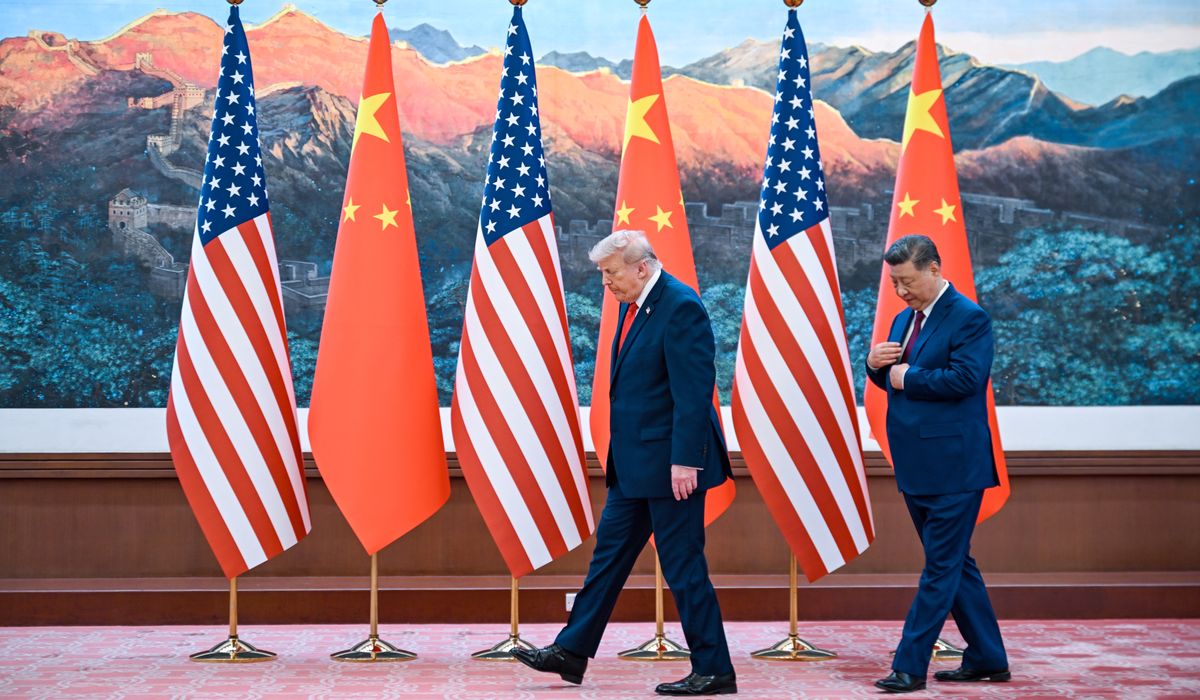
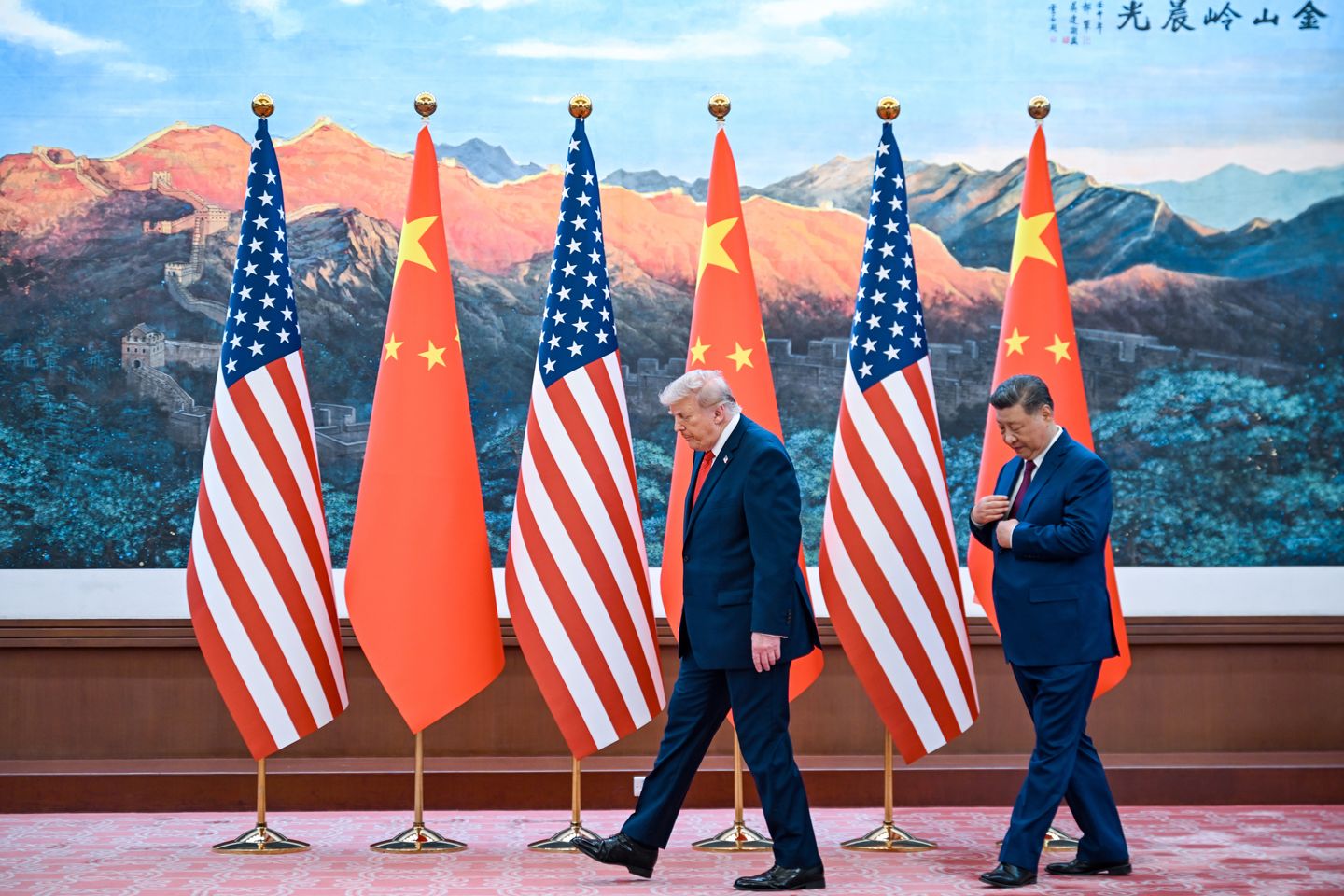
President Trump is challenging a long-standing U.S. policy toward Taiwan after his two-day visit to China by announcing he may restrict a multibillion-dollar arms package for the island democracy in a bid to improve relations with Beijing.
Taiwan’s president, meanwhile, is pushing back against Mr. Trump’s claims that the island is provocatively risking war by seeking independence from Beijing.
President Lai Ching-te wrote in a social media post that Taiwan will not be pressured into giving up its freedom. He also said arms sales are a security commitment based on U.S. law.
Asked on an Air Force One flight to Washington, Mr. Trump said he will decide on whether to go ahead or restrict a major arms sale to Taiwan soon. He said he also plans to speak to Mr. Lai on the issue.
Jamieson Greer, U.S. trade representative, said in a television interview Sunday that Mr. Trump is considering using the arms sales to Taiwan as leverage in ongoing negotiations with China, something he said past presidents have done.
“Right now, the president’s considering how to move forward on that. The reality is, it’s really important for the United States and China to have a stable relationship,” he said.
Mr. Trump also said Chinese President Xi Jinping asked him if the United States would defend Taiwan amid concerns over a Chinese attack and told him, “I don’t talk about those [issues].”
Mr. Xi said during the summit that a U.S. mishandling of Taiwan could lead to conflict.
Mr. Trump said he did not believe there will be a war over the island that broke from the mainland during a civil war in 1949. “I think we’ll be fine,” he said, noting the Chinese leader feels very strongly that Taiwan is Chinese territory.
“I made no commitment either way. We’ll see what happens,” he said.
Mr. Lai said in a Facebook post that he has explained to Chinese officials that Taiwan is a defender of the current status quo and will not seek to provoke or escalate a conflict. “But we will also not give up our national sovereignty and dignity, or our democratic and free way of life, under pressure,” he said.
China, he stated, is the source of regional instability and has continued to expand military activities in the Taiwan Strait and surrounding waters with military aircraft and ship jamming, large-scale military drills, grey zone coercion, and various military, political and economic pressure on neighboring countries.
“China is the root cause of destroying regional peace and stability and changing the status quo,” Mr. Lai said.
China stepped up military operations around the island beginning Friday as the summit ended. The Taiwan Defense Ministry reported that up to eight warships and five warplanes carried out activities around Taiwan, including jets that crossed the median line down the Taiwan Strait delineating Chinese and Taiwan defensive airspace.
Mr. Lai also stated that Taiwan impendence is not an issue.
“The Republic of China Taiwan is a sovereign and independent democratic country,” he said.
On U.S. arms sales and security cooperation, weapons and military support is key to maintaining regional peace and stability, Mr. Lai said.
“Taiwan-U.S. long-term security cooperation and arms sales are built on the Taiwan Relations Act, which is not only the U.S. security commitment to Taiwan, but also the most important deterring force against regional peace and stability in the long run,” he said.
The U.S. assured the island democracy in the 1979 Taiwan Relations Act that it would not be abandoned after the shift in diplomatic recognition from Taipei to Beijing that year.
The act calls for supplying Taiwan with defensive weapons and notes that any decision to defend the island from attack would be made by the executive branch. President Biden, Mr. Trump’s predecessor in the White House, said during his term that the U.S. would defend Taiwan militarily.
On Capitol Hill, Republican and Democratic lawmakers weighed in on the arms sales question.
Rep. Michael McCaul, Texas Republican and former House Foreign Affairs Committee chairman, said Friday that the U.S. must “arm Taiwan so they can defend themselves for deterrence against Chairman Xi.”
Rep. Gregory Meeks, New York Democrat and ranking member of the House Foreign Affairs Committee, and three other Democrats wrote to Mr. Trump last week urging continued arms sales to Taiwan to preserve peace and stability across the Taiwan Strait.
Rep. John Moolenaar, chairman of the House Select Committee on the Chinese Communist Party also voiced support in a social media post, stating, “The Chinese Communist Party has never governed Taiwan yet continues to threaten force.”
America “will stand by its commitments, support Taiwan’s defense, and oppose unilateral attempts to change the status quo,” the Michigan Republican said.
Rep. Ro Khanna, ranking member of the House Select Committee, also said he is concerned about Taiwan following the summit.
“The Taiwan Relations Act from 1979 is clear that the United States will support Taiwan to make sure that China does not use military coercion. The reality is, as people know, that China is tightening the noose around Taiwan,” the California Democrat said.
A group of 10 Democratic senators led by Sen. Jeanne Shaheen said in a statement that the lawmakers were “deeply disturbed by President Trump’s refusal to defend America’s support for Taiwan during this summit, including by consulting with President Xi regarding U.S. obligations to help provide for Taiwan’s defense.”
“We call on the administration to formally notify the $14 billion in U.S. arms sales that Congress pre-approved in January 2026,” they stated.
The pending arms package includes advanced missiles and missile defense interceptors.
Last week, the Taiwan legislature passed a $25 billion supplementary defense spending bill, less than the $40 billion sought by Mr. Lai.
Mr. Lai said in the social media post that peace depends on strength and the will of the Taiwanese to protect freedom and democracy. Taiwan will continue to bolster its defenses and maintain the status quo, he said.
Earlier in an interview with Fox News, Mr. Trump said during the summit he talked “the whole night” with Mr. Xi on Taiwan.
The Chinese leader’s warning of a potential conflict was based on a formal declaration of independence by Taiwan, he said, adding that such a declaration would cause the Chinese to probably “do something pretty harsh and then they would be met harshly and bad things will happen.”
The comment was the first indirect statement by the president indicating a probable U.S. and allied military response to an attack on Taiwan.
The president said he does not believe China will launch an invasion or blockade of Taiwan while he is in office but they might after his second term is completed in January 2029.
On Chinese concerns about Taiwan, Mr. Trump said the current leader of Taiwan is someone who “wants to go independent.”
“Well, it’s a risky thing when you go independent. You know they’re going independent because they want to get into a war … They figure they have the United States behind them. I’d like to see it stay the way it is,” he said.
During the flight to the United States, Mr. Trump was asked by a reporter if discussing U.S. arms sales to Taiwan violated a 1982 agreement not to talk with China about arms sales to the island.
“Nineteen-eighty-two is a long way,” Mr. Trump said. “That’s a big, far distance away.”
One of the Six Assurances on Taiwan issued by President Ronald Reagan’s administration, a cornerstone of American ties, states that the U.S. will not consult with China in advance of decisions on arms sales to Taiwan.
“You know, the whole thing with the arms sales was in great detail, actually, and I’ll be making decisions,” Mr. Trump said. “But you know, I think the last thing we need right now is a war that’s 9,500 miles away. I think that’s the last thing we need. We’re doing very well.”
Retired Army Gen. Jack Keane said China has declared as a geopolitical objective the taking of Taiwan, though Beijing has never owned the island.
A second objective of Beijing is to seize Taiwan’s advanced microchip-making capabilities for artificial intelligence, he said.
“Whoever owns that capability is going to own the future in terms of AI development,” he said on Fox News. “And that is the secondary mission here” of China’s designs on Taiwan.
Ryan Hass, a Brookings Institution senior fellow, said Mr. Trump’s comments and plans for using arms sales to Taiwan in negotiations with China are dangerous and “will elevate — not lower — the risk of confrontation.”
“The net effect of his comments was to suggest that his views on Taiwan independence were closer to Beijing’s preferences, that Taiwan had a greater responsibility to avoid provoking conflict, and that America’s security support for Taiwan was negotiable with China,” Mr. Haas stated in a post-summit report.
“Trump’s comments placed him apart from the views of most American experts and officials, including those within his own administration, who judge that China’s steadily increasing pressure on Taiwan has been the principal source of rising tensions, not actions by Taiwan or the United States,” he said.