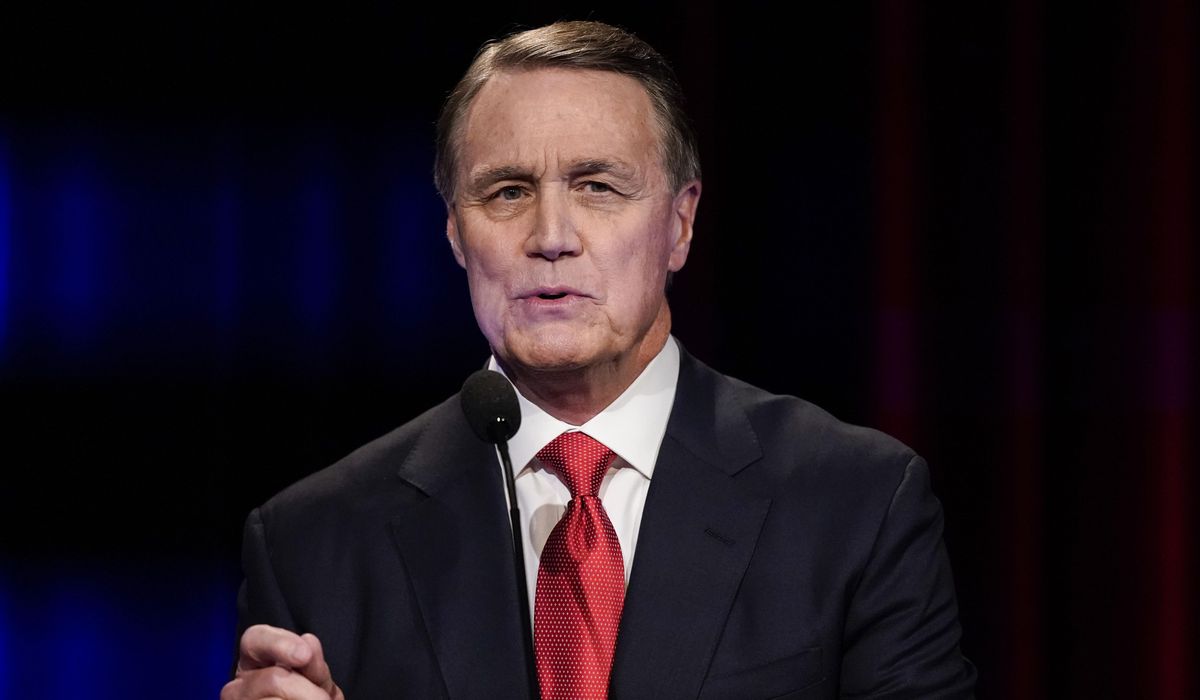
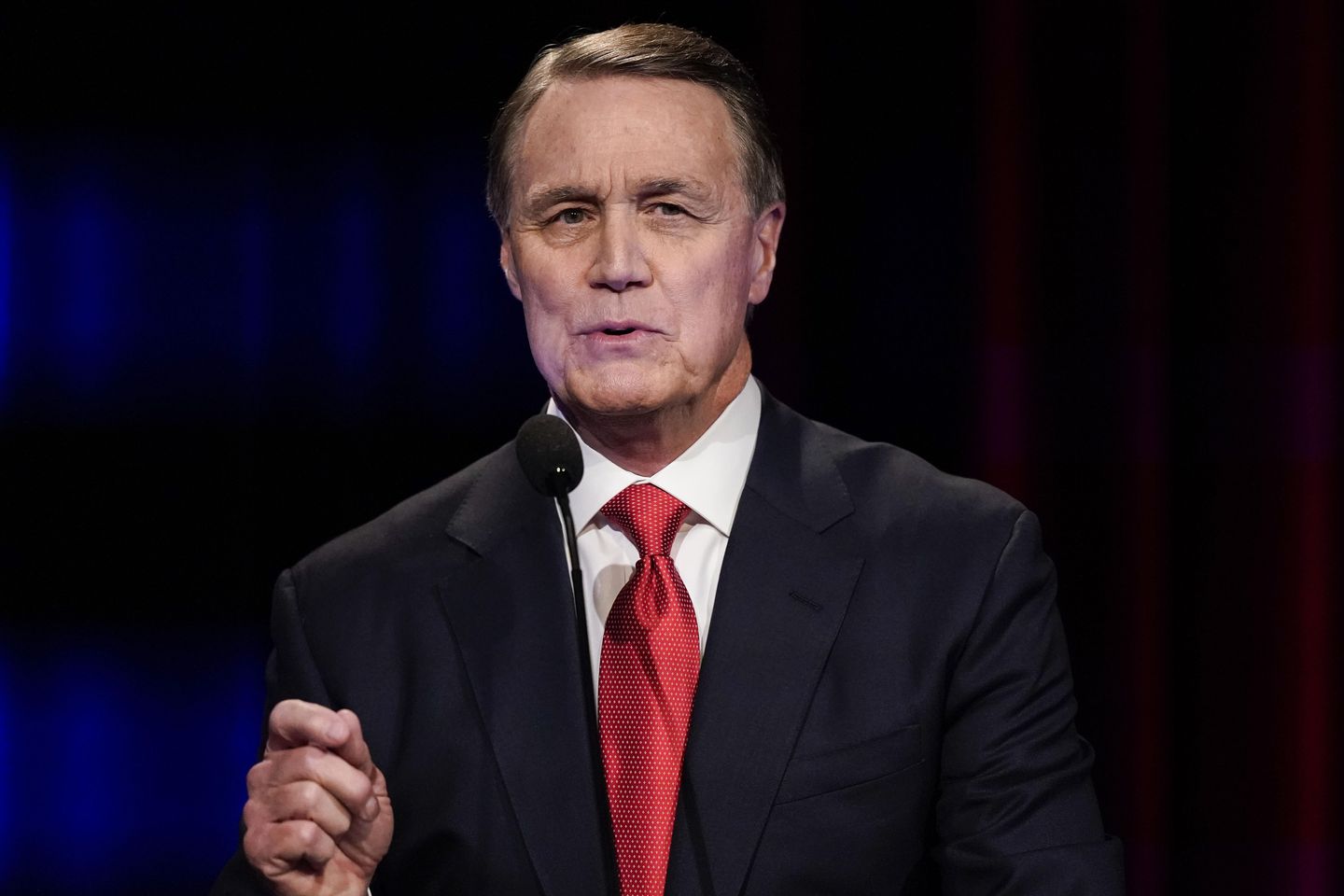
U.S. Ambassador to China David Perdue said President Trump’s recent state visit to Beijing was a necessary diplomatic engagement to address decades of economic imbalance that “hollowed out” American strategic industries.
Mr. Purdue said during an appearance on “Fox and Friends Sunday” that Mr. Trump’s trip was “historic” — the first presidential trip to China in nine years — and the two days of talks were described as “candid, cordial and consequential.”
He said Mr. Trump is in an engagement period with the people of China as he tries to level the trade and economic playing field between the two countries.
“The first thing you have to realize is it’s going to be very difficult to run independent of China. They’re the second largest economy in the world, 1.4 billion people,” Mr. Perdue said. “But what President Trump is doing is trying to correct the malaise in the United States over the last 25 years, where we saw some of our strategic industries hollowed out by the Chinese.”
Mr. Perdue cited four areas of U.S. strategic vulnerability: rare earth elements, magnets, commercial shipbuilding and pharmaceuticals.
“We’re in a potential time of vulnerability. And the Chinese have shown the world, frankly, that they’re willing to weaponize that, and that’s why President Trump went to China,” the ambassador said.
Mr. Trump said the two sides made “fantastic trade deals, good for both countries,” specifically announcing that China agreed to purchase soybeans and Boeing aircraft, including a commitment to order 200 jets.
China has yet to fully follow through on a 2019 promise to purchase U.S. soybeans.
Asked how the U.S. will enforce any trade agreements with China, Mr. Perdue said: “If you look back at the 2019 deal that I was a part of, actually they didn’t execute but about two thirds of that deal then.”
According to Mr. Perdue, Treasury Secretary Scott Bessent and U.S. Trade Representative Jamieson Greer are involved in negotiations related to the agreements that have triggered 301 investigations, which is a mechanism under U.S. trade law that allows the government to investigate and respond to unfair trade practices by foreign countries.
“Believe me, we’ve got 301 investigations underway right now. There are things, there’s a lot more teeth in these investigations now than there ever have been,” he said. “And the people that are negotiating with the Chinese are doing it from a position of strength in that regard.”
The meeting in Beijing was the first time Mr. Trump and Mr. Xi had spoken face-to-face since October, and the first visit to China by a U.S. president since Mr. Trump traveled to Beijing during his first term in 2017.
To help solidify the economic wheeling and dealing, Mr. Trump brought with him to China several U.S. executives, including Tesla CEO Elon Musk, Nvidia CEO Jensen Huang and outgoing Apple CEO Tim Cook.
After Mr. Trump wrapped up his trip to Beijing, he said he made important progress to stabilize U.S.-China relations, which only a few years ago were at the lowest level in decades.
“We’ve settled a lot of different problems that other people wouldn’t have been able to settle, and the relationship is a very strong one,” Mr. Trump said at the start of bilateral talks Friday but offered few details on what was settled.