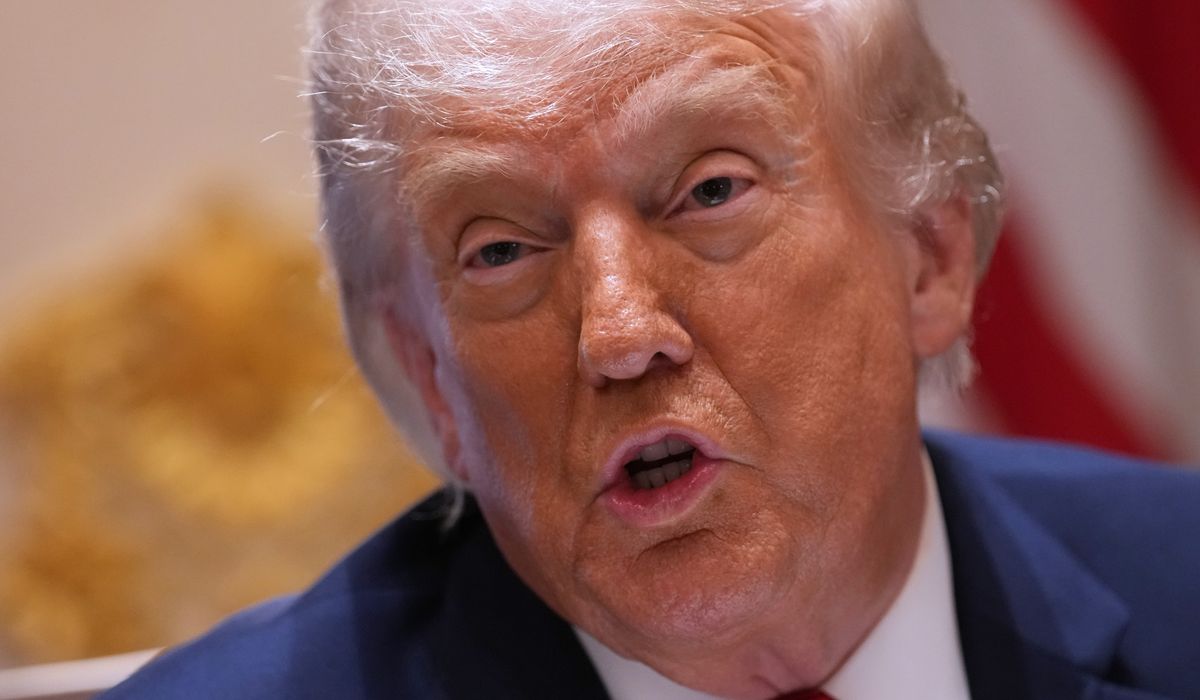
President Trump has reignited his trade war with a plan to impose tariffs on 60 U.S. trading partners nearly four months after the Supreme Court struck down his earlier levies.
In its most sweeping action since the high court ruling, the Trump administration will impose tariffs of 10% on imports from Canada, Mexico, the European Union, Taiwan and the U.K., among other places, according to a statement released overnight by the Office of the U.S. Trade Representative.
Imports from other major economies, including China, India, Japan, South Korea, Brazil and Switzerland, will face a 12.5% levy, the statement said.
The USTR said it has the authority to impose the tariffs under Section 301 of the Trade Act of 1974, which empowers the U.S. to take action against countries that permit or fail to prohibit goods made with forced labor.
“The failure of our most important trading partners to address the importation of goods made with forced labor is unacceptable. This creates a dynamic where American workers are forced to compete globally on an unlevel playing field,” U.S. Trade Ambassador Jamieson Greer said in a statement. “We will no longer tolerate this disparity.”
Mr. Greer said some trading partners have taken “initial steps” to prevent the importation of goods made from forced labor, but “each of our trading partners must do more to ensure that trade does not perversely encourage and entrench forced labor globally.”
The USTR flagged 34 goods in specific countries that are made with parts produced with forced labor. Those included cotton used for garments, critical minerals for solar products, fish used for fish meal, palm fruit and palm oil.
The new tariffs won’t go into effect immediately and could be changed before they are codified. Under federal law, the proposals are subject to a public comment and review period, with written comments due by July 6.
Starting July 7, the USTR’s Section 301 panel will hold public hearings on the matter.
China pushed back against the notion that it uses forced labor and said the U.S. should resolve such allegations through trade negotiations rather than unilaterally imposing tariffs.
“So-called forced labor does not exist in China, and we oppose using this as a pretext for political manipulation,” Foreign Ministry spokeswoman Mao Ning said at a press briefing in Beijing on Wednesday.
She added that “economic and trade issues should be resolved through dialogue and consultation on the basis of equality, mutual respect and reciprocity.”
EU spokesman Olof Gill called the tariff proposal “unjustified” and said it’s analyzing the findings of the USTR investigation. He added that in 2024, the EU banned products made with forced labor.
A spokesperson for Japan’s trade office simply said it was in contact with Washington about the matter.
The move is Mr. Trump’s biggest step to revive the tariffs he imposed during his first year in office, before the Supreme Court declared them unconstitutional. In its ruling, the court said Mr. Trump exceeded his authority by imposing the tariffs under the International Economic Emergency Powers Act.
The tariffs proposed late Tuesday cited Section 301 of the Trade Act, a separate legal authority, to impose the new levies. A separate set of 301 investigations is looking into U.S. trading partners’ excess manufacturing capacity, and the findings are expected to be released soon.
It’s possible that even more tariffs could result from that probe, which would be added to those imposed through the forced labor investigation.
Mr. Trump’s latest round of levies comes at a complex time for the global economy. Financial markets are already skittish over the Iran war, which has caused energy prices to soar around the globe.
In the U.S., inflation increased at its fastest pace in three years in April, driven by the higher energy prices caused by the conflict.
Surging price pressures are eroding household income and restraining consumer spending. Inflation hit 3.8% in April, its highest level since 2023.
Tariffs often increase the cost of goods, though the Trump team has argued it’s temporary pain, with the tariffs forcing companies to scale up their U.S. manufacturing operations and reducing costs in the long term.
Business groups say tariffs increase their compliance costs and make doing business more expensive, with those costs passed on to the consumer.
“Applying a single investigatory framework across 60 economies, including longstanding US allies and parties to existing bilateral trade agreements, will create significant compliance uncertainty for businesses operating in global supply chains,” International Chamber of Commerce Secretary-General John Denton said in a statement Wednesday.
New tariffs could rekindle fears of inflation, especially ahead of what’s expected to be a brutal midterm battle in November. Democrats have campaigned on reducing the high cost of living, which threatens to upend GOP control of the House and Senate.
A Democratic victory in November will likely derail Mr. Trump’s agenda for the remainder of his term.
The proposed tariffs could add new pressure on consumer prices, UBS economist Paul Donovan wrote in an investor note. He said the earlier tariffs were passed on to consumers, but after the Supreme Court removed them, prices did not fall, letting the companies enjoy higher profit margins.
“A critical question is what this means for the U.S. consumer,” Mr. Donovan wrote, “Certainly, there is little evidence that past price increases were rolled back when the last wave of tariffs were declared to be illegal. Once a tariff has been passed through to the consumer, it tends to stick … and becomes a boost to profits if that tariff was reversed.”