President Trump on Wednesday reiterated America’s demand that the Strait of Hormuz must remain open to all and threatened to restart strikes on Iran if negotiators don’t deliver a better deal than what’s proposed.
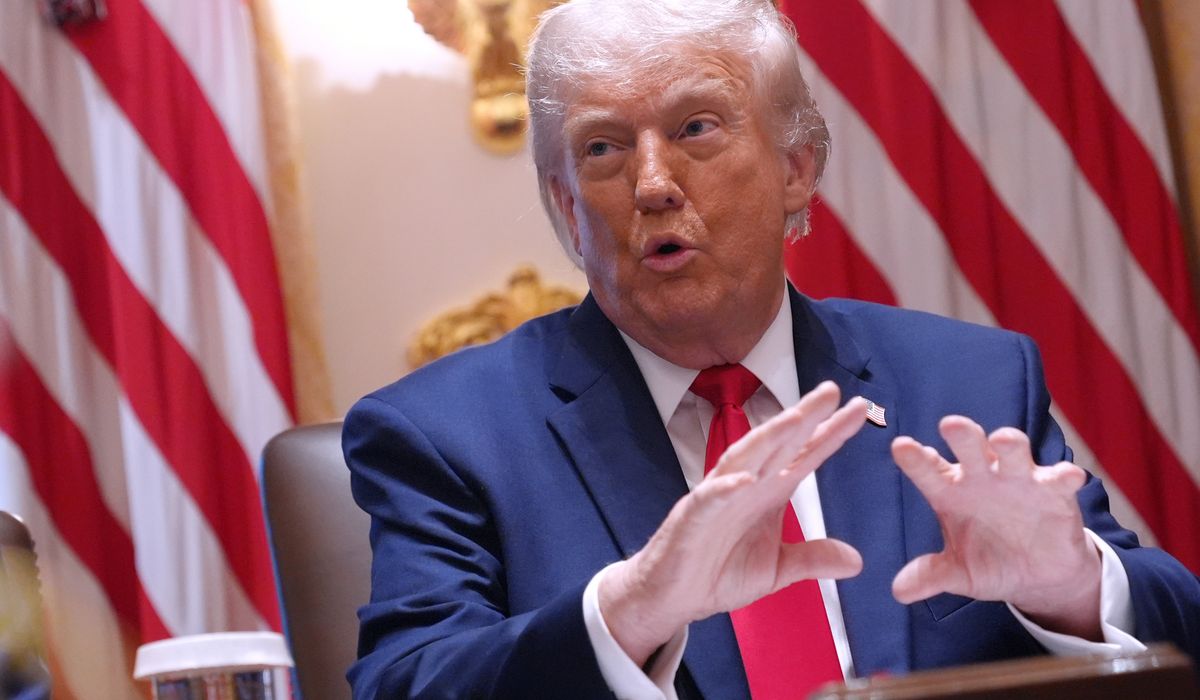
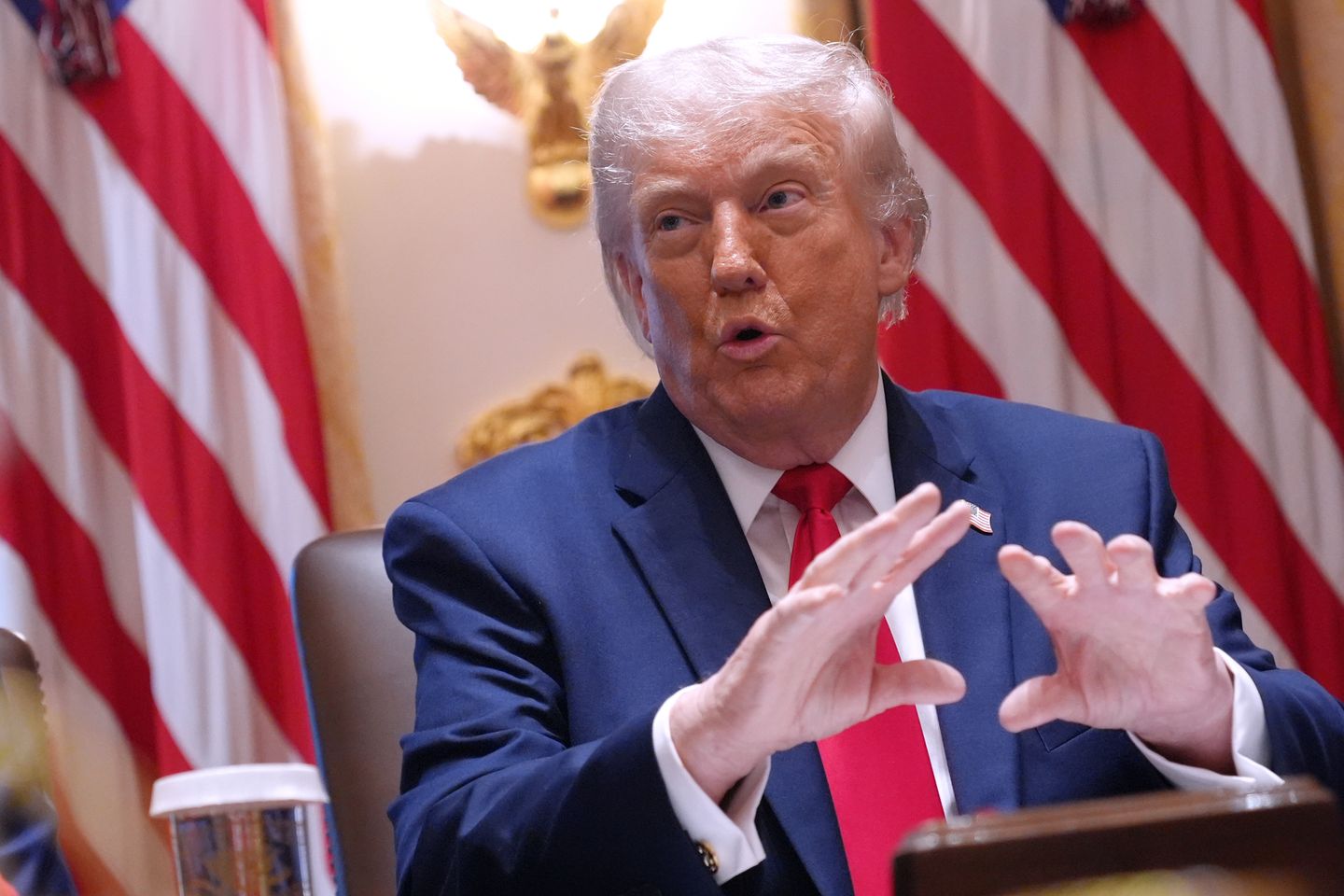
Speaking at a Cabinet meeting, Mr. Trump asserted that the strait, through which at least 20% of the world’s oil passes each year, can’t be controlled by Iran.
“The strait’s gotta be open to everybody. Nobody’s going to control it,” Mr. Trump said. “We’ll watch over it, but nobody’s going to control it.”
He also issued a warning to Oman, the Gulf country that borders the strait, that its leaders should be wary of working with Iran to maintain a toll system in the waterway.
“It’s international waters, and Oman will behave just like everybody else or we’ll have to blow ’em up. They understand that; they’ll be fine,” Mr. Trump said.
Iran imposed an effective blockade of the Strait of Hormuz as retaliation for the U.S. military operation launched on Feb. 28 in coordination with Israel. Some ships have gotten through the critical waterway, but the clampdown is causing energy shortfalls and higher oil prices around the world.
SEE ALSO: Trump warns Oman to ‘behave’ or face attack, says Strait of Hormuz must be open
Mr. Trump also restated his belief that any peace pact with Iran would include other Mideast nations agreeing to join the Abraham Accords, the U.S.-brokered deal that normalized relations among Israel, Bahrain and the United Arab Emirates.
“I think those countries owe it to us,” Mr. Trump said. “I’m not sure we should make the deal if [those countries] don’t sign.”
The president first made the claim earlier this week, pointing specifically to Saudi Arabia, Qatar, Pakistan, Turkey, Egypt and Jordan. He said he would accept some countries declining to sign, but that most should agree to join the accords.
Mr. Trump’s comments come as Iranian-affiliated media outlets disseminate a draft version of an agreement between Iran and the U.S. that would reopen Hormuz.
Iranian state broadcaster IRIB said the 14-point draft agreement would create a memorandum of understanding between the two countries, with Iran lifting its blockade of the strait in exchange for the U.S. lifting its blockade of Iranian ports.
The report added that, under the agreement, normal commercial shipping traffic would return to prewar levels within a month.
Notably, the agreement indicates that Iran would retain management duties over the strait, sharing responsibilities with Oman.
The report also includes provisions for the withdrawal of U.S. troops from territories near Iran, with military vessels not granted transit permission through the strait.
The draft agreement also includes a promised $300 billion reconstruction program for Iran, according to Iranian lawmaker Meysam Zohourian, who wrote on X that primary and secondary sanctions against Iran would end after a certain period.
Mr. Zohourian, who serves as secretary of Iran’s Economic Committee in Parliament, also said the agreement would declare an end to the war in both Iran and Lebanon.
Since starting the blockade, the Islamic republic has made moves to formalize its control over the strait, including demanding commercial ships pay exorbitant fees and complete transit paperwork before navigating through Iran-approved routes.
The agreement does not mention any of the Trump administration’s key demands for a peace deal, including the removal of Iran’s nuclear material, the dismantling of its enrichment infrastructure and ending its support for proxy groups.
The White House said via social media on Wednesday that the details of the tentative deal released by Iranian state media are false.
“This report from Iranian-controlled media is not true and the MOU they ’released’ is a complete fabrication. Nobody should believe what Iranian state media is putting out. FACTS MATTER,” the White House wrote on X.
Ali Bagheri, deputy secretary of Iran’s Supreme National Security Council, said Wednesday that indirect negotiations with the U.S. were underway via Pakistani mediators.
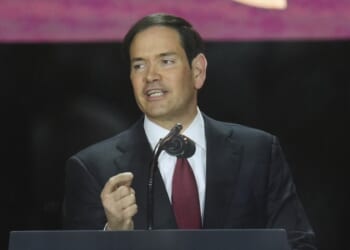
Both sides have expressed a mix of optimism and caution concerning the discussions. Secretary of State Marco Rubio, speaking at the Cabinet meeting, said he saw some signs of progress toward an agreement, but refused to disclose any details.
“We’ll see over the next few hours and days if progress can be made,” Mr. Rubio said before telling the president: “You have other options available if that doesn’t work.”
Indeed, Defense Secretary Pete Hegseth said America’s blockade of Iranian ports, initiated last month after a ceasefire was announced, was airtight and that Iran’s economy is “hurtin’ bigtime.”
U.S. Central Command, which oversees military operations in the Middle East, said Wednesday that the blockade has intercepted and redirected at least 109 vessels since the blockade began.
The U.S. has already conducted what it termed “self-defense strikes” against Iranian boats and launch sites this week, just days after Mr. Trump reported significant progress in peace negotiations.
Iran’s Islamic Revolutionary Guard Corps categorized the strikes as clear ceasefire violations and vowed to respond forcefully to further strikes, including launching new attacks on U.S. military installations.