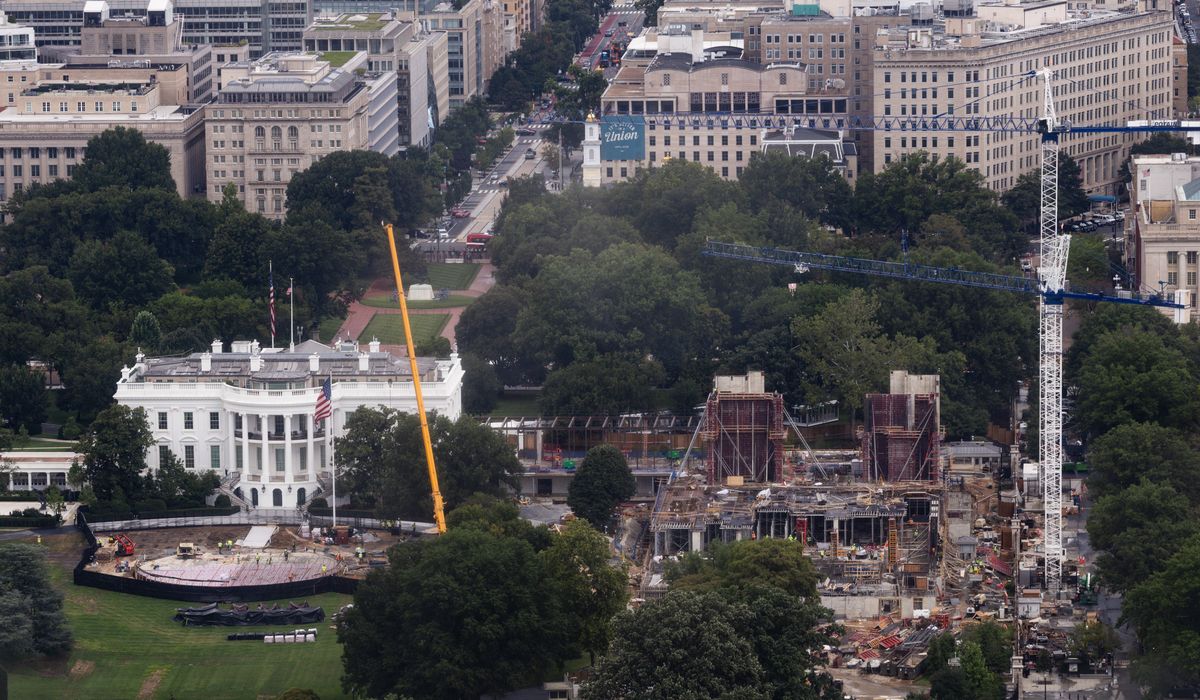
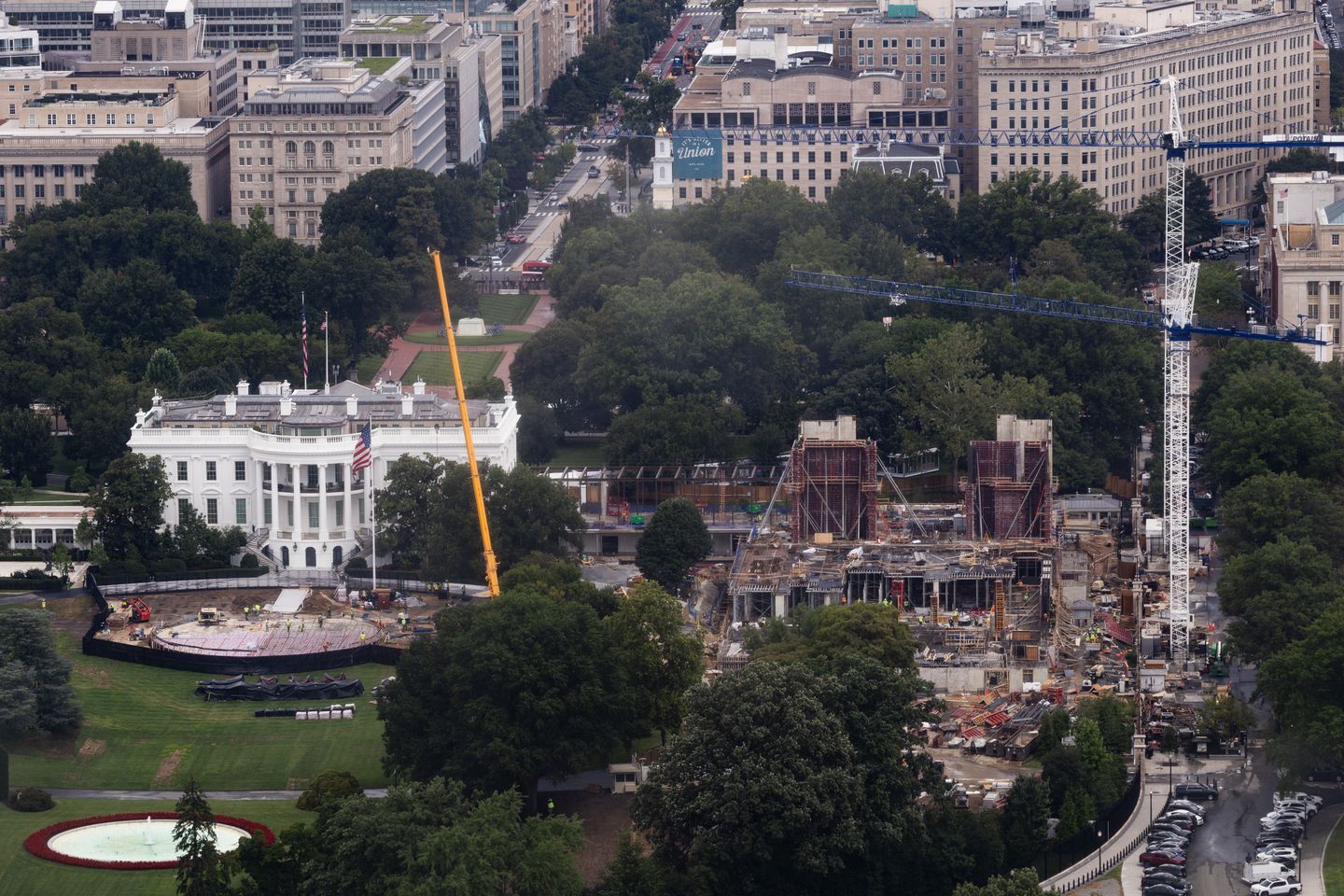
President Trump went to the Supreme Court Friday to ask permission to keep building his grand plans for a ballroom at the White House, telling the justices the project is “vitally required by national security.”
Mr. Trump wants the high court to set aside lower court rulings that have shut down construction, save for rudimentary safety and security modifications.
In a brief that often reads like a Trump social media post, the Justice Department repeatedly wrapped the president’s ballroom plans in the cloak of security, pointing to the repeated assassination attempts the president has faced as justification for the $400 million, 90,000-square-foot building.
“The updated East Wing complex is absolutely required and should not be enjoined,” Solicitor General D. John Sauer wrote in the petition.
For the president, the ballroom has become a major test of power and prestige, with him devoting an extraordinary amount of attention to it. He even devoted a portion of his remarks at the White House Correspondents Association dinner to defending the need for the ballroom.
Mr. Trump had the old East Wing complex razed last fall, without getting permission from Congress or several boards that oversee construction in the monumental core of the city.
He then began construction on the ballroom — which is being paid for by private donations — again without permission from Capitol Hill.
The case raises two legal issues.
The first is whether the National Trust for Historic Preservation, the private group that sued, had legal standing to bring the case. Lower courts found that a member of the trust is suffering an “aesthetic” injury by the loss of the old East Wing.
The second issue is what powers a president has to alter the White House complex without needing congressional approval.
The U.S. Circuit Court of Appeals for the District of Columbia, in a 2-1 decision, said the Constitution grants Congress authority over federal property, and Mr. Trump trampled on that.
“Whether or not a massive ballroom should be constructed is for Congress to decide and is not a matter for executive self-help,” wrote Judges Patricia Millett and Brad Garcia, both Democratic appointees.
Judge Neomi Rao, a Trump appointee, issued a forceful dissent saying presidents have always had the ability to make improvements to the White House residence, and since the new ballroom is intimately connected to the residence, the president is on firm ground.
She also mocked the idea that someone’s displeasure at the aesthetics of the White House was enough to bring a case.
“The district court elevated the aesthetic displeasure of a single passerby over the government’s security interests in the ballroom and the security risks of leaving an open construction site at the president’s home and office,” she wrote.