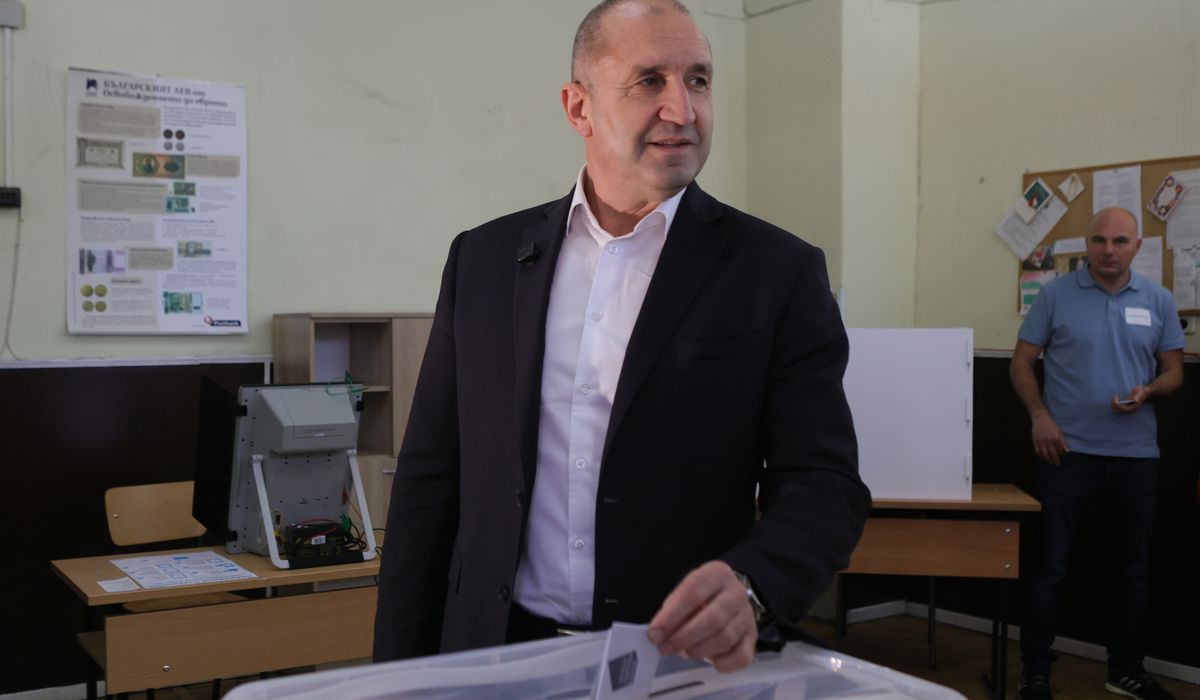
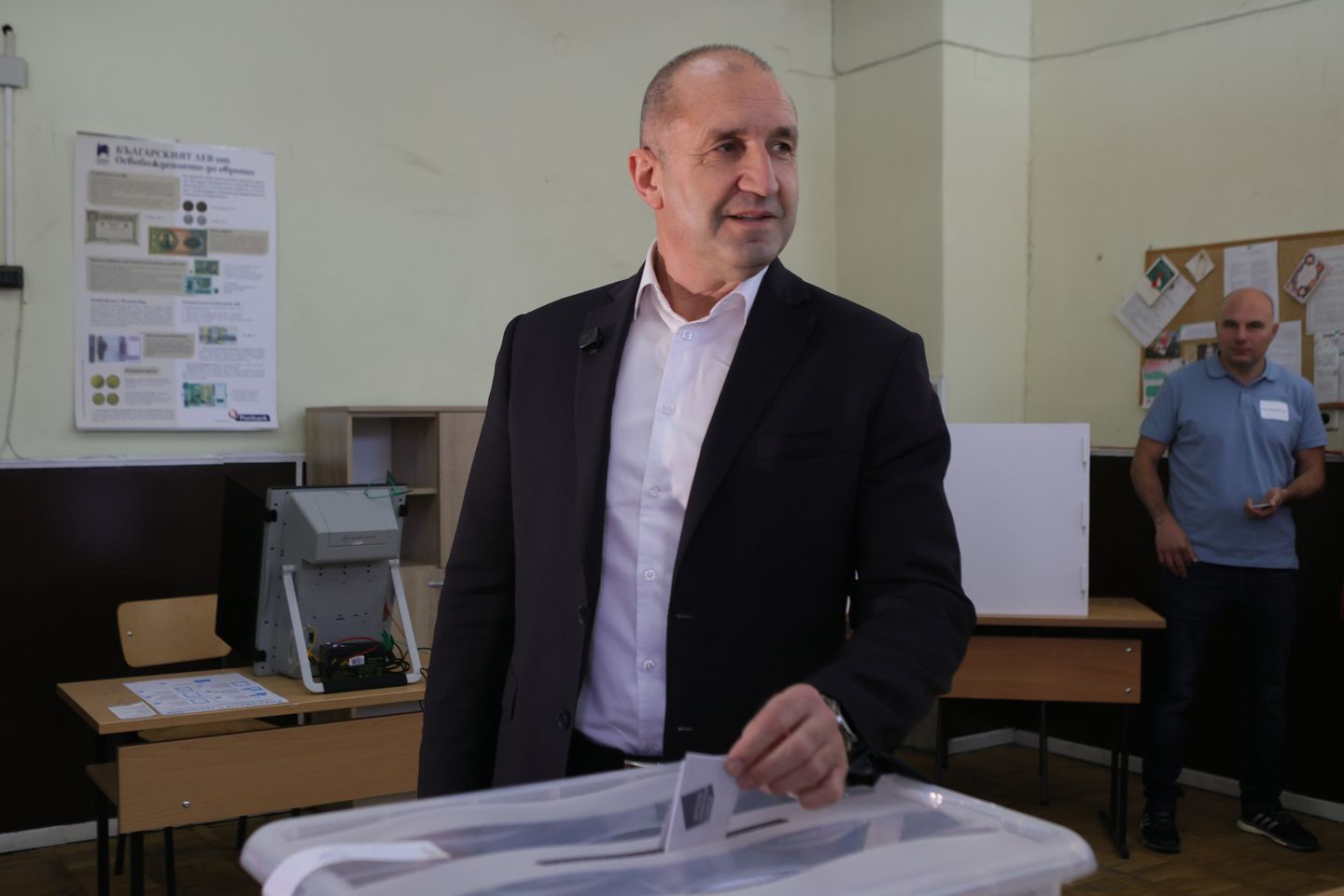
SOFIA, Bulgaria — The center-left coalition of ex-president Rumen Radev has emerged as the clear winner of Bulgaria’s parliamentary election, the country’s central electoral commission said Monday, ending half a decade of political fragmentation.
With 96% of the ballots counted by early Monday, results showed the Progressive Bulgaria coalition receiving 44.7% of the vote, over 20 percentage points ahead of the center-right GERB party of veteran leader Boyko Borissov and the pro-Western reformist bloc led by the We Continue the Change party. Both parties ran neck-to-neck, scoring 13.4% and 12.9% respectively.
Two other parties also appear to have gained seats in the 240-seat chamber, according to the latest results.
Borissov conceded defeat and congratulated the election winner.
Radev described his party’s victory as “unequivocal,” a “victory of hope over distrust, a victory of freedom over fear,” saying Bulgaria would “make every effort to continue on its European path”.
“But believe me, a strong Bulgaria and a strong Europe need critical thinking and pragmatism. Europe has fallen victim to its own ambition to be a moral leader in a world without rules,” Radev told reporters.
PHOTOS: Tired of political turmoil, Bulgarians give ex-president a convincing mandate for change
During his presidency, Radev gained a reputation as being sympathetic to Russia. He repeatedly opposed EU efforts to send military aid to Ukraine for its war against Russia’s full-scale invasion. He has often argued that supporting Ukraine risks drawing Bulgaria into the war and has favored reopening talks with Russia as a way out of the conflict.
Radev resigned from the mostly ceremonial presidency in January, a few months before the end of his second term, to launch a bid to lead the government in the more powerful role as prime minister.
The former fighter pilot, 62, earned a Master of Strategic Studies degree from the U.S. Air War College in 2003, before being appointed Bulgarian air force commander. His supporters are divided between those hoping he will put an end to the country’s oligarchic corruption and those lining up behind his Euroskeptic and Russia-friendly views.
Bulgaria’s previous conservative government collapsed in December after nationwide anti-corruption protests drew hundreds of thousands of mainly young people to the streets.
Radev’s popularity surged as he cast himself as an opponent of the entrenched mafia and their ties to high-ranking politicians. At campaign rallies he vowed to “remove the corrupt, oligarchic model of governance from political power.”
NATO and EU member Bulgaria has been repeatedly criticized for not tackling corruption and for deficiencies in the rule of law.
Since 2021, the nation of 6.5 million has struggled with fragmented parliaments that produced weak governments, none of which managed to survive more than a year before being brought down by street protests or backroom deals in parliament.
Tired of the seemingly never-ending election roulette, people on the street reacted with mixed feelings to the latest election results.
“Above all, we expect a more stable judicial system, and for trust in institutions to truly be restored. Until now, they have been heavily influenced by various figures, many of whom, as we can see from the current results, have now left the government,” said Nikoleta Dimitrova, a 37-year-old shop assistant from Sofia.
Accountant Cveta Gerogieva, 55, was less optimistic: “I hope that we will really live a better life, but I am not sure that there will be stability for a long period. Probably we will vote again.”