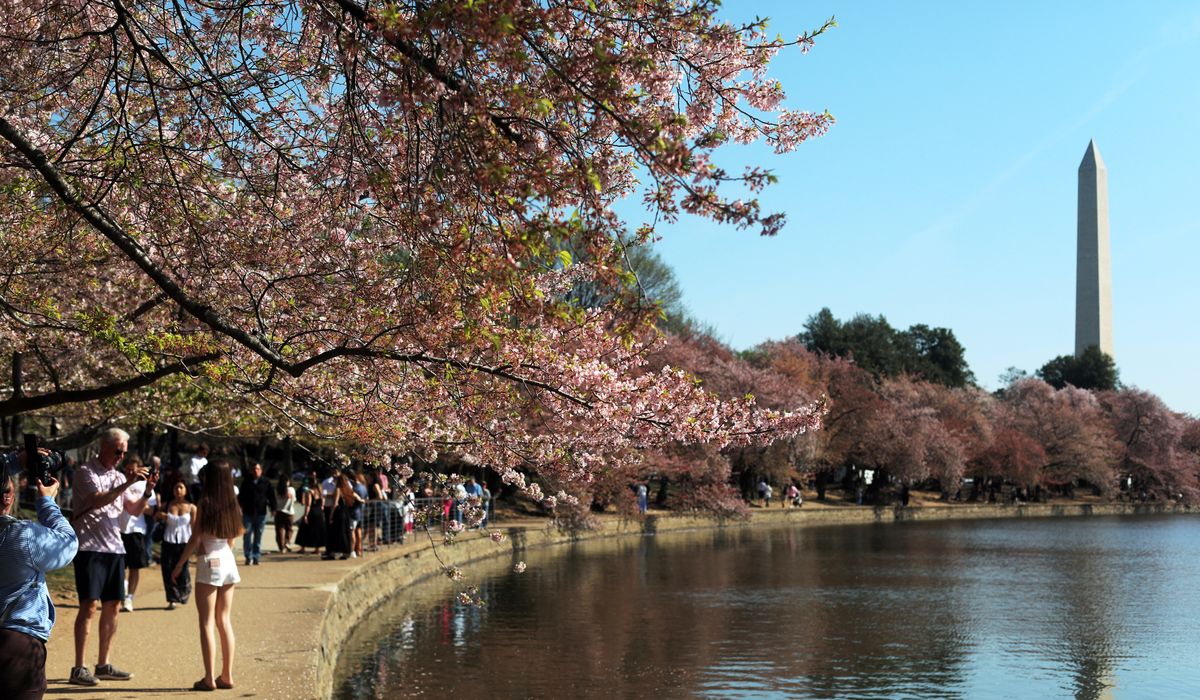
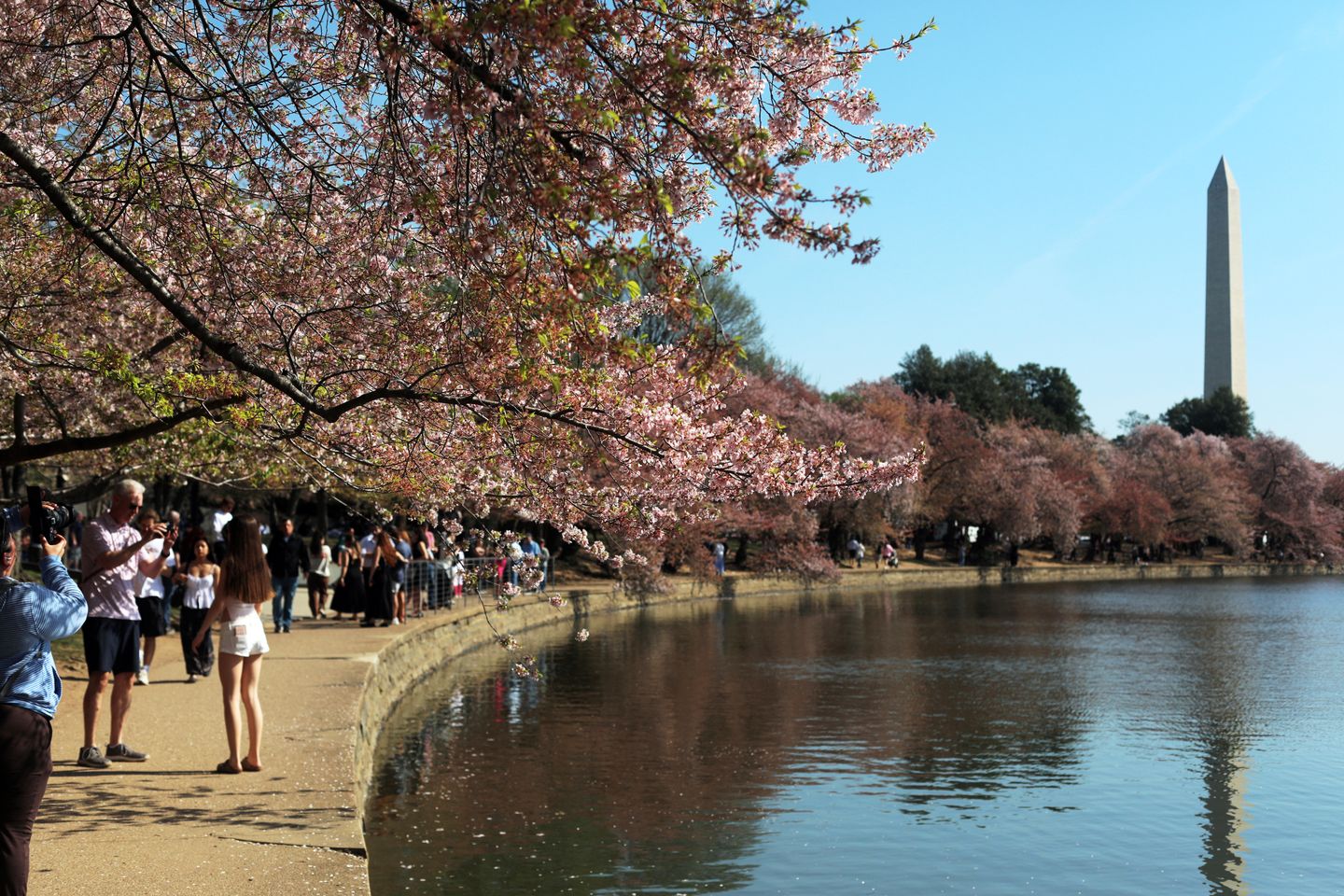
The Tidal Basin is now fully reopened to visitors with new and improved seawalls, walkways and hundreds of new trees planted.
Work done on the seawalls reinforced more than 6,000 feet of shoreline, and 546 new trees were planted to replace trees that were removed when the project started. Among the new trees are 353 cherry trees, the Interior Department said.
Roughly 306 trees were removed for the project.
The project finished eight months early and $30 million under budget. The work has been completed, but officials delayed the full reopening of the Tidal Basin until after the end of the National Cherry Blossom Festival on April 12.
The Interior Department held a ribbon-cutting ceremony for the project Tuesday.
At the ceremony, Interior Secretary Doug Burgum said, “Today marks meaningful progress in preserving one of the nation’s most recognized public spaces.”
He credited the Great American Outdoors Act with financing the project, which addressed decades of deterioration.
The original wall, dating back to the late 19th and early 20th centuries, had sunk as much as 5 feet from its original position in some spots, and walkways and trees were regularly inundated by the tides.
Among the inundated trees was the famously gnarled cherry tree known as Stumpy. Clones of Stumpy, grown at the National Arboretum, are due to be planted along the Tidal Basin as early as next spring.