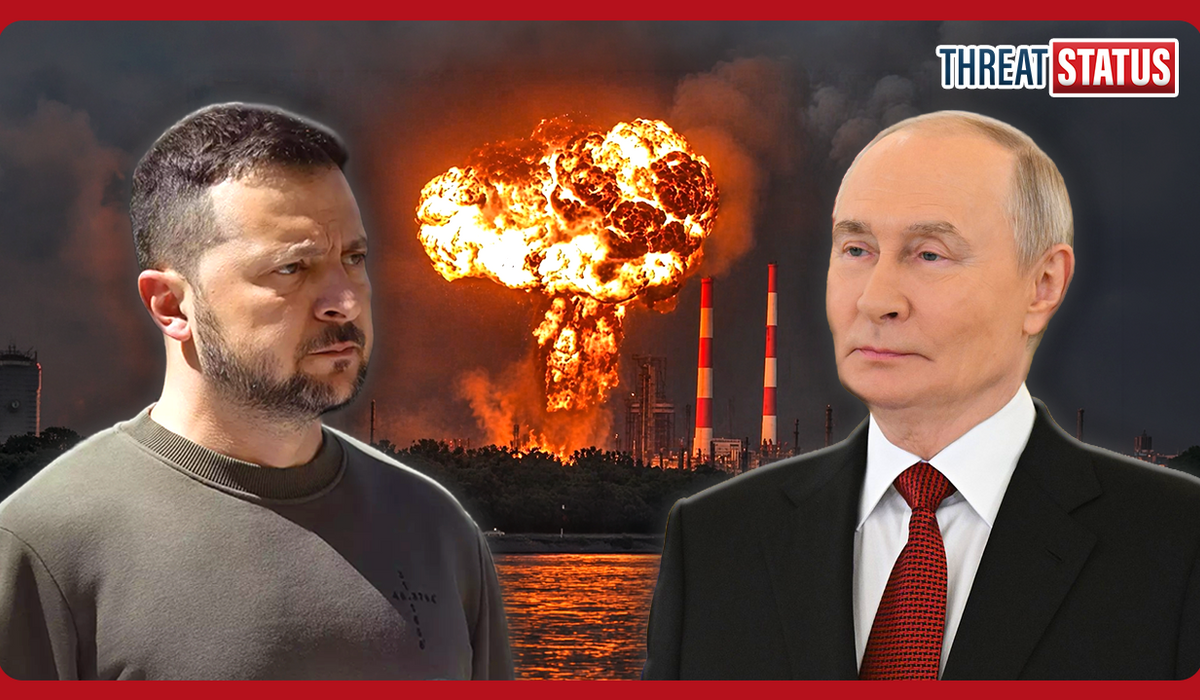
As global energy markets teeter on the edge of chaos, a shadow war is heating up over the world’s fuel supply that could determine the future of the conflict in Eastern Europe. While Russia’s oil revenues recently skyrocketed to a record $9.7 billion a month, effectively bankrolling their military operations, Ukraine has launched a bold new drone campaign to strike Moscow where it hurts most — their energy infrastructure.
My name is Joseph Hammond, foreign correspondent for The Washington Times.
In this Q&A, I break down the high-stakes energy war, from the controversial U.S. sanctions waivers to the secret oil-for-missile deals shaping the conflict.
How is the Middle East crisis affecting the Ukraine-Russia war?
The recent crisis in the Middle East, which saw U.S.-Israeli airstrikes and the naval blockade of Iran, as well as Iran’s effort to control the Straits of Hormuz through their own blockade, has resulted in the largest disruption to global energy supply in history, according to the Paris-based International Energy Agency.
The Straits of Hormuz sees some 25% of the world’s oil supply and 20% of the world’s liquefied natural gas pass through it. And with that strait cut down, it’s been a massive boon for Russia, which is one of the few countries — as the third largest supplier of petroleum products — one of the few countries prepared and poised to profit from that.
Russia has benefited immensely from the disruption in the Middle East and has been able to profit to the order of at least $9.7 billion, according to the International Energy Agency, month-on-month terms, due to the U.S.-led war against Iran.
How are sanction waivers boosting Russia’s oil profits?
Prior to the conflict in the Middle East, the United States had led sanctions against Russia, specifically targeting its oil industry. In the context of the disruption caused by the war with Iran, the closure of the Straits of Hormuz, the United States has eased those sanctions on Russia in order to offset the impact on the global economy of rising oil prices.
These sanction waivers, which allow countries such as India to continue to purchase large quantities of Russian oil, have been a massive boon for Russia. And Russia is now able to fund its war in part from these expanded oil profits. They come at a time when most analysts say the Russian economy was teetering on the brink due to its extended war with Ukraine, now in its fourth year.
How is Ukraine responding to Russia’s rising oil profits?
What’s interesting is how Ukraine has responded. Ukraine’s response to the rise in Russian oil profits has involved both a political component and a military component.
On the political level, they have lobbied the U.S. to remove the sanctions waivers and to reimpose sanctions against Russia. These waivers have allowed India to continue to receive Russian oil. There’s a large series of Lukoil gas stations which are continuing to receive supplies from Russia as a result of these sanctions waivers. And Ukraine has really lobbied very actively against this, and saying that these sanctions waivers need to be removed on the political level.
On the military level, they have targeted Russian energy infrastructure where export is the primary motive. You’ve seen drone strikes around oil facilities on the Baltic seaboard, and you’ve seen a large campaign against oil facilities around the Caspian Sea region as well too. This new campaign focuses on hurting Russia’s ability to export oil and to profit from the large spike in oil prices due to the current Middle East crisis.
How is Russia responding to Ukraine’s attacks?
Russia has struck back in response to Ukraine’s targeting of its energy infrastructure with its own attacks on Ukraine’s energy structure, which have left tens of thousands of people without energy in Western Ukraine, and have also targeted other key electricity and energy infrastructure areas within Ukraine itself.
What long-term global shifts could this war create?
The long-term geopolitical shift we’re seeing as a result of this is that Ukraine is going to have the opportunity to build new energy relationships and continue to find new global partners.
One of the interesting outcomes of the current war in the Middle East is that Ukraine has stepped in to protect Gulf Arab states from Iranian drone and missile strikes. With the know-how they have developed in their long war with Russia, the Gulf states have reached out to Ukraine — counter-drone measure specialists — to those countries. And now in response, Ukraine has announced that they have signed a deal with Gulf Arab states to provide them not only with money and munitions, but importantly, oil and other energy products.
This deal is very important because, in the long term, this means Ukraine will continue to have the ability to wage this war and also a stable source of energy and oil that is beyond the range of Russian missile strikes.
Click here to receive the daily Threat Status newsletter delivered directly to your inbox.