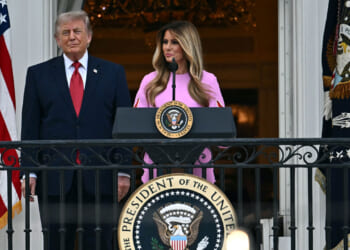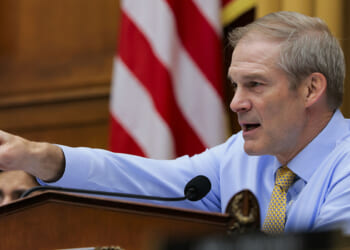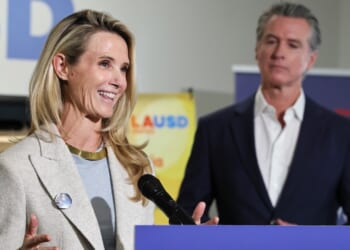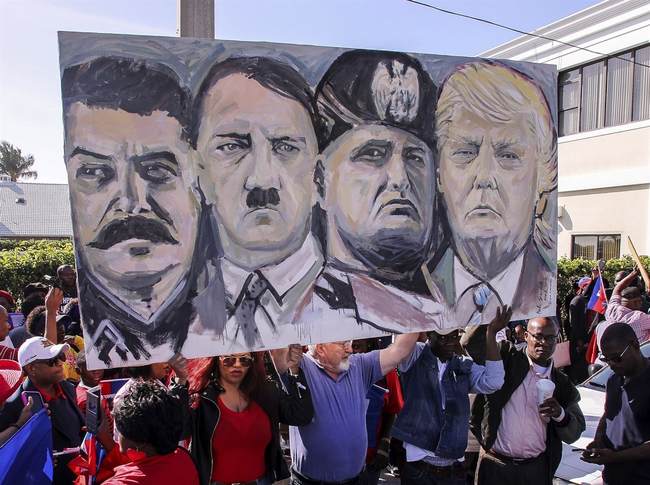
For years now, Americans have heard the same accusations aimed at President Donald Trump. He’s been called a Nazi, dictator, tyrant, and a threat to democracy itself. Cable panels, activist groups, celebrities, and Democratic politicians repeated the language so often that it’s almost become background music, akin to what we hear in elevators.
Yet while Americans endlessly argue over rhetoric, the country of Georgia spent the last several years showing what actual democratic backsliding looks like in real time.
Georgia now carries the label of a “hybrid regime” from multiple international monitors. Freedom House gave the country a 51 out of 100 freedom score in 2026, placing it in the “Partly Free” category. Political rights dropped to 19 out of 40 as concerns grew over elections, media restrictions, and government pressure against opponents.
The ruling Georgian Dream party has steadily tightened its grip. Billionaire Bidzina Ivanishvili, founder and honorary chairman of Georgian Dream, continues exercising enormous influence despite not formally leading the day-to-day machinations of the government.
Georgian riot police used pepper spray and water cannons to disperse demonstrators on the night of the October 4 vote, which was boycotted by the two largest opposition blocs as part of a standoff with the ruling Georgian Dream party, in power since 2012.
Opposition figures had called for a “peaceful revolution” against Georgian Dream, which they accuse of being pro-Russian and authoritarian. Shortly before polls closed last year, a group of demonstrators attempted to force entry to the presidential palace in the capital Tbilisi.
Five activists were arrested that night and ten were ultimately charged, including opera singer and activist Paata Burchuladze and several opposition politicians.
Prime Minister Irakli Kobakhidze oversees the government while opposition parties accuse Georgian Dream of centralizing power and weakening democratic safeguards.
The government’s “foreign agents” law intensified concerns across Europe and inside Georgia itself. The legislation forces media organizations and nongovernmental groups receiving foreign funding to register as organizations acting under foreign influence.
Enacted on August 1, the law requires NGOs that receive 20 percent or more of their funding from abroad to officially register themselves as “pursuing the interests of a foreign power.” This would affect many of the roughly twenty-six thousand NGOs in Georgia; according to a 2020 report by the Asian Development Bank, Georgian civil society organizations receive more than 90 percent of their funding from abroad. Failure to register by September 1 could result in fines of up to $9,300.
The law was reintroduced by the ruling Georgian Dream party in April 2024 after its first iteration failed to advance in parliament amid public outrage in 2023. On May 17, it passed Georgia’s 150-member parliament by an 84–4 vote, with almost all opposition lawmakers abstaining. Less than two weeks later, a parliamentary majority overruled a veto of the bill by President Salome Zourabichvili, who has no party affiliation. Hundreds of Georgian NGOs have since pledged to defy the law; opposition lawmakers have announced that they would challenge it in court.
Tell me I’m wrong: the law accurately mimics measures used inside Russia to suppress dissent and pressure independent journalism.
Election concerns followed closely behind; international observers cited intimidation claims, misuse of state resources, and an uneven political environment during Georgia’s 2024 parliamentary elections. Opposition leaders accused the ruling party of stacking the system in its favor while protesters filled the streets in response.
Does any of this sound familiar?
American political debate spent years revolving around whether Trump represented an authoritarian danger despite courts operating normally, elections continuing, opposition media attacking him every day, and voters ultimately returning him to office in 2024.
The contrast becomes even sharper when looking at the aftermath of January 6.
After the Capitol riot and the disputed 2020 election aftermath, federal prosecutors pursued hundreds of criminal cases tied to the riot. Many defendants remained in pretrial detention for extended periods while defense attorneys challenged confinement conditions and prosecutorial tactics. Some defendants spent months in isolation while awaiting trial.
Oath Keepers founder Stewart Rhodes received an 18-year sentence for seditious conspiracy. Proud Boys chairman Enrique Tarrio received 22 years before later legal reconsideration under the Trump administration. Federal courts treated the cases as some of the most serious political prosecutions in modern American history.
President Trump later issued broad pardons and commutations tied to January 6 prosecutions after returning to Trump 2.0. His administration’s Justice Department also moved to revisit several major seditious conspiracy cases. Supporters argued that the prosecutions became politically excessive; critics called the pardons dangerous.
Here’s a quick compare and contrast: The left considered Trump’s pardons for dubious prosecution dangerous. Yet when President Joe “I can’t remember what I’m eating now” Biden issued incredibly broad pardons of his family and some confidants, we heard crickets from those same critics.
Still, the larger comparison remains, well, let’s go with uncomfortable, for many on the American left.
Georgia features disputed elections, legal pressure against opposition parties, restrictive speech laws, police crackdowns on protesters, and a growing concentration of political power around a single ruling structure. European Union membership discussions stalled partly because some European officials questioned whether Georgia still met democratic standards.
Now comes the Hitler part: Americans spent years hearing Trump compared to the German leader while opposition media freely operated, courts repeatedly ruled against him, states removed him from ballots only to be overturned by higher courts, and voters continued deciding elections through constitutional processes.
None of this excuses January 6 violence or claims Georgia has become a full dictatorship. Georgia still holds elections, maintains active protests, and retains functioning democratic institutions. Americans also remain deeply divided over Trump himself, with many ruined relationships caused by severe Trump Derangement Syndrome.
As the Lightbringer himself, he with impeccably creased pants, once said, words have meaning and carry weight. When every political opponent becomes a “tyrant,” eventually the label loses meaning. Georgia’s political trajectory shows what genuine democratic deterioration starts to resemble, usually arriving through gradual consolidation, legal pressure, media restrictions, and weakened opposition structures, not simply through loud speeches and partisan outrage.
Using Georgia as our lens, we see a Democratic Party traveling the same paths Georgia finds itself following: one-sided media, weaponizing the legal system, refusing opposing thought by banning conservative speeches on campuses, and a dogmatic belief in opposing any racial progress. This includes incessantly taxing middle-class people in California and New York, along with the emasculation of a generation of men — planting seeds of doubt inside them so they do not speak up when necessary.
I could continue, easily bringing up the religion of green energy, and, well, I need to stop.
The precedent of democratic backsliding has been made, both during the Obama/Biden regimes and in the country of Georgia.
One sign of the quality of a movie thriller is how the primary villain is presented. For every 15 vanilla bad guys, we get a single Anton Chigurh.
In today’s United States, Chigurh is played by the left. Each one of them.
Georgia’s political shift offers a far more serious warning about democratic backsliding than many of the exaggerated claims Americans heard for years about Trump. PJ Media VIP digs deeper into the international double standards, political narratives, and constitutional questions shaping both stories. Get 60% off with promo code FIGHT.