The current fragile ceasefire between the U.S. and Iran began on April 8. Since then 11 Israeli soldiers have been killed—by Hezbollah aggression.
The Israel–Hezbollah warfare that began on March 2, a few days after the joint U.S.-Israeli attack on Iran was launched, hasn’t let up for almost three months and is now dubbed by many Israelis “The Ceasefire War”—particularly Israelis living along the border with Lebanon and taking constant fire from Hezbollah.
For these Israelis the situation is particularly frustrating. Many were among those who evacuated the northern border under the relentless Hezbollah fire that began on October 8, 2023, one day after the October 7 attack.
Not long after Israel’s successful counterattack on Hezbollah in the fall of 2024—which included the pager attack and the elimination of Hassan Nasrallah and almost all the Hezbollah top leadership—many of the displaced Israelis returned to their homes along the border in the hope of a normal life.
But at present—even as the rest of the country is in a tense period of quiet—life along the northern border is reprising the conditions that forced many residents to flee in the first place.
The Jerusalem Post describes it:
As . . . sirens repeatedly sound throughout border communities, daily life for thousands of families has become one of constant tension. Sleepless nights. Children afraid to leave their homes. Parents trying to maintain some sense of routine in a reality that is anything but normal. And alongside all of this, the economic burden continues to deepen. Businesses have been severely affected, workplaces disrupted, and many families are struggling to keep up with daily expenses.
Behind it all, there’s geopolitics. But the geopolitics seem all too willing to sacrifice the lives and well-being of Israeli soldiers and civilians to goals that seem increasingly dubious.
The April 8 ceasefire between the U.S. and its ally Israel on the one hand, and Iran on the other, didn’t include the Israel–Hezbollah front. Iran wanted Hezbollah’s onslaught against Israel to continue, and Iran’s whims had to be honored.
On April 16, the U.S. announced a separate 10-day ceasefire covering Lebanon.
The next day President Trump stated that Israel was “prohibited” from bombing Lebanon. Aside from the concern for Iran’s sensibilities, Israeli–Lebanese peace talks were underway, and it was apparently feared that aggressive Israeli strikes on Hezbollah could derail them.
“Israeli–Lebanese peace talks” sounds nice—and, indeed, many Lebanese, including some in the government, would love to get the Hezbollah albatross off their necks. The hitch is that—even since the fall of 2024 when Israel gravely weakened Hezbollah—Lebanon keeps being too feeble and divided to do it.
Israel, for its part, understood that this new “ceasefire” meant it couldn’t carry out aerial bombardments of Hezbollah targets—particularly in the Dahieh quarter of Beirut, Hezbollah’s home turf and command center, which Israel hit hard in the fall 2024 hostilities.
Problem was—and is—that no one imposed any kind of limitations on Hezbollah, which has kept bombarding both Israeli forces in southern Lebanon and civilian communities along the border without letup for six weeks.
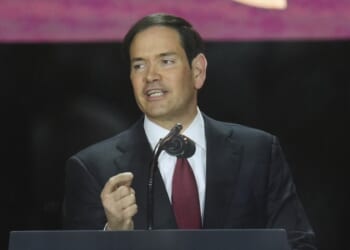
On Monday, Secretary of State Marco Rubio said: “Israel always has a right to protect itself…. If Hezbollah is going to launch missiles or launches missiles at them, Israel has every right to respond to that, or to prevent that from happening….That’s always been understood. It’s being understood during the ceasefire.”
The problem is that it hasn’t been “understood” too clearly, as Israel has been under constant pressure to seriously constrain its counterattacks.
On Monday night, however, the Israeli Air Force hit about 70 targets in Lebanon, including command centers and weapons depots in the city of Tyre—while still, at the time of writing, steering clear of Beirut.
Where things will go from now can’t be predicted. But the situation of making Israel fight with one hand behind its back can’t continue. It wouldn’t be justified even if the U.S.–Iran peace negotiations were really leading somewhere. But—all of a piece with the viciousness and cynicism of Iran and its bloc—there are weighty reasons to doubt that.
Editor’s Note: Thanks to President Trump and War Secretary Pete Hegseth’s leadership, the warrior ethos is coming back to America’s military.
Help us report on Trump and Hegseth’s successes as they make our military great again. Join PJ Media VIP and use promo code FIGHT to receive 60% off your membership.