Cubans are no different from anyone else on this earth; God has endowed them with rights to life, liberty, and the pursuit of property. For the past 67 years, a pitiless regime, run mostly by one family, has deprived them of these rights, and when they have raised their voices, the regime’s henchmen have thrown them into dungeons and left them there for years.
Terror always works. Stalin died of natural causes, as did Mao. It took an invading army made up of some 50 countries, led by the U.S. and Britain, to dislodge Adolf Hitler. There’s not much an unarmed population can do when those with a monopoly on violence are sufficiently unfeeling to repress their compatriots.
But now there is a glimmer of hope. For the past several months, and thanks to the actions of the Trump Administration, Cubans, in the seventh decade of their misery, do seem to be getting closer and closer to enjoying the rights that God endowed them with (or, if you prefer, nature). The planets do seem to be aligning such that enough of the regime’s enforcers will start refusing to repress their own people.
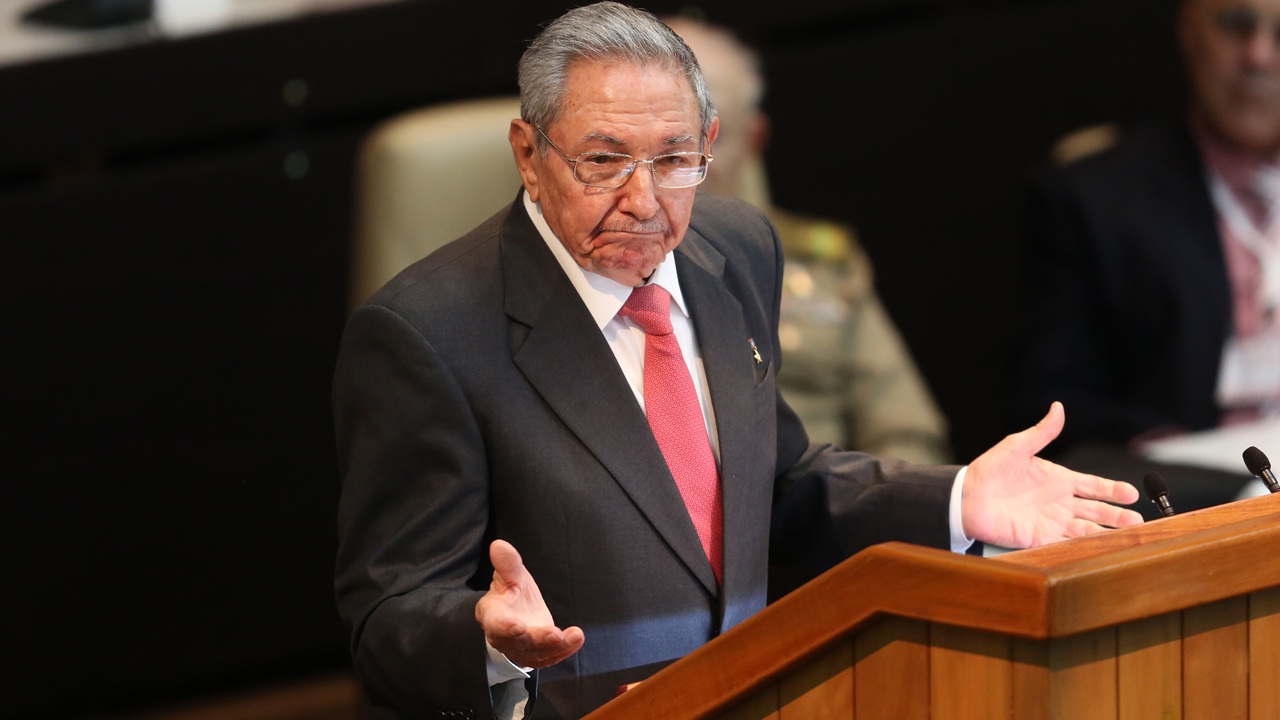
Today, on the 124th anniversary of Cuba’s independence, huge steps were taken. The first was that the U.S. Justice Department unveiled criminal charges against Raul Castro, the reigning 94-year-old patriarch of the family that has called the shots (and that is the precise term) in Cuba since the victory of the Revolution in 1959.
Raul was indicted for his involvement in the 1996 downing of two Cessna planes being flown outside of Cuba’s territorial waters by American pilots working for the U.S.-based charity group Brothers to the Rescue, which used to fly search-and-rescue missions to spot Cubans fleeing the island on rafts who found themselves in distress in the Florida Straits.
Four men aboard the two Cessnas were burned to death when their planes erupted into fireballs after being shot at by Cuban pilots aboard Soviet-made MiG fighter planes. One of the Cuban fighter pilots was recorded boasting after firing his guns, “We blew his [testicles] off. He won’t give us any more [expletive] trouble.”
Castro was defense minister at the time for his brother Fidel Castro, the leader of the 1959 Revolution and the dictator who single-handedly ran Cuba for many decades. In an audio recording that emerged in 2006, Raul is heard saying: “I told them [the Cuban pilots] to try to knock them down over [Cuban] territory, but they [the pilots aboard the two Cessnas] would enter Havana and go away. Of course, with one of those missiles, air-to-air, what comes down is a ball of fire that will fall on the city … Well, knock them down into the sea when they reappear.”
In February, four U.S. lawmakers asked President Donald Trump to indict Raul Castro in connection with the these events.
Many other things have happened recently to lead even the most skeptical observer to have hope that change may come to Cuba yet. Earlier this month, the head of the Central Intelligence Agency, John Ratcliffe, visited Havana to deliver a message from President Trump to the ruling regime.
Axios reports that an official has told it that Cuba has bought 300 drones from Russia for use against the U.S. naval base in Guantanamo Bay, in eastern Cuba, and possibly U.S. ships.
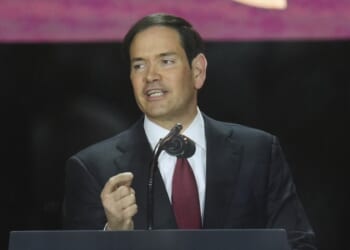
In another key move today, Secretary of State Marco Rubio sent Cubans a video message explaining to Cubans on the island how their suffering is the result of the regime’s cruel repression and offering U.S. support.
Speaking in Spanish, Rubio, the proud son of Cuban exiles, told Cubans that “The real reason you don’t have electricity, fuel, or food is because those who control your country have plundered billions of dollars, but nothing has been used to help the people.”
“Cuba is not controlled by any ‘revolution,’” explained Rubio. “Cuba is controlled by GAESA,” the conglomerate that controls 70% of the Cuban economy. GAESA was founded by Raul Castro, who still wields great power over it today.
“President Trump is offering a new relationship between the U.S. and Cuba,” Rubio said in the video. “But it must be directly with you, the Cuban people, not with GAESA.”
President Trump’s vision for Cuba, Rubio explained, was for it to be a normal country, a place “where you can complain about a failing system without fear of going to jail or being forced to leave your island.”
“This is not impossible. All of this exists in the Bahamas, the Dominican Republic, Jamaica, and even just 90 miles away in Florida. If owning your own business and having the right to vote is possible around Cuba, why is it not possible for you in Cuba?”
Cubans can get back to this life. They used to have it.
Today’s U.S. actions against Cuba might convince the Castros’ goons that the jig is up. They might realize that it’s not worth it to continue repressing a population exploding into protests. After the regime finally falls, the long-suffering Cubans may begin the long and arduous process of reconstruction.
Cuba was so good at growing sugarcane that it produced about one-third of world sugar exports before the 1959 Revolution. Then, when Marxism’s central planning destroyed the economy, the Revolution began producing internal repression and exporting violent mayhem to the world.
Today, hopefully, that starts to change.