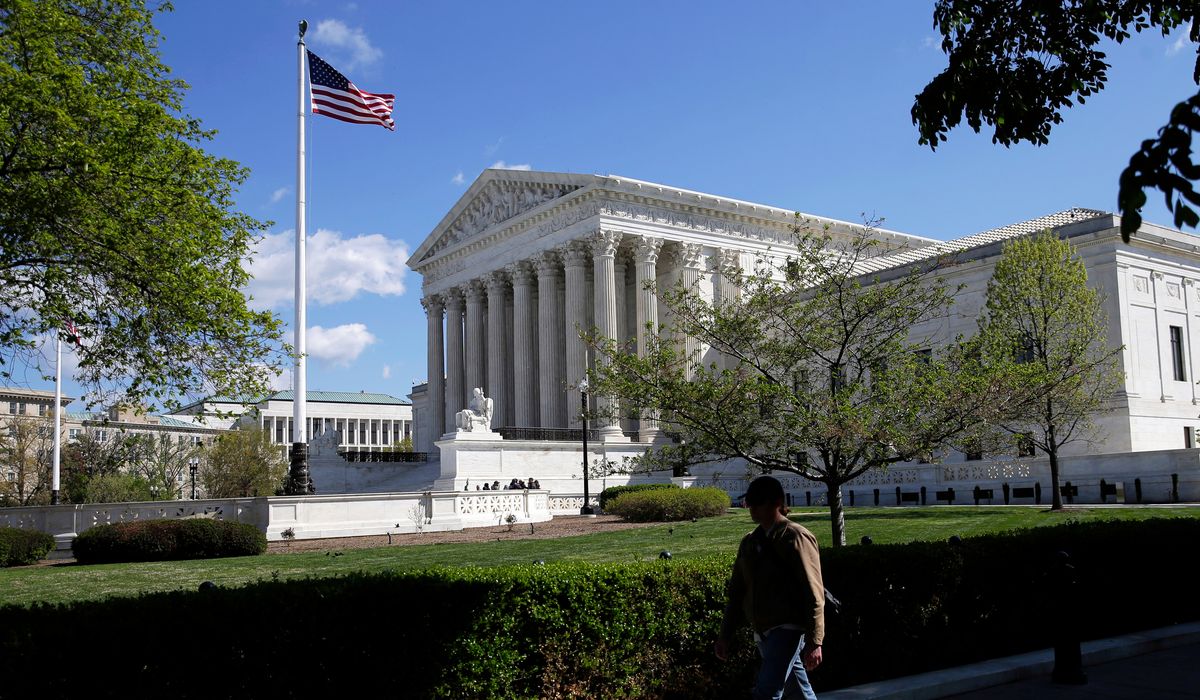
The Supreme Court has ruled that Chevron can force a climate change lawsuit to be heard in federal court rather than a less friendly state court, delivering a significant legal victory to oil companies preparing to battle an onslaught of global warming cases.
In an 8-0 ruling on Friday, the justices said Chevron was acting at the behest of the federal government when it took the actions that may have damaged Louisiana’s coastline. That, the court said, means any lawsuit challenging those actions can be forced into federal court.
The ruling could undermine dozens of lawsuits filed by localities in Louisiana, including a $745 million judgment against Chevron by one Louisiana jury last year.
The case turns on the way the law was written and doesn’t guarantee the companies will win the cases themselves.
A Chevron gas station in Alameda, …
more >
But the battleground on which the cases would be fought is important, with state courts and juries seen as likelier to be antagonistic to oil companies than federal courts would be.
The issue before the justices was whether Chevron’s activities in Plaquemines Parish, Louisiana, were “relating to” its work for the federal government. If so, the company was allowed, under the law, to remove the parish’s lawsuit from state court to federal court.
Chevron and the federal government said the oil drilling in question was done under a World War II-era federal contract to ramp up production of aviation gasoline. Avgas was used to power piston-engined fighters.
Louisiana argued that damage to the coastline was too tenuously connected to the World War II contract. The state and the parish said the feds only asked for the avgas, and it was Chevron’s own decisions about how to produce it that caused the damage.
Justice Clarence Thomas, a George H.W. Bush appointee who wrote the key opinion Friday, said Chevron got it right.
“Chevron’s wartime crude-oil production was closely connected to its wartime avgas refining, so the parish’s suit challenging that crude-oil production relates to that refining,” he wrote.
The federal law governing removing lawsuits applies to federal officers but also to anyone acting “under” them. It covers actions “for or relating to” whatever they were doing for the feds.
Justice Thomas said that “sweeps broadly.”
Justice Samuel A. Alito Jr., a George W. Bush appointee, didn’t take part in the case.
Justice Ketanji Brown Jackson, a Biden appointee, wrote her own opinion agreeing with the gist of the ruling but saying she would have applied a higher standard to the connection to federal activities.
She said she felt Chevron still met that bar anyway.
Plaquemines is one of dozens of Louisiana parishes that sued oil and gas companies under a 1978 state law governing oil production along the state coastline.
The parish said Texaco, in drilling for oil at the Delta Duck Club field, used bad drilling, storage and transportation methods, all of which led to coastal erosion. Chevron acquired Texaco in 2001.
Chevron filed to have the case heard in federal district court instead.
The federal court declined, and the 5th U.S. Circuit Court of Appeals affirmed that ruling.
Plaquemines Parish, southeast of New Orleans, says it has lost about 250 square miles of land over the last 50 years. Louisiana as a whole says it lost about 2,000 square miles between 1932 and 2016.
Plaquemines won a $745 judgment in a state court last year. That was the first of more than 40 lawsuits to reach a verdict.
Friday’s decision likely means that case will now be refought in federal court.