This may sound like a Kevin Bacon-style degree-of-separation connection, but please bear with me. I’m going to try to connect a dumb decision in 1977 that ultimately led to Somali immigration to Minneapolis.
Essentially, it was a period of chaos that led to corruption.
When Siad Barre ordered the invasion of Ogaden in 1977, the objective seemed straightforward: seize territory and unite ethnic Somalis under a single flag.
Somali forces quickly advanced; however, the support Barre expected from the Soviet Union shifted to Ethiopia, followed by Cuban troops entering the fight, and the offensive collapsed.
In Somalia, Mohammed Siad Barre had seized power in a coup in 1969 and had declared Somalia a socialist republic. The Soviet Union and Somalia had then signed a Treaty of Friendship and Cooperation in 1974. However, Siad Barre had designs on the Ogaden region of Ethiopia and resented the growing closeness between Ethiopia and the Soviet Union. In response, the Somali dictator reached out to the United States in hopes of securing military aid and eventually expelled the Soviets from the country. The Soviets chose to support Addis Ababa, keeping the bigger prize in the zero sum game of the Cold War. The United States was actively considering aid to Mogadishu when Somalia invaded Ethiopia, completing the total flip in the alliances.
The defeat accomplished more than simply ending a war; it exposed deep fractures within Somalia’s leadership and military. Barre answered with repression, but there were too many cracks for him to patch.
Armed opposition groups gained strength, regions pulled away, and by 1991 the central government disappeared. Somalia fell into a prolonged civil war that pushed families out with little more than what they could carry.
Somalis use the word burbur (‘catastrophe’) to describe the period from December 1991 to March 1992, when the country was torn apart by clan-based warfare and factions plundered the remnants of the state and fought for control of rural and urban assets. Four months of fighting in Mogadishu alone in 1991 and 1992 killed an estimated 25,000 people, 1.5 million people fled the country, and at least 2 million were internally displaced.
In the midst of drought, the destruction of social and economic infrastructure, asset stripping, ‘clan-cleansing’ and the disruption of food supplies caused a famine in which an estimated 250,000 died. Those who suffered most came from the politically marginalised and poorly armed riverine and inter-riverine agro-pastoral communities in the south, who suffered waves of invasions from the better-armed militia from the major clans.
Many of those families spent years in refugee camps before resettlement programs brought them to the United States. Federal placement systems often directed arrivals to cities with available work and established support networks.
Minneapolis became the largest Somali population center in the country, and over time, immigrants opened businesses, formed tight communities, and rebuilt lives far from the Horn of Africa.
As we all know, that chapter doesn’t close this story.
In September 2022, federal prosecutors in Minnesota uncovered one of the largest pandemic-era fraud cases in the country. Andrew Luger announced charges against 47 defendants tied to a scheme involving a federally funded child nutrition program.
As the case progressed, that number grew to 79 people, where 63 suspects in what became known as the Feeding Our Future fraud case were found guilty; 57 pleaded guilty, with some taking plea deals, and seven people were found guilty at trial.
The case discovered that over $250 million meant to feed children was diverted through false claims, fake meal counts, and shell companies.
Investigators described a network that exploited emergency funding rules created during the pandemic, when oversight loosened to quickly move money. That created openings, which didn’t sit open for very long.
Remember, the fraud didn’t simply appear out of nowhere; it took root inside a system built for speed and massive pandemic spending, where weak oversight invited abuse.
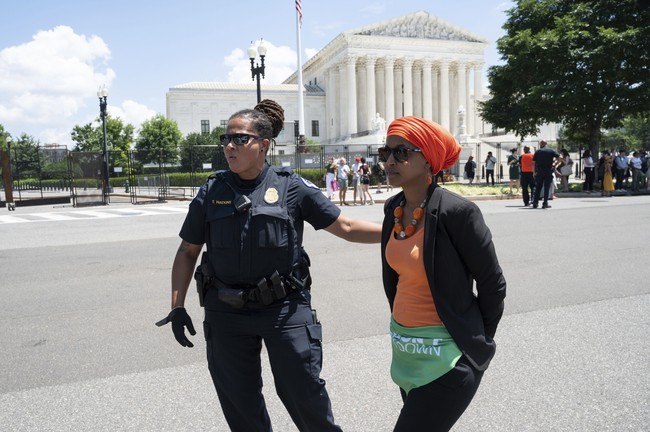
Many on the right noticed that many defendants in the case were Somali, a detail that sparked a heated public debate. Enter Rep. Ilhan Omar (D-Minn.) and her fiery response, defending her constituents during a recent state hearing.
There isn’t a straight line running from the Ogaden battlefield to a Minnesota courtroom, but there is a chain of consequences that does exist.
And it continued, at least until citizen-journalist Nick Shirley released a December 2025 viral video that documented Somali-run childcare centers in Minneapolis and St. Paul appearing empty or inactive, yet still drawing millions in federal funds.
His on-the-scene footage of these specific sites in the Twin Cities area sparked federal raids and renewed scruitinty.
Basically, Shirley did the work that “professional” journalists should’ve been doing all along. You know the story: drawing a large, blue circle around the Twin Cities paired with people having that “D” after their names offered more security than Israel’s Iron Dome.
Shirley’s reporting sparked federal raids and renewed scrutiny.
If you’re a regular here at PJ Media, you already know all of this, so I’ll skip the ridiculous Minnesota Governor Tim Walz (D-Jazz Hands) and continue with the Somali line of thought.
These allegations tie straight back to the Feeding Our Future scandal, where, as Shirley highlighted, they had previously collected over $6.3 million from that program by claiming to serve 2.8 million meals that prosecutors say were never provided.
The same network of operators now faces expanded charges over up to $9 billion in fraud cases.
All of this centers on a concentrated group within the Somali community in the Twin Cities. Omar’s district includes these exact neighborhoods, and she has spoken publicly on the investigations, cautioning against broad generalizations, such as calling half the country bigots, while drawing criticism for her associations with Feeding Our Future sites.
History doesn’t stop at borders or generations; Somalia’s collapse drove mass displacement, resulting in resettlement in Minnesota. And in this corner of Minneapolis/St. Paul, a subset of that migration entered America’s expansive federal systems, where some people did some things, allegedly.
The harder truth is straightforward: instability rarely stays contained. It travels through people, institutions, and time. Minnesota didn’t create Somalia’s past; it now lives with some of its consequences.
It would be so nice if history announced its next stop, where one decade’s decisions echo across oceans and into systems never built to absorb them. Somalia’s collapse didn’t end when the government fell; it followed its people into new homes and new vulnerabilities.
Minneapolis is simply a point on that long arc, where outcomes visible today grew from decades of flight, resettlement, and pressure on large government programs.
I’m not using a broad brush to paint all Somalis as corrupt. Yet I’d venture to say that when fleeing a dictator’s actions in their home country, certain people paid attention and took notes.
Chaos doesn’t stay put.
Want the deeper story behind how global events reshape American cities in ways most people never notice? This isn’t just about Somalia or Minneapolis. It’s about how decisions ripple across decades and land where no one expects. Unlock the full analysis and get 60% off a PJ Media VIP membership with promo code FIGHT right now.