The Senate Homeland Security and Governmental Affairs Committee approved its portion of a multiyear immigration enforcement funding package that Republicans hope to send to President Trump’s desk by week’s end.
The committee’s 8-7, party-line vote advances the legislation to the Senate Budget Committee, which is scheduled to vote on Wednesday to report it to the floor.
The Senate Judiciary Committee’s portion of the bill is still being tweaked and will be added on the floor.
The Homeland Security panel’s updated portion provides $23 billion of the total funding.
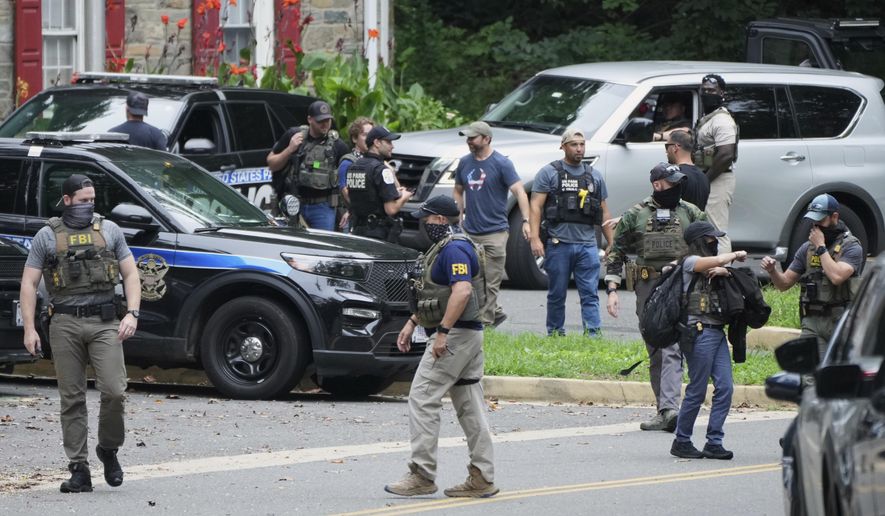
Officers from various federal agencies, including …
more >
That includes $13 billion for U.S. Customs and Border Protection, $7.5 billion for U.S. Immigration and Customs Enforcement and $2.5 billion for the Department of Homeland Security to spend on immigration enforcement as it sees fit.
Republicans added language in the ICE funding portion of the bill to require $108.5 million to be spent on Homeland Security Investigations to hire more investigators and forensics analysts to support the identification and rescue of child sexual exploitation victims.
The updated text reduces the CBP funding from the committee’s original draft by $9.6 billion.
The funding reduction was not explained during the markup, but a committee aide told The Washington Times the money will be shifted to the Judiciary Committee’s portion of the bill.
Republicans are using the filibuster-proof budget reconciliation process to fund ICE and the border patrol functions of CBP because Democrats would not support funding the agencies through the annual appropriations process, which led to a record 76-day shutdown of DHS.
The funding is meant to last through the end of Mr. Trump’s presidency to prevent similar fights in the next three years.
“This committee will not let Senate Democrats block paychecks for our border patrol and other law enforcement,” Homeland Security Chairman Rand Paul, Kentucky Republican, said. “We will not let them shut down inspections for fentanyl, weapons or nuclear material. And we will not stand idly by while they defund the interdiction of child sex trafficking across the border.”
Democrats countered that they held up ICE and CBP funding in pursuit of guardrails on the president’s deportation force after federal agents killed two U.S. citizens protesting enforcement actions in Minnesota early this year.
“We are doing this whole irresponsible and hyper-partisan spending exercise because the Republican majority does not want to pass common-sense reforms that would rein in ICE and hold agencies accountable,” said Michigan Sen. Gary Peters, the committee’s top Democrat.
Democrats offered some of their proposed changes to immigration enforcement policies as amendments during the markup.
Those included proposals to require immigration enforcement agents to wear identification, obtain a judicial warrant before entering a private home, improve their use of force standards and receive de-escalation training for interactions with civilians and protesters.
Democrats also offered amendments to fund medical care and improve conditions for immigrants in detention and to require DHS to let members of Congress conduct unannounced visits to detention facilities for oversight purposes.
Mr. Paul moved to table every one of the Democrats’ amendments, arguing they did not comply with the budget reconciliation rules.
Democrats said the Senate parliamentarian had not reviewed the amendments to make that determination.
While most of the funding in the reconciliation package is earmarked for immigration enforcement, the Judiciary Committee portion of the bill includes $1 billion in funding for the Secret Service to use for security, including “hardening” of the White House ballroom project.
Democrats offered several amendments to redirect the $1 billion to other priorities, which Mr. Paul also moved to table, noting that the Homeland Security text did not include any money for the ballroom.
Mr. Paul said the amended text the committee approved has been fully cleared by the Senate parliamentarian after she raised a few objections to the original draft.
Republicans removed language in the bill that said CBP could use the funding for initial screenings of unaccompanied alien children.
The parliamentarian said that provision would have undermined decades-old legal protections for noncitizen children, as evidenced by the Trump administration’s implementation of similar funding Republicans provided in the One Big Beautiful Bill.