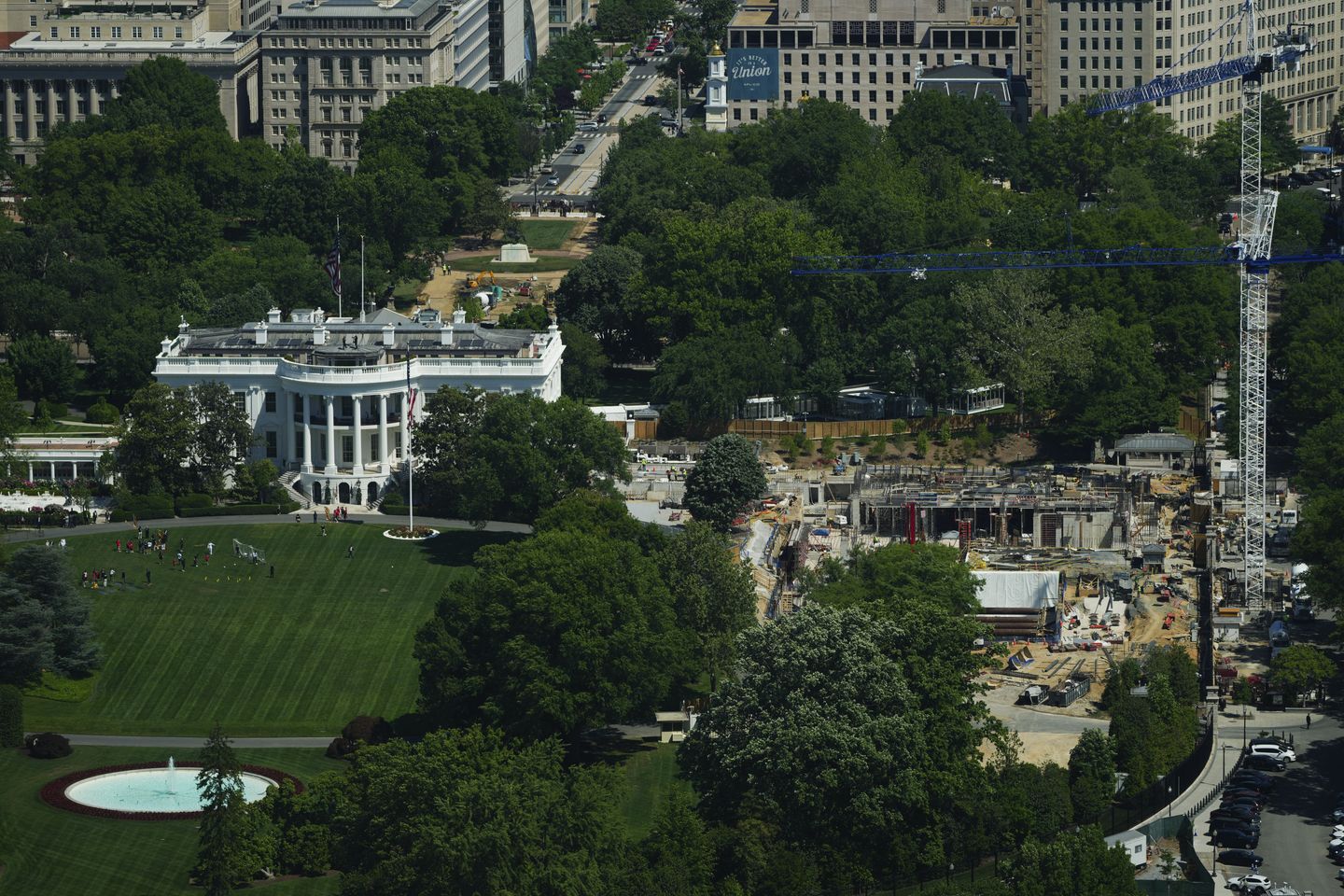
The Secret Service wants Congress to give it $1 billion for security but says $220 million of it, rather than the full amount, will be spent on the White House ballroom project.
The Secret Service is now clarifying that the $220 million will be spent on “the above and below ground hardening requirements of the East Wing Modernization Project,” with the remainder of its $1 billion funding request intended for other security, technology and training needs.
The spending justification that the agency provided to Congress on Tuesday – obtained by The Washington Times – said the hardening will include bulletproof glass, drone detection technologies, chemical and other threat filtration and detection systems and other national security features.
“Importantly, as the legislative text makes explicit, none of these funds will be used to support non-security improvements at the White House,” the Secret Service said.
Senate Republicans tucked the $1 billion for the Secret Service into a $72 billion filibuster-proof budget reconciliation package that is primarily designed to fund immigration enforcement agencies.
The $1 billion has drawn a lot of attention because President Trump has pegged the cost of the ballroom project at roughly $400 million, and said it would be paid for with private donations.
The GOP bill says the $1 billion is for “security adjustments and upgrades, including within the perimeter fence of the White House Compound to support enhancements by the United States Secret Service relating to the East Wing Modernization Project, including above-ground and below-ground security features.”
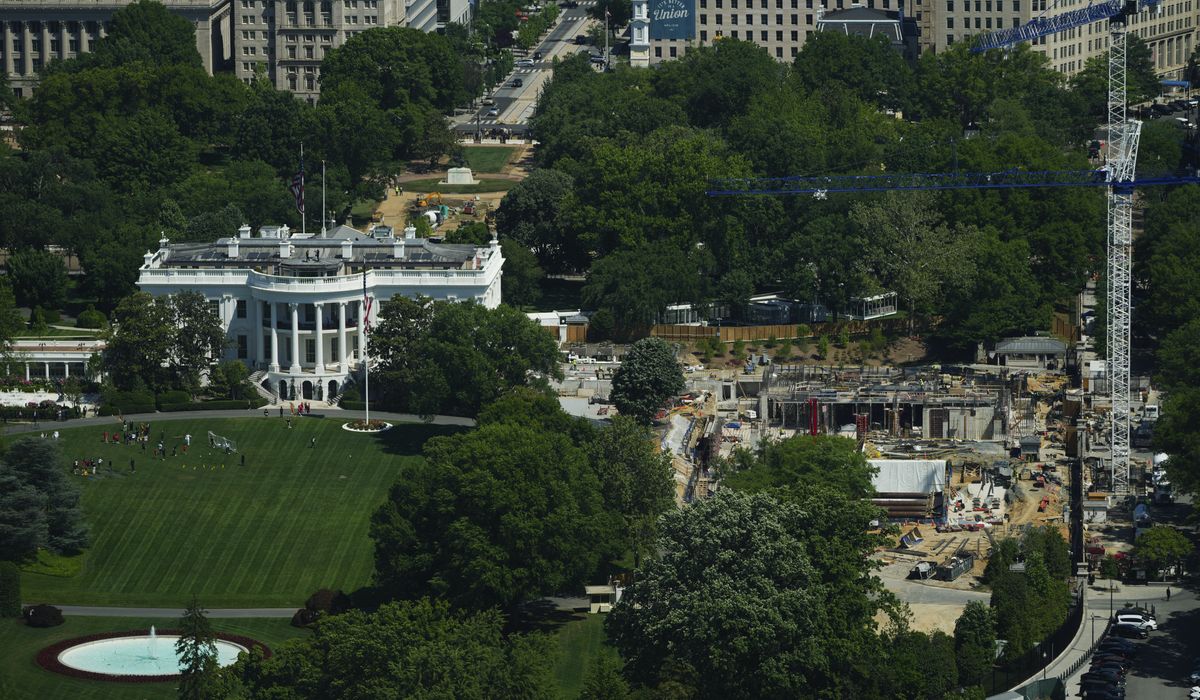
The East Wing Modernization Project is the formal name for the demolition and reconstruction of the part of the White House that will house a new 22,000-square-foot ballroom that can seat 1,000 guests, a new office suite for the first lady and a replacement movie theater.
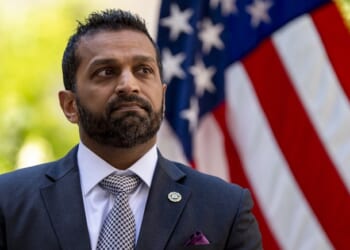
In addition to the written justification, Secret Service Director Sean M. Curran attended Senate Republicans’ weekly conference lunch to explain how his agency would spend the $1 billion.
“I don’t have any details I need to support it,” Sen. John Curtis, Utah Republican, told reporters ahead of the lunch.
“If I were a businessman and an employee came and said, ’I have a project and it’s a billion dollars,’ I’d say, ’You made that number up, right?’ Like, where did the number come from?” he said. “I want to see data, if it’s really for extra security.”
The Secret Service’s justification breaks down the $1 billion into six buckets:
— $220 million for security features of the East Wing project.
— $180 million for a new White House visitor screening facility.
— $175 million for training Secret Service agents “in the modern threat environment,” including updating the agency’s training facilities.
— $175 million to improve security for Secret Service protectees, including at “frequently visited venues facing heightened risk due to their public visibility and static nature.”
— $150 million for the Secret Service Special Operations Division to invest in state-of-the-art technologies to counter drones, airspace incursions, unmanned systems and biological threats.
— $100 million for increased security at high-profile national events that require significant planning, specialized training and extra assets.