A majority of justices, though sympathetic, seemed reluctant to allow members of the Falun Gong movement to sue a U.S. tech firm they accused of assisting the Chinese communist government of “aiding and abetting” in torture.
In the case of Cisco v. Doe, the Supreme Court is considering a lower court’s ruling that would have allowed the lawsuit against Cisco to proceed.
“This case is about the systematic persecution of a religious minority by Chinese authorities and Cisco’s partnership in that persecution,” Paul Hoffman, lawyer for the plaintiffs, said during his argument.
“Each of the plaintiffs was tortured or killed by Chinese authorities because of their religious beliefs. Cisco provided substantial assistance to this persecution from U.S. territory by providing a customized surveillance system designed to identify Falun Gong believers to Chinese authorities for detention and forced conversion through torture and other barbaric treatment.”
The Falun Gong spiritual movement spread in China in the 1990s, but the Chinese Communist Party banned its practices in 1999. The lawsuit against Cisco commenced in 2011.
Most of the conservative-leaning justices on the court expressed concerns that opening up a new avenue for lawsuits could pose foreign policy and separation-of-powers problems.
The question before the court is whether two statutes, the 18th-century Alien Tort Statute and the 1991 Torture Victim Protection Act, provide a cause of action to sue. But several conservatives asked why Congress didn’t specify the right to sue in the law.
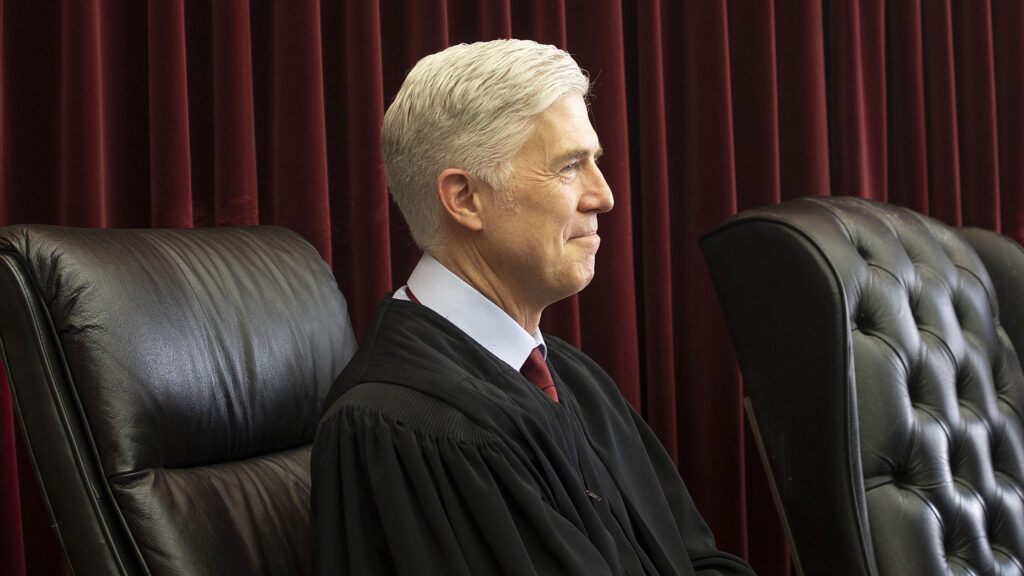
“The job for creating causes of action because of foreign policy concerns, as sympathetic as this particular case certainly is, that the responsibility for creating causes of action generally lies not with judges but with Congress,” Justice Neil Gorsuch said.
During arguments by Cisco attorney Kannon Shanmugam, Justice Sonia Sotomayor spent the most time questioning him.
“It is alleged that by its internal and public statements it [Cisco] knew that those people would be tortured,” Sotomayor asked. “So what is the problem with how that fits into any conscious aiding-and-abetting statute, including our own domestic one that requires active inducement and active participation.”
Shanmugam said, “With regard to the allegations in this case, Justice Sotomayor, it will not surprise you to learn that Cisco vigorously disputes those allegations.”
He also argued Cisco cannot be held responsible for torture, as it didn’t commit the acts.
“That is a form of secondary liability. It’s not full-fledged aiding-and-abetting liability,” he said. “And that just underscores that when Congress acts, it often acts in a restricted fashion with regard to secondary liability.”