Think lower crime rates are an unalloyed win for law-abiding residents? Think again — at least if you’re in California’s notoriously woke Bay Area.
Sure, San Francisco’s KTVU-TV knows that vehicle break-ins are down in Oakland. That’s a positive thing, particularly given that just a few years ago, people were literally leaving their car trunks open there to prove there was nothing worth stealing in their vehicles. Ergo, there shouldn’t be a downside to crime falling.
And in this case, it’s falling fast in Oakland: a 37 percent decrease in car break-ins year over year, KTVU reported last week. Great news, right? Yay! Way to get it together for once, Bay Area!
But of course, there’s a catch — to reporters in one of the most reliably liberal areas in the country, anyway:
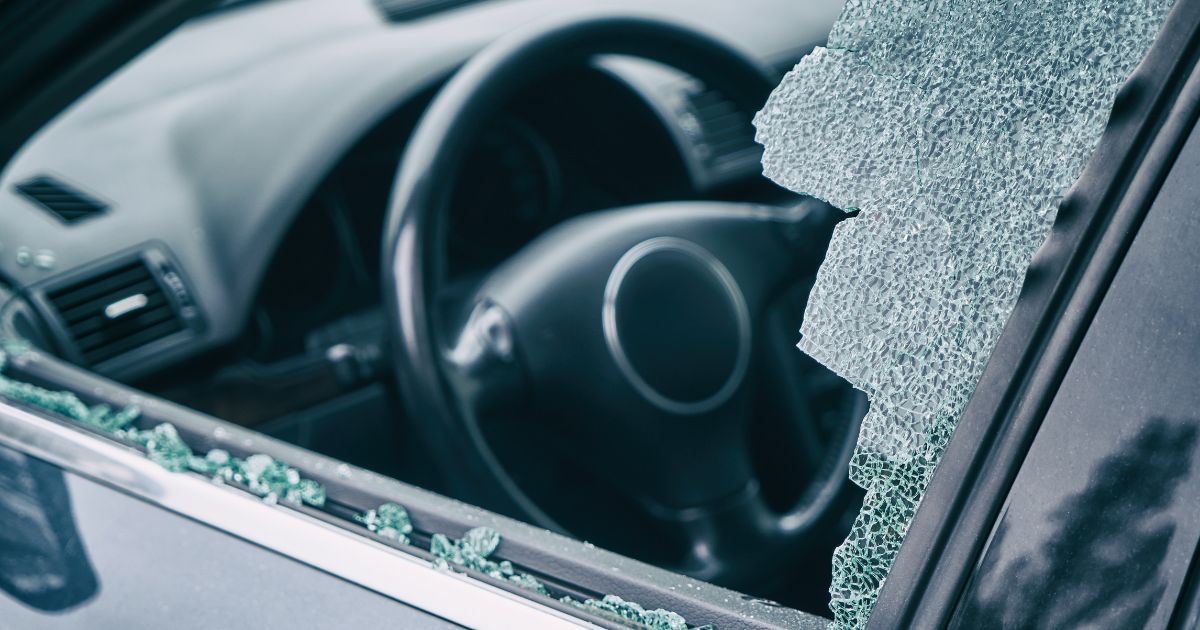
What’s good news for car owners is less so for repair shops that specialize in window and windshield replacements.
Multiple businesses have reported a sharp decline in their income as a result.
At Low Price Auto Glass on San Leandro Street in East Oakland, owner Raj Singh said the decrease has directly impacted a once-reliable portion of his business.
Is the Bay Area too woke?
“There is the door glass repair if there is any break-ins or vandalism — that segment of my business has been down about 30 percent,” Singh said.
Here’s a tip for you: If a “reliable portion” of your business is related to the massive amount of criminality in your area, you are in business in the wrong area, unless you’re a criminal or you countenance criminality.
And it’s not only Mr. Singh: James Serwa, who also owns a glass repair shop, estimated that 35 to 40 percent of his business has evaporated because there have been fewer break-ins.
“We’ve taken quite a hit,” Serwa said.
Again, if your business model is based on getting a third of your business because your urban area is a crime-ridden hellhole where people keep their trunks open to prove there’s nothing worth stealing, you aren’t in the right place.
Serwa says he’s laid off three of his seven window installers because of the decreased demand from not having car windows smashed.
“We noticed this trend about a year ago, about the same time the catalytic converters started to die out, so did the calls for break-ins,” Serwa said.
Yes, catalytic converter theft — also a big thing in the Bay Area — has dropped off, too. It’s like a cyanide dealer complaining that a crackdown on murderous spouses has really put a damper on this year’s profits.
At least Singh had the temerity to be happy about crime being down.
“It’s a surprise, but I would say from a community point of view, it’s a good surprise,” he told KTVU.
And he’s managed to keep his business afloat the honest way: by repairing glass that got damaged due to legitimate causes like road debris.
KTVU’s conclusion, though? “The overall effect underscores a mixed outcome: improved public safety alongside new economic challenges for certain sectors.”
A mixed outcome: Sure, crime is down, but won’t you please think about the people who profit from crime?
In 1850, French economist Frédéric Bastiat introduced the “Parable of the Broken Window” to illustrate the fallacy that this kind of economic activity is good. He told a hypothetical story of a shopkeeper whose careless son breaks a window.
Suppose it cost six francs to repair the damage, and you say that the accident brings six francs to the glazier’s trade — that it encourages that trade to the amount of six francs — I grant it; I have not a word to say against it; you reason justly. The glazier comes, performs his task, receives his six francs, rubs his hands, and, in his heart, blesses the careless child. All this is that which is seen.
But if, on the other hand, you come to the conclusion, as is too often the case, that it is a good thing to break windows, that it causes money to circulate, and that the encouragement of industry in general will be the result of it, you will oblige me to call out, “Stop there! your theory is confined to that which is seen; it takes no account of that which is not seen.”
It is not seen that as our shopkeeper has spent six francs upon one thing, he cannot spend them upon another. It is not seen that if he had not had a window to replace, he would, perhaps, have replaced his old shoes, or added another book to his library. In short, he would have employed his six francs in some way, which this accident has prevented.
Apparently, either the Bay Area is so far behind the times that they haven’t read Bastiat in the 176 years since he laid out, in three paragraphs, how broken windows are bad, economically, or their problem is that the most prominent university in the area is the University of California at Berkeley. Whichever it is, if you have any sense and you’re still around there, get the hell out. Rest assured, they’ll start breaking windows again in a right hurry to keep the James Serwas of the world rolling in repair dough.
Advertise with The Western Journal and reach millions of highly engaged readers, while supporting our work. Advertise Today.