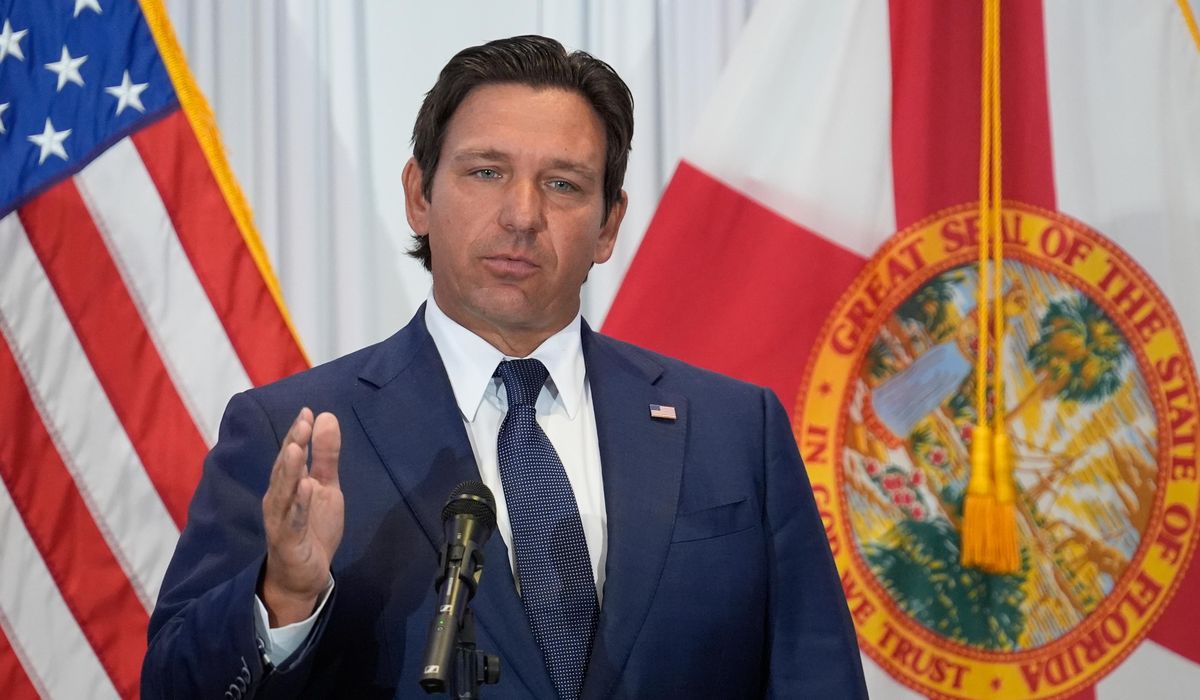
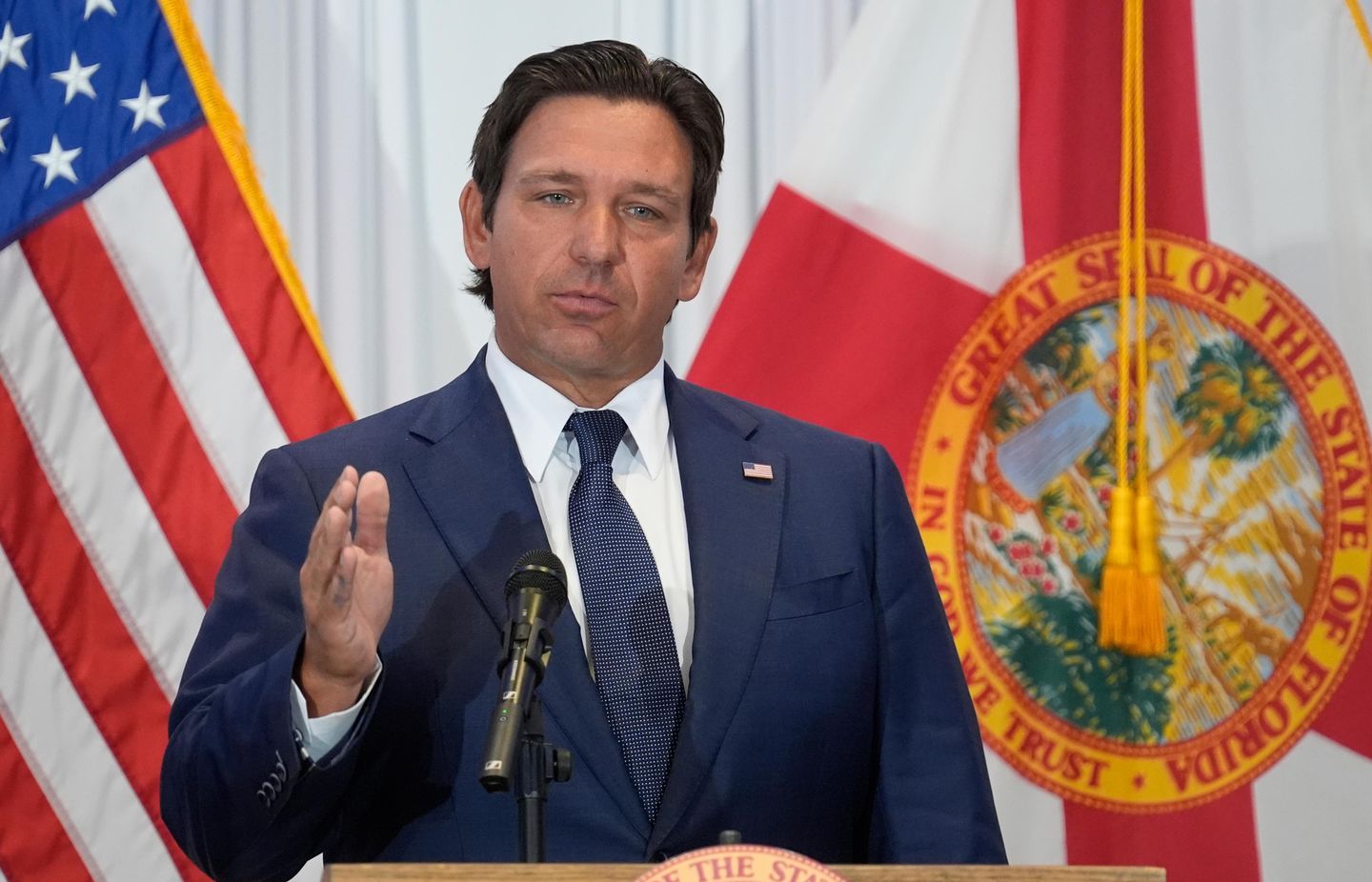
JACKSONVILLE, Fla. — Florida Gov. Ron DeSantis on Wednesday aggressively moved to make his state the first in the nation to eliminate most residential property taxes, citing wasteful spending by local governments and the need to help residents struggling to afford increasing costs.
Mr. DeSantis called a June 1 special session of the Florida Legislature, seeking its approval to add his proposal to the November ballot. State voters would then decide in the midterm election whether to implement the tax cut as a constitutional amendment.
“We need to start standing up for taxpayers,” Mr. DeSantis said, announcing the special legislative session at a press conference in Tampa.
While more than a dozen states are weighing proposals to end or reduce residential property taxes, none has moved as aggressively as Florida. It is now on the verge of becoming the first state to institute a plan that would phase out the tax entirely.
Mr. DeSantis, limited to two terms, is seeking to usher through the tax cut in his final year in office and amid speculation he will attempt another presidential run in 2028.
Florida’s initiative is part of a push to abolish or reduce property taxes across the nation.
Indiana lawmakers introduced a bill this year that would abolish property taxes beginning in 2028.
Texas Gov. Greg Abbott, who is running for reelection, has introduced a five-point plan to rid the state of a large chunk of residential property taxes by placing the measure on the ballot for voters to decide. His plan would require two-thirds voter approval for all local property tax increases.
Other states, among them Georgia, Kansas, Ohio and Nebraska, are examining proposals to reduce property taxes or cap property tax increases.
Homeowners have been clamoring for relief from rising tax bills that accompany climbing property values.
Home values surged more than 45% between the start of the COVID-19 pandemic and mid-2025, the real estate website Zillow reported.
“Changes have been made in many states to property taxes in recent years, and this will continue,” said Jared Walczak, a senior fellow at the Tax Foundation.
Mr. DeSantis’ proposal would wipe out an initial $250,000 of a residential property’s taxed value. The reduction, in combination with the state’s existing homestead tax exemption, would give 60% of Florida residential homeowners complete relief from paying any property taxes.
The governor’s proposal would phase in the elimination of the entire tax.
Mr. DeSantis said raising the state’s property tax exemption to $500,000 would eliminate property taxes for more than 90% of Florida property owners.
“I’d rather focus on folks who are new homeowners, young people, seniors on fixed incomes, middle-class folks,” Mr. DeSantis said. “It’s a way to make this a smooth transition.”
He called his plan “something that can actually get done. That is something that is really, really meaningful.”
The proposal would require the support of 60% of lawmakers in the Florida Legislature to make it to the ballot in November. It would then need 60% of Florida voters to support it.
Mr. DeSantis has been eyeing the elimination of the state’s residential property taxes since last year.
He accused Florida’s local governments of using primary residential homes as piggy banks to fund ever-increasing budgets.
Residential property taxes collected by Florida’s county and local governments have climbed from $32 billion in 2019 to $60 billion this year, much of it due to raising the valuation of homes.
“So you have a home, and all of a sudden you’re having to pay more just because the house down the street may have sold for more,” Mr. DeSantis said.
His plan faces opposition from local governments that say, without the tax revenue, they can’t keep schools open or pay for police and firefighters.
The plan could run into opposition in the Republican-led legislature.
While Senate President Ben Albritton said he supports the plan, Florida House Speaker Daniel Perez gave a tepid response to the governor’s announcement.
He has been at odds with Mr. DeSantis over several of the governor’s policy proposals, recently blocking a measure that would have broadened vaccine exemptions for Florida public school students and another measure that would limit the development of artificial intelligence in the state. Mr. DeSantis recently accused Mr. Perez of “not governing in the best interest of the people of the state of Florida,”
Mr. Perez complained that Mr. DeSantis had yet to put forward his tax elimination proposal and pointed out the Florida House passed a residential property tax cut in February, although it is a much smaller reduction.
“The Florida House has already passed a proposed constitutional amendment to eliminate homestead property taxes,” Mr. Perez said in a statement Wednesday. “We are pleased the governor has finally gotten around to share an actual proposal. We look forward to reviewing it once we have received the language.”
Mr. DeSantis started building his case for a property tax cut by establishing the Florida Department of Government Efficiency, led by Chief Financial Officer Blaise Ingoglia.
Mr. DeSantis tasked Mr. Ingoglia with auditing county and city budgets across the state. He has flagged nearly $2 billion in “excessive, wasteful spending.”
Mr. Ingoglia unearthed $75,000 spent by the city of Jacksonville on a hologram of Mayor Donna Deegan. The mayor’s ghostly 3D image greeted visitors in multiple languages inside the terminal at Jacksonville International Airport.
He also discovered Jacksonville spent $7.5 million on a mile-long sidewalk project.
Broward County officials, Mr. Ingoglia said, spent nearly $900,000 on DEI training since 2020 while Pensacola officials shelled out $150,000 to a management company that brought shows to the city theater, including performances by drag queens.
Mr. DeSantis said his plan would ensure schools and essential services stay funded by requiring local governments to use remaining property taxes “solely for core public needs,” including public safety, education, infrastructure and natural resources.
A third of all property taxes collected in the state come from primary residences that would be eligible for the cut.
The governor’s plan would establish a state trust fund to help local governments that come up short of the money needed to fund essential services and would limit local governments from raising taxes on small businesses to make up for lost revenue.
The property tax cuts exclude Florida’s “snowbirds” who live in the state part-time, as well as rental and commercial properties.
To qualify for the tax cut, a homeowner must live in the state for at least five years. Florida’s population has grown by nearly 2 million residents since 2020.
“I don’t want Floridians to go and see this on the ballot and say, ‘Oh man, I really would like the property tax relief, but I don’t want the entire state of Illinois to empty out into Florida or wherever because of this,’” Mr. DeSantis said. “That’s not going to happen.”