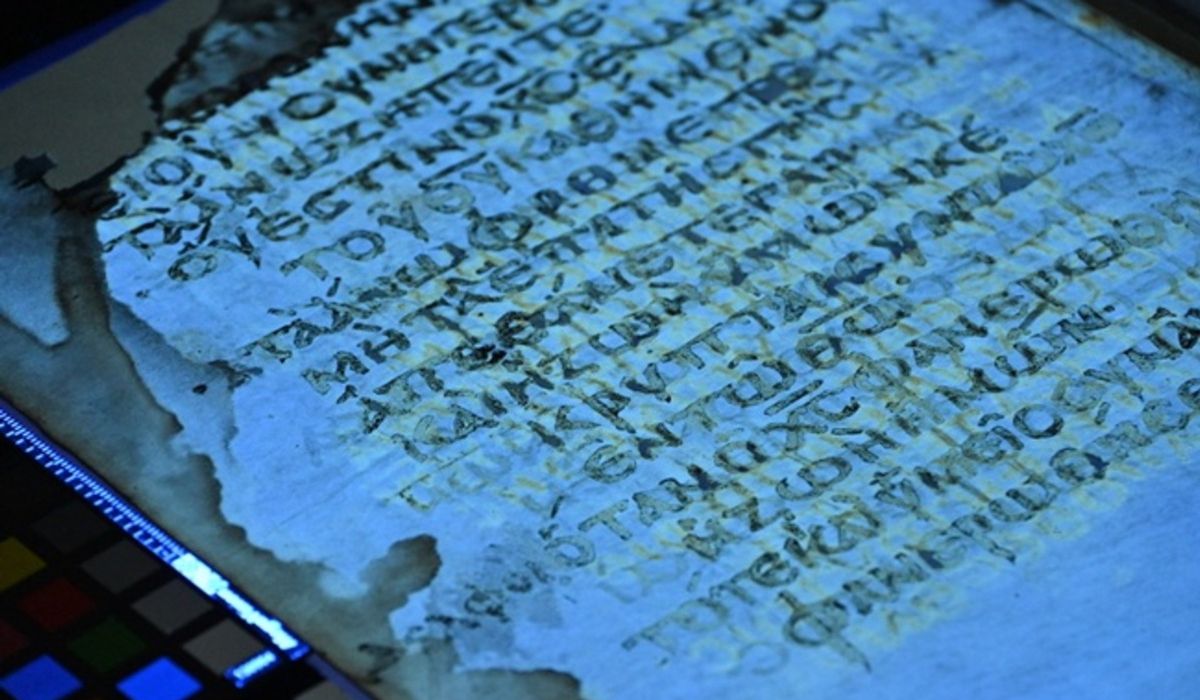
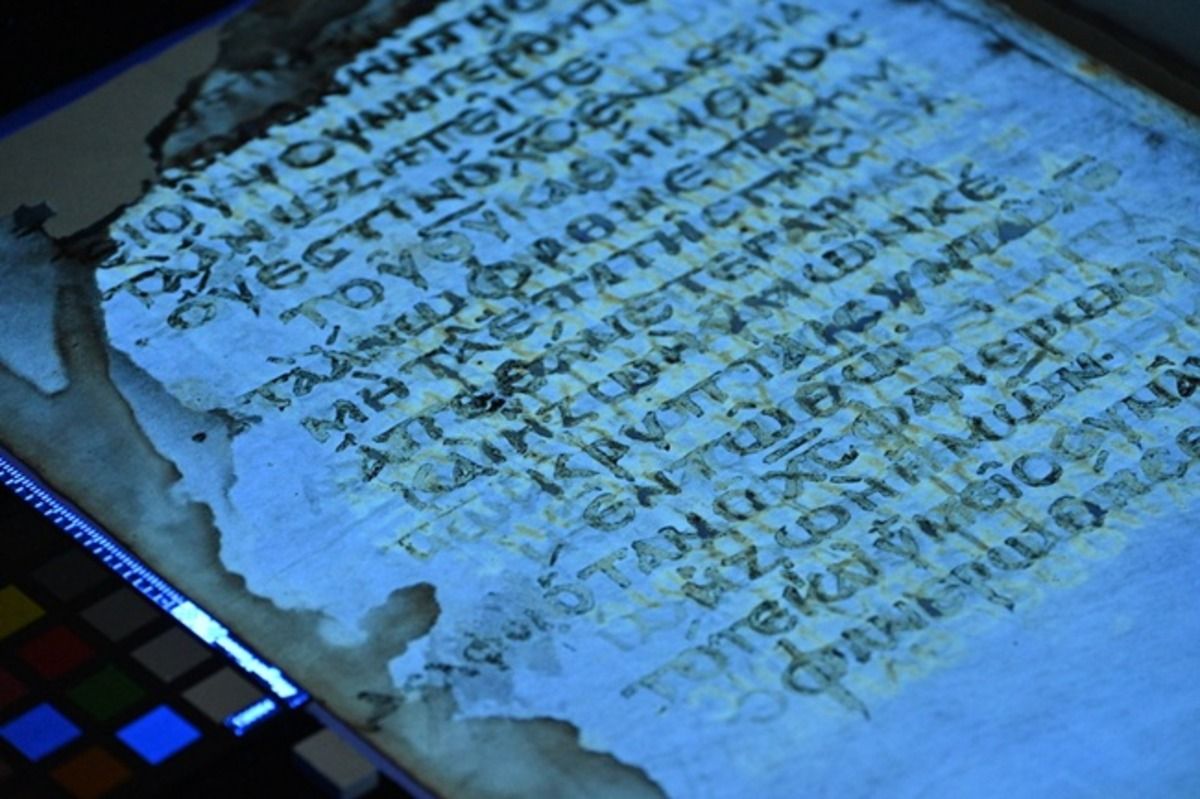
Researchers at the University of Glasgow have recovered 42 long-lost pages from Codex H, one of the most significant early New Testament manuscripts in existence, using advanced imaging technology to reveal text invisible to the naked eye.
The international team, led by Glasgow professor Garrick Allen, recovered the pages from the sixth-century manuscript, which contains a copy of the Letters of St. Paul. The university announced the discovery in an April 24 press release.
Codex H, formally known as GA 015, is a palimpsest, meaning its parchment was reused and rewritten over the centuries. The breakthrough came when researchers determined the manuscript had been re-inked at some point in its working life. The chemicals in the new ink caused what Mr. Allen described as “offset” damage to facing pages, creating a mirror image of the original text on opposing leaves — sometimes leaving traces several pages deep, barely visible to the naked eye.
Working in partnership with the Early Manuscripts Electronic Library, researchers used multispectral imaging to process images of the surviving pages and recover “ghost” text that no longer physically exists, effectively retrieving multiple pages of information from every single physical page.
The manuscript’s history took a dramatic turn in the 13th century, when monks at the Great Lavra Monastery on Mount Athos dismantled it and reused its parchment as binding material for other books. The surviving fragments are now scattered across libraries in Italy, Greece, Russia, Ukraine and France.
Among the recovered material were ancient chapter lists that, according to the university, “differ drastically from how we divide these letters today.” The fragments also reveal how sixth-century scribes corrected, annotated and interacted with sacred texts, and how books were repurposed once they fell into disrepair.
Mr. Allen said Codex H’s significance lies partly in its rarity.
“It’s an important witness to the text of Paul’s Letters in a period where we don’t have that many manuscripts,” he said, referring to the sixth through ninth centuries. The manuscript also contains more than 70 textual corrections by a scribe who cross-referenced it against another manuscript, and annotations from at least 15 later readers who left behind prayers, poems and grammatical notes.
“These annotations are often the only tangible evidence left that these anonymous people existed,” Mr. Allen said.
As for why the manuscript was ultimately taken apart, Mr. Allen suggested it had likely reached the end of its working life after six to seven centuries of use. Ironically, its disassembly may have ensured its survival — the pages, repurposed as binding material across multiple volumes, eventually found their way into European library collections where they could be rediscovered.
A digital edition of the recovered pages is freely available to the public and scholars for the first time in centuries, with a print edition also forthcoming.
Mr. Allen said the project offered a model for future work on difficult manuscripts.
“Although each manuscript is by definition unique and presents its own challenges, we think that we’ve developed a model for working with challenging manuscripts like palimpsests at a larger scale,” he said. “When manuscript and biblical scholars work closely with imaging specialists, data scientists, monastic communities, museums, and other local partners, we can really make progress in our understanding of these important documents.”
This article was constructed with the assistance of artificial intelligence and published by a member of The Washington Times’ AI News Desk team. The contents of this report are based solely on The Washington Times’ original reporting, wire services, and/or other sources cited within the report. For more information, please read our AI policy or contact Steve Fink, Director of Artificial Intelligence, at sfink@washingtontimes.com
The Washington Times AI Ethics Newsroom Committee can be reached at aispotlight@washingtontimes.com.