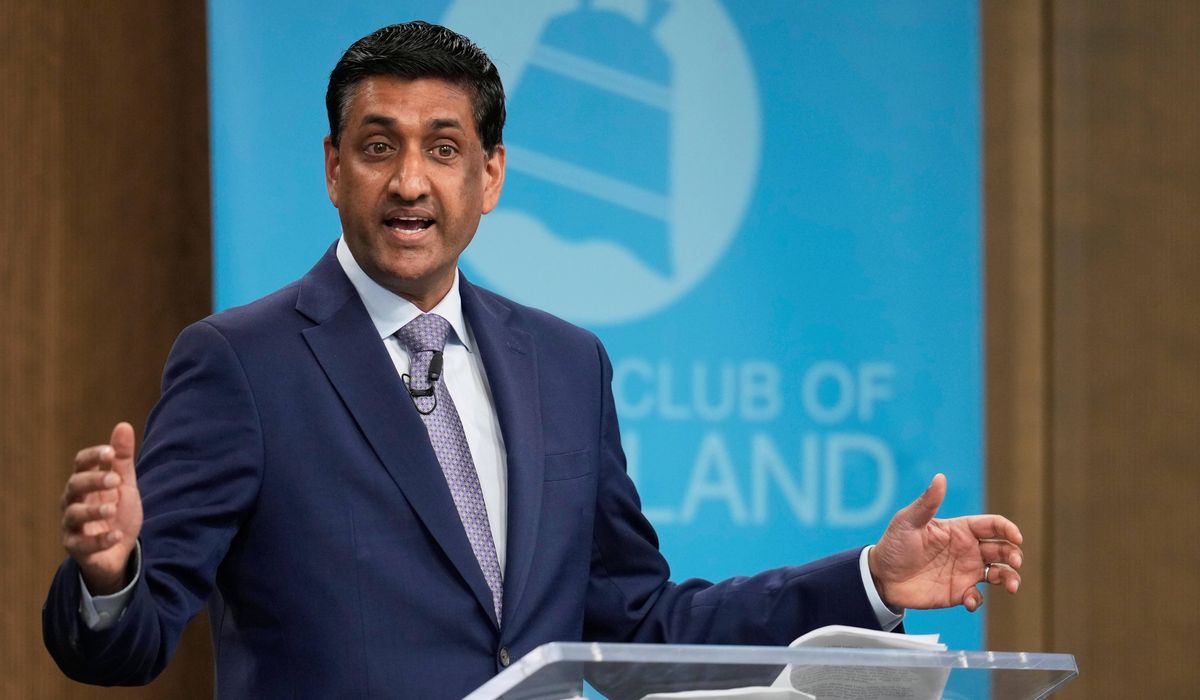
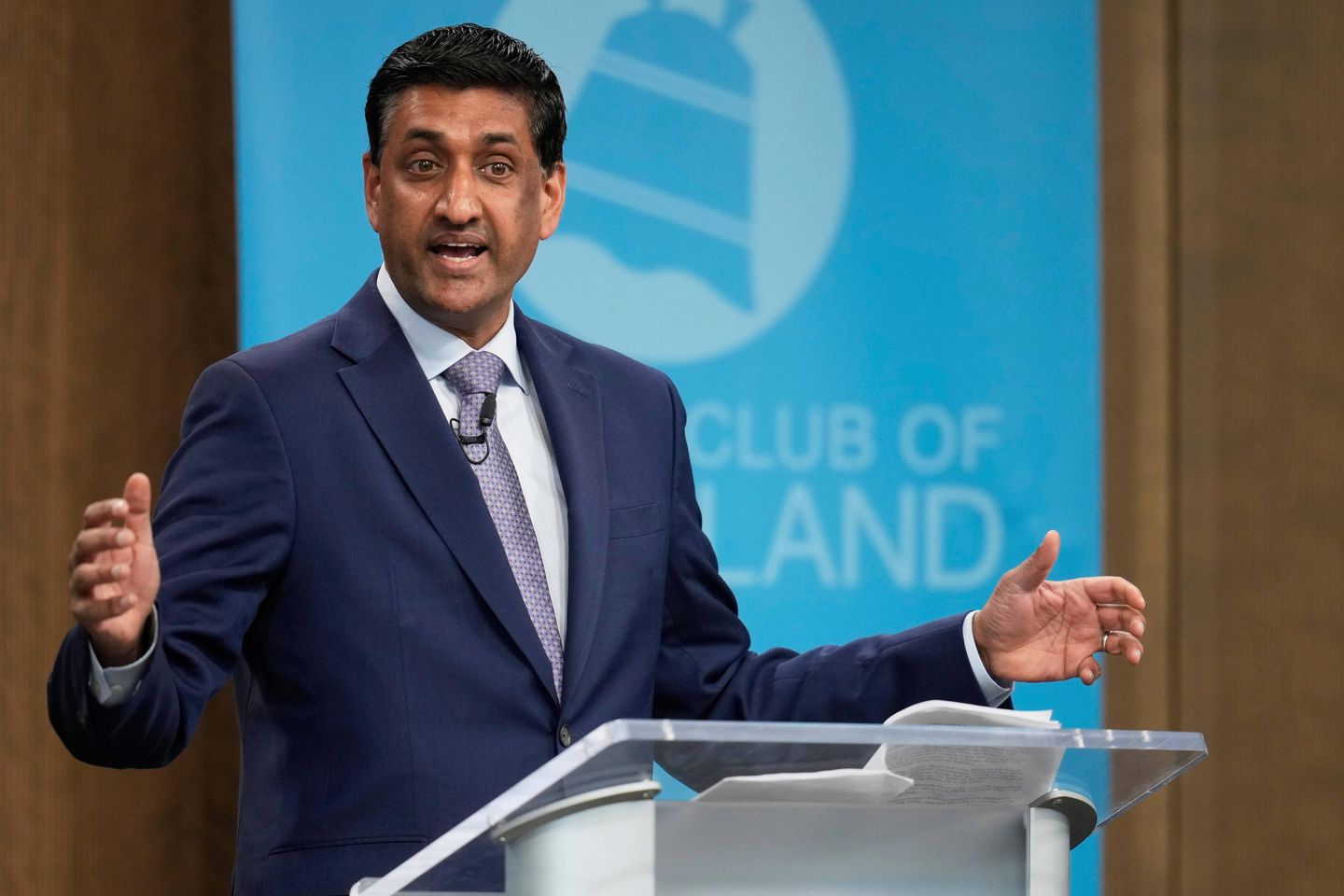
King Charles. Epstein. Iran. Political violence — you name it, Rep. Ro Khanna is there.
The California Democrat has turned himself into the party’s Swiss Army knife, eager to snap open for whatever is dominating the moment inside or outside the Beltway as he mulls a 2028 presidential bid.
This week, he was back on Capitol Hill, pressing Secretary of Defense Pete Hegseth on how much the Iran War is costing taxpayers through higher food and gas prices. A day earlier, he hosted a roundtable with survivors of the late Jeffrey Epstein’s sex crimes, urging King Charles III — whose brother, formerly Prince Andrew, is under investigation for his Epstein ties — to acknowledge the victims in his address to Congress.
He also popped up on “Fox & Friends,” talking about his work with Rep. Thomas Massie, Kentucky Republican, to push for the release of more Epstein files, defending his appearance with far-left influencer Hasan Piker, and standing by Democrats’ push to overhaul ICE.
The Epstein crusade fits neatly into the broader populist message Mr. Khanna has been road-testing ahead of 2028 — the idea that the wealthy and powerful play by a different set of rules. He said the fight for the survivors is inseparable from that larger argument.
“This is about the survivors of justice and the epidemic of sexual assault, but it also shows that rich and powerful people for too long have had impunity,” he told The Washington Times. “They’ve treated ordinary Americans and vulnerable Americans as disposable, whether it’s survivors, whether it’s workers, whether it’s people who have dealt with a rigged system.
“We need to have one system of justice in America. We can’t have second-class citizens in America,” he said. “We can’t have a group of people who are seen as disposable in America.”
A proud acolyte of socialist icon Sen. Bernard Sanders, 84, Mr. Khanna sees himself as part of the party’s next generation of leaders, and political insiders believe he is positioning himself as an alternative to 36-year-old Rep. Alexandria Ocasio-Cortez, the natural heir to the Sanders movement.
Still, he remains a relative unknown outside California’s 17th Congressional District in Silicon Valley — something he’s been working to change.
The 48-year-old has become a regular presence on podcasts and the Sunday talk‑show circuit. He didn’t miss a single weekend in April, hopping between “Fox News Sunday,” ABC’s “This Week,” and NBC’s “Meet the Press.”
“He’s on the Sunday shows every week, and it’s not just one issue,” said Pete D’Alessandro, a veteran Iowa organizer and senior adviser to Mr. Sanders’ 2020 presidential campaign. “He’s established himself as someone you call for Medicare for All, for Gaza, for the Epstein files. He has made sure he is the go-to guy on any of the big issues happening.”
Mr. D’Alessandro said that what sets him apart is his intellectual humility — or at least its convincing appearance. “He is one of those people that is usually the smartest guy in the room, but doesn’t have to let you know he’s the smartest guy in the room,” he said. “In fact, he talks to you like there’s a chance you might be smarter on the issue than he is — and that’s the only way he’s going to get smarter.”
The left also cheered that he is carrying the progressive banner in one of the wealthiest House districts.
“I give him extra points because he’s an elected official from Silicon Valley, pushing against the machine,” said Nina Turner, who also served as a Sanders 2020 co-chair.
Mr. Khanna gave his clearest public signal of presidential interest earlier this month, telling the Rev. Al Sharpton at the National Action Network Convention in New York that he believes he offers a comprehensive roadmap for the economic future.
“Whether that is workers having equity, whether it is the Black South being a part of the [artificial intelligence] revolution, whether it is making sure families have economic independence with health care and child care, I have a comprehensive economic vision,” Mr. Khanna said.
His willingness to go anywhere — and talk to anyone — reflects a broader evolution in how he presents himself.
Before landing in Congress in 2017, Mr. Khanna served as deputy assistant secretary at the Department of Commerce under President Obama. He was seen as a tech-friendly Democrat. Now he is championing a ballot measure to tax the wealthy and making little effort to hide his contempt for prominent tech billionaires who have threatened to flee California over its high tax and heavy regulatory climate.
Where Mr. Khanna once leaned heavily on his identity as a South Asian, tech-district congressman, he has shifted toward class-based economics.
“He’s moved from a place of identity politics to a place that’s much more about class, and that’s what allows him to speak across constituencies that sometimes are not talking to each other,” said David McCuan, a political scientist at Sonoma State University.
Critics say he risks overexposure. But Mr. McCuan said the saturation is intentional, comparing the strategy to the media ubiquity that helped propel former South Bend Mayor Pete Buttigieg’s success in the 2020 presidential race.
“He’ll go to Fox. He’ll talk to folks across the ideological spectrum because he believes his ideas can survive that challenge — any publicity is good publicity.”
For now, Mr. Khanna is leaning into the widening generational and ideological divide inside the party, taking stiff aim at Senate Minority Leader Charles Schumer — including over U.S. weapons sales to Israel. Mr. Khanna went straight to social media after Mr. Schumer joined six other Senate Democrats in voting against a pair of Sanders-led resolutions to block hundreds of millions in military assistance to Israel.
“Mr. Schumer, you are out of touch with our base and the nation,” he said. “Step aside.”
It wasn’t the first time. In November, he called for new Democratic leadership, arguing that Mr. Schumer no longer inspires confidence among voters.
Critics say Mr. Khanna’s national ambitions are eclipsing his view of his district. Ethan Agarwal, who is challenging him in the June 2 jungle primary, said the congressman has neglected his constituents in pursuit of higher office.
“It’s an open secret in Silicon Valley that Ro Khanna has been far more focused on his 2028 presidential ambitions and completely neglected the people of California’s 17th District,” Mr. Agarwal said. “While families here are worried about affordability, public safety, education, and the future of Silicon Valley, Ro is chasing cable news hits and building a national progressive brand that is completely out of step with this district.”
He also questioned Mr. Khanna’s stock trading record, arguing it undercuts his populist pitch.
“After trading hundreds of millions of dollars in stocks while in office — with access to information ordinary investors will never have — it is hard to take seriously his claims that he is fighting for working families,” he said.
“If AOC is the new Bernie, then he is the new Elizabeth Warren,” said Rob Stutzman, a California-based GOP strategist. “Being the new Warren still gets you in the game. It is better than being the new Jerry Nadler.”