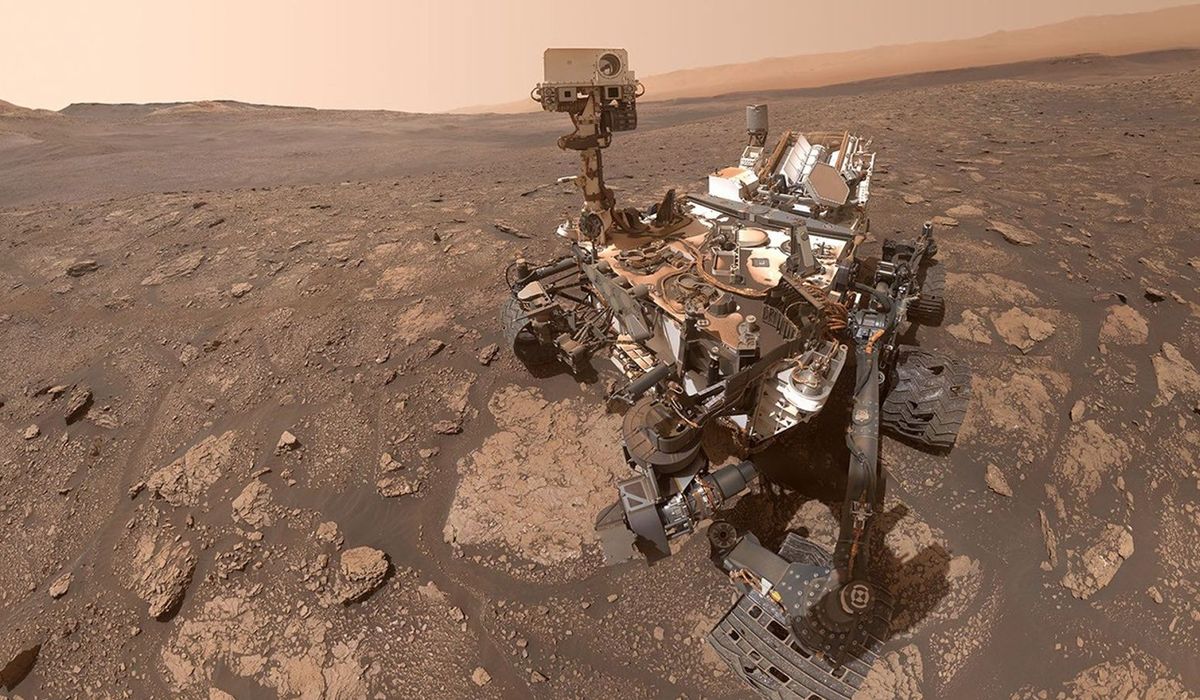
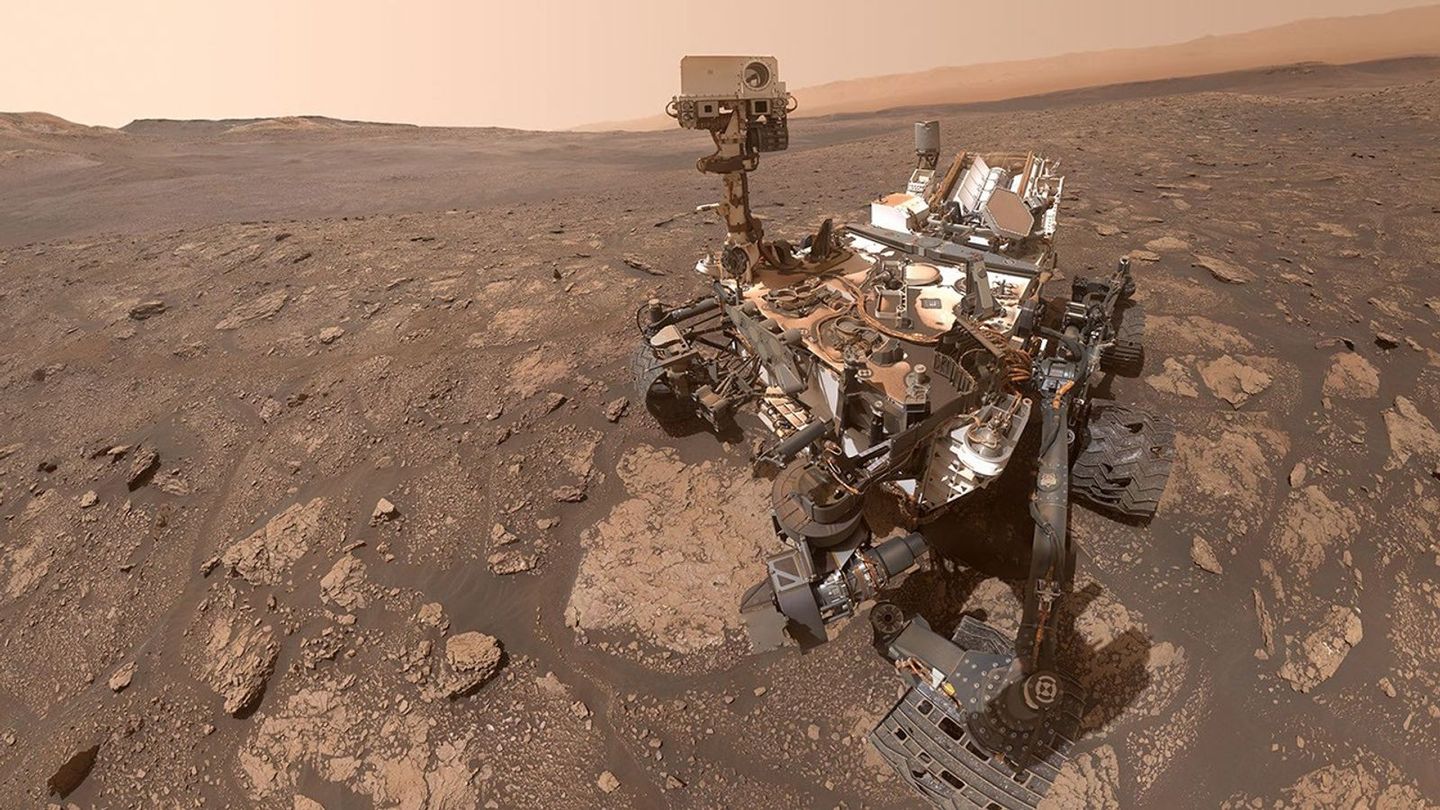
NASA’s Curiosity rover has uncovered the most diverse collection of organic molecules ever found on Mars, scientists announced Tuesday, a discovery that adds to evidence that the Red Planet once had conditions capable of supporting life.
The findings, published in the journal Nature Communications, stem from a rock sample nicknamed “Mary Anning 3” — after an English fossil collector and paleontologist — that Curiosity drilled and analyzed in 2020. Of the 21 carbon-containing molecules identified in the sample, seven were detected for the first time on Mars, scientists said.
“This is Curiosity and our team at their best,” said Ashwin Vasavada, the mission’s project scientist at NASA’s Jet Propulsion Laboratory. “This collection of organic molecules once again increases the prospect that Mars offered a home for life in the ancient past.”
Researchers cautioned that they cannot determine whether the molecules were produced by biological or geological processes, as both are possible. However, the compounds reinforce previous findings that ancient Mars had the chemical ingredients necessary for life and that such molecules can persist despite billions of years of radiation exposure on the planet’s surface.
The sample was collected from a clay-enriched region of Mount Sharp, an area scientists believe was once shaped by lakes and streams. Clay minerals are particularly effective at preserving organic compounds, the building blocks of life found throughout the solar system.
Among the newly identified molecules is a nitrogen heterocycle — a ring of carbon atoms containing nitrogen — a type of structure considered a precursor to RNA and DNA.
“That detection is pretty profound because these structures can be chemical precursors to more complex nitrogen-bearing molecules,” said Amy Williams of the University of Florida, the paper’s lead author. “Nitrogen heterocycles have never been found before on the Martian surface or confirmed in Martian meteorites.”
Scientists also identified benzothiophene, a carbon- and sulfur-bearing molecule previously found in meteorites that some scientists think may have contributed to prebiotic chemistry in the early solar system.
This article was constructed with the assistance of artificial intelligence and published by a member of The Washington Times’ AI News Desk team. The contents of this report are based solely on The Washington Times’ original reporting, wire services, and/or other sources cited within the report. For more information, please read our AI policy or contact Steve Fink, Director of Artificial Intelligence, at sfink@washingtontimes.com
The Washington Times AI Ethics Newsroom Committee can be reached at aispotlight@washingtontimes.com.