LEGE-CAP FERRET, France — The Tour de France’s last stage Sunday is being slashed in length by a third to divert officers to the fight against wildfires in the country’s southwest.
The Paris police department said in a statement Saturday that the riders will race inside Paris, rather than starting from Thoiry, west of the capital, on a circuit of 89 kilometers (55 miles), down from the 133-kilometer (82.5-mile) route that had been planned.
The statement said part of the security deployment planned for the 21st and final stage of the three-week race will instead “reinforce the response efforts in the areas affected by the wildfires.”
THIS IS A BREAKING NEWS UPDATE. AP’s earlier story follows below.
LEGE-CAP FERRET, France (AP) – France was preparing to use a massive specially adapted cargo aircraft to dump flame retardants Saturday on a wildfire that has forced the evacuation of tens of thousands of people, including from some suburbs of the wine region city of Bordeaux.
Including some 70,000 people evacuated in central Spain, wildfires in southern Europe this week have displaced more than 250,000 people.
French Interior Minister Laurent Nunez said the hulking A400M aircraft will join 18 other water- and retardant-dropping planes and helicopters waging an expected “long and very difficult” battle against the blaze raging in the Gironde region of southwestern France.
With winds expected to shift in a west-to-east direction on Saturday afternoon, potentially driving the fire closer to Bordeaux, fire crews and authorities were digging trenches, using retardants and taking other steps to block it, Nunez said. He said the fire was about 30 kilometers (20 miles) west of the city and lost some of its intensity overnight.
The government mobilized soldiers to join the battle and was rushing in 1.5 million face masks to protect against choking smoke.
Authorities ordered people between the fire and Bordeaux to evacuate, including from parts of the city’s western suburbs and other towns and villages.
Prime Minister Sébastien Lecornu described the fires as unprecedented and said the Gironde blaze became so strong on Friday that it had begun generating its own winds.
“Our priority is clear: protecting human lives,” he posted on X, adding that evacuation orders “must be respected without delay.”
He said firefighting teams were being reinforced Saturday with the addition of hundreds of soldiers and that breathing masks to filter out smoke particles were being rushed to the Gironde region for those exposed to the clouds of potentially noxious fumes.
A400M is a heavyweight addition to the fight
The French military transport aircraft converted for a firefighting role introduces a heavyweight new tool to the battle. In tests, it carried and dropped 20 tons of water, around three times the capacity of widely used Canadair water-bombing planes.
The virulence of the French and Spanish wildfires, fueled by high temperatures and the long-term effects of climate change, caught fire crews and authorities off guard. Firefighters in Spain said the blazes spread so fast and violently that they could not be tackled head on. In France, some people even fled by boat when flames swept through touristic towns on the Atlantic coast.
“We’ve never seen anything like this,” said Javier Organista, a resident of El Tiemblo, west of Madrid, where fire charred a famed chestnut grove.
“When we saw the flames coming into our town, surrounding us, leaving us with practically no way out, all the neighbors joined together to try to stop its advance.”
“It’s just really sad,” he said.
Climate change is super-charging blazes
Spain deployed 2,600 firefighters, police and other emergency personnel to two blazes west of Madrid, backed by 19 water-dumping aircraft and helicopters.
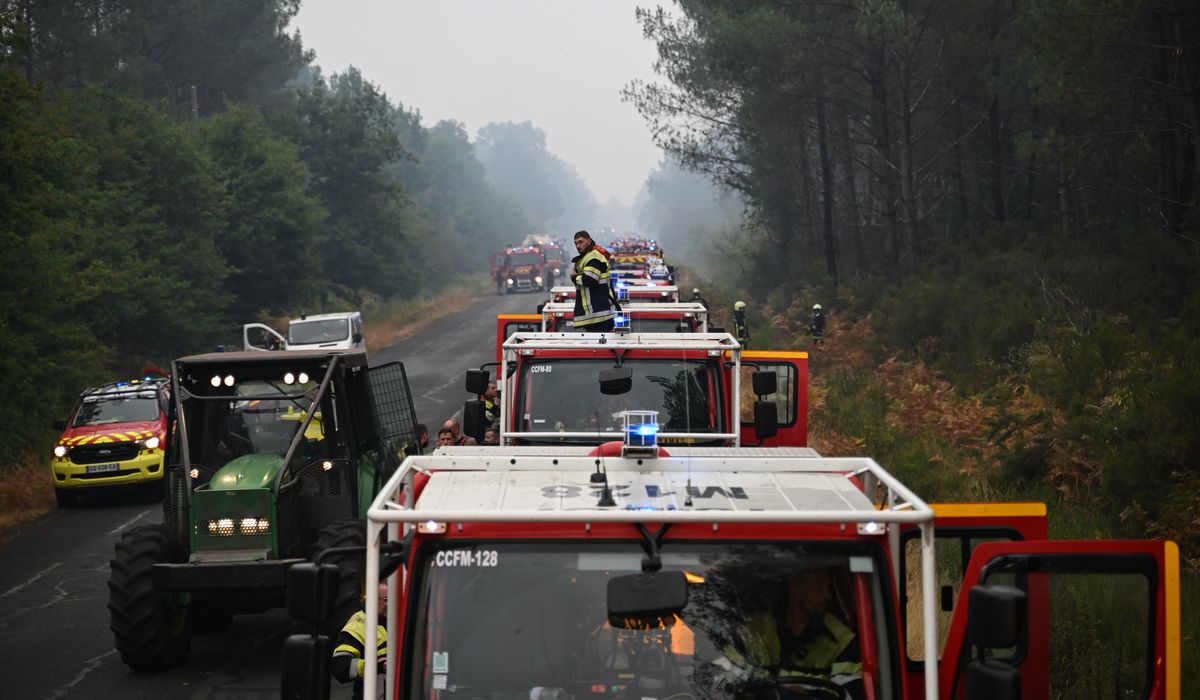
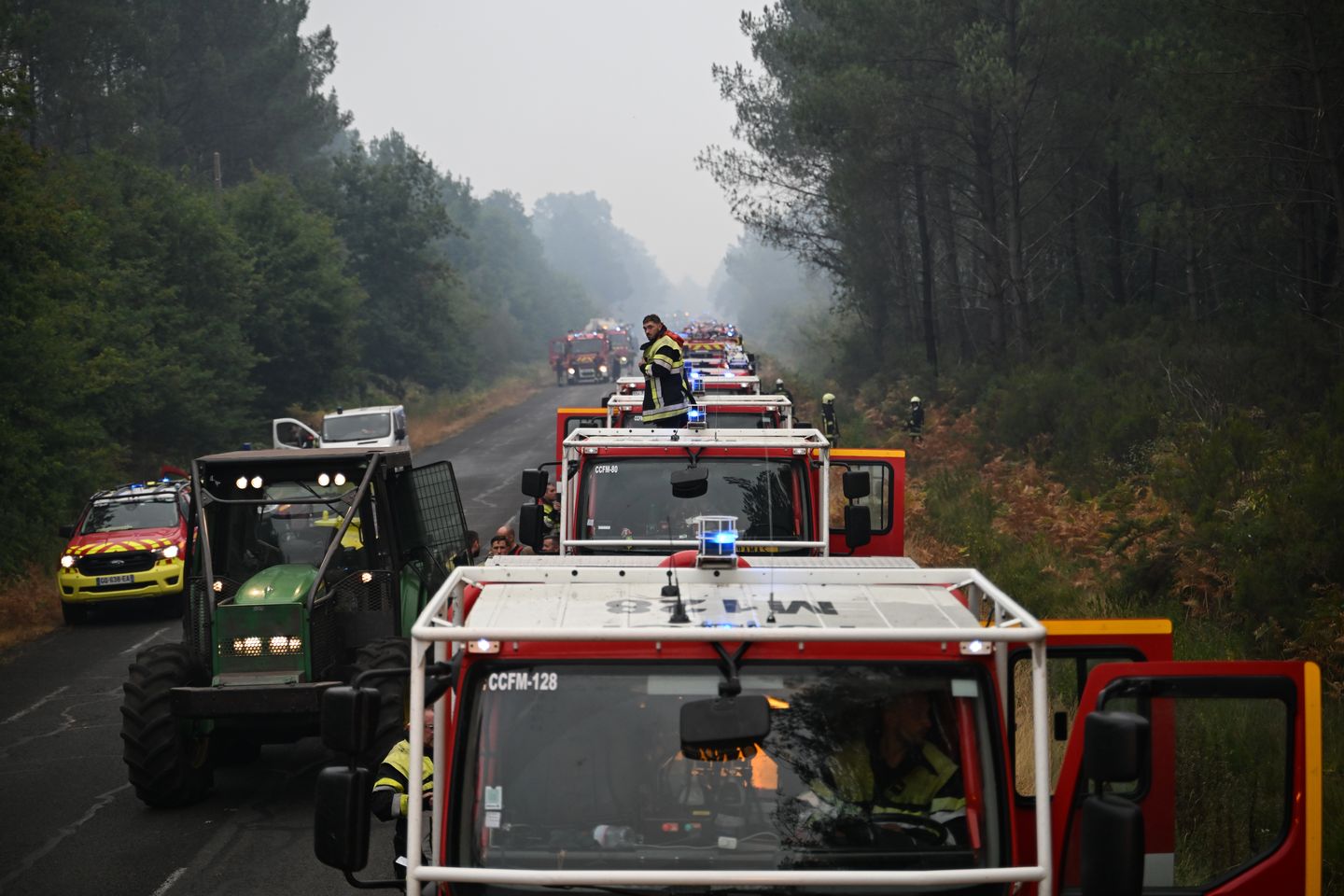
France deployed 1,300 firefighters to the Gironde fire and another further south in the Landes region. Dozens of firefighters suffered injuries, authorities said, but no deaths were reported in either country despite the scenes of panic as townsfolk fled by car and police went door to door to tell people to leave as smoke plumes darkened the skies.
Successive heat waves that hit unusually early and hard this year, baking Europe with record-shattering high temperatures, have turned forests and scrublands into tinderboxes.
Fires have burned 130,000 hectares of forest already this year in Spain, up from an annual average of 100,000 hectares over the past decade, Spanish Prime Minister Pedro Sánchez said Saturday as he visited a command post west of Madrid.
He said more favorable weather Saturday offered “a window of opportunity” for fire crews to bring the blazes under control. Madrid’s regional government said the fires decreased in intensity as winds and temperatures dropped.
Other European nations were helping, with Italy, Greece, the Netherlands, Portugal, Croatia, the Czech Republic and Slovakia already providing or expected to deploy water-dumping planes and helicopters to the Spanish and French fire fronts.
Wildfire headed toward Bordeaux
Gironde region prefect Sophie Brocas said on Friday night that strong winds from the west were pushing the fire closer to the Bordeaux metropolitan area and that it had grown to “an unprecedented magnitude.” Bordeaux’s western suburbs covered by evacuation orders included Le Haillan and parts of Eysines and Mérignac, where the city’s airport is located. The airport said it remained open but that its bus and tram services were suspended.
The Gironde blaze broke out Wednesday near the Cap Ferret peninsula on France’s Atlantic coast, 60 kilometers (37 miles) from Bordeaux. Bordeaux authorities took in thousands of evacuees, offering them food and shelter in an exhibition center, and the city’s mayor said it could be equipped to welcome as many as 10,000 people if that became necessary.
Evacuation orders were sent with special alerts to mobile phones, instructing people to leave, Brocas said.
“We want everyone to be quickly brought to safety. We must act quickly together,” she said.