SEOUL, South Korea — Japan announced the scrapping of historical prohibitions on arms exports Tuesday, one day after its troops joined multinational combat drills in the Philippines for the first time.
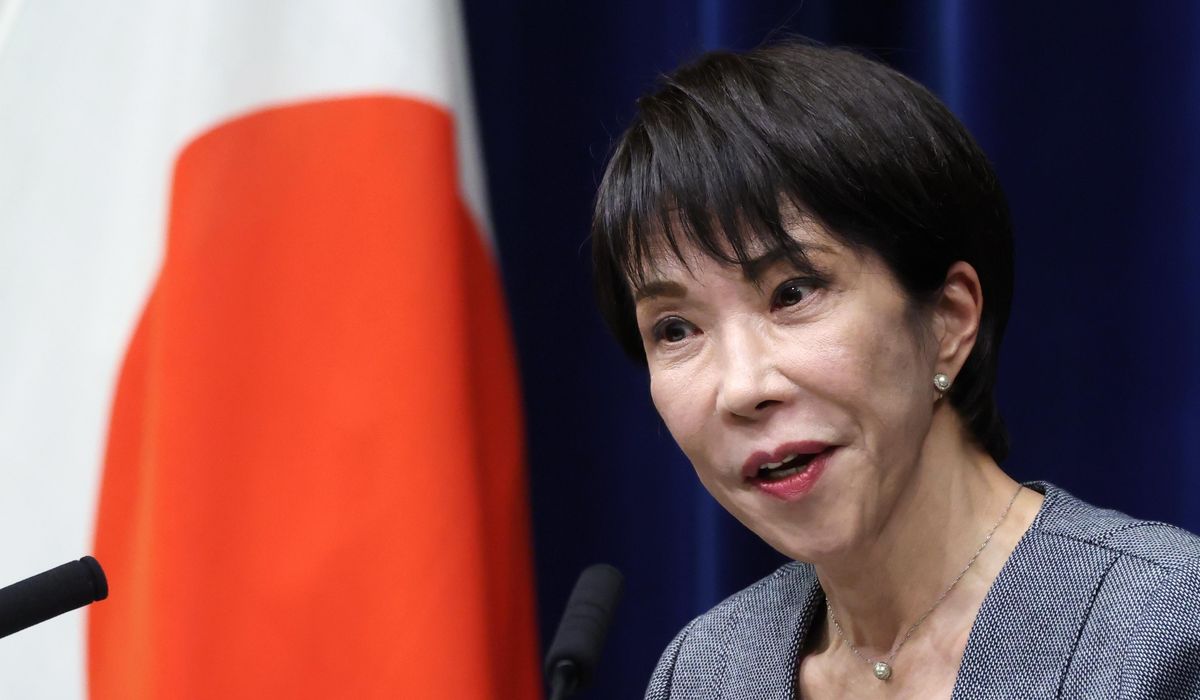
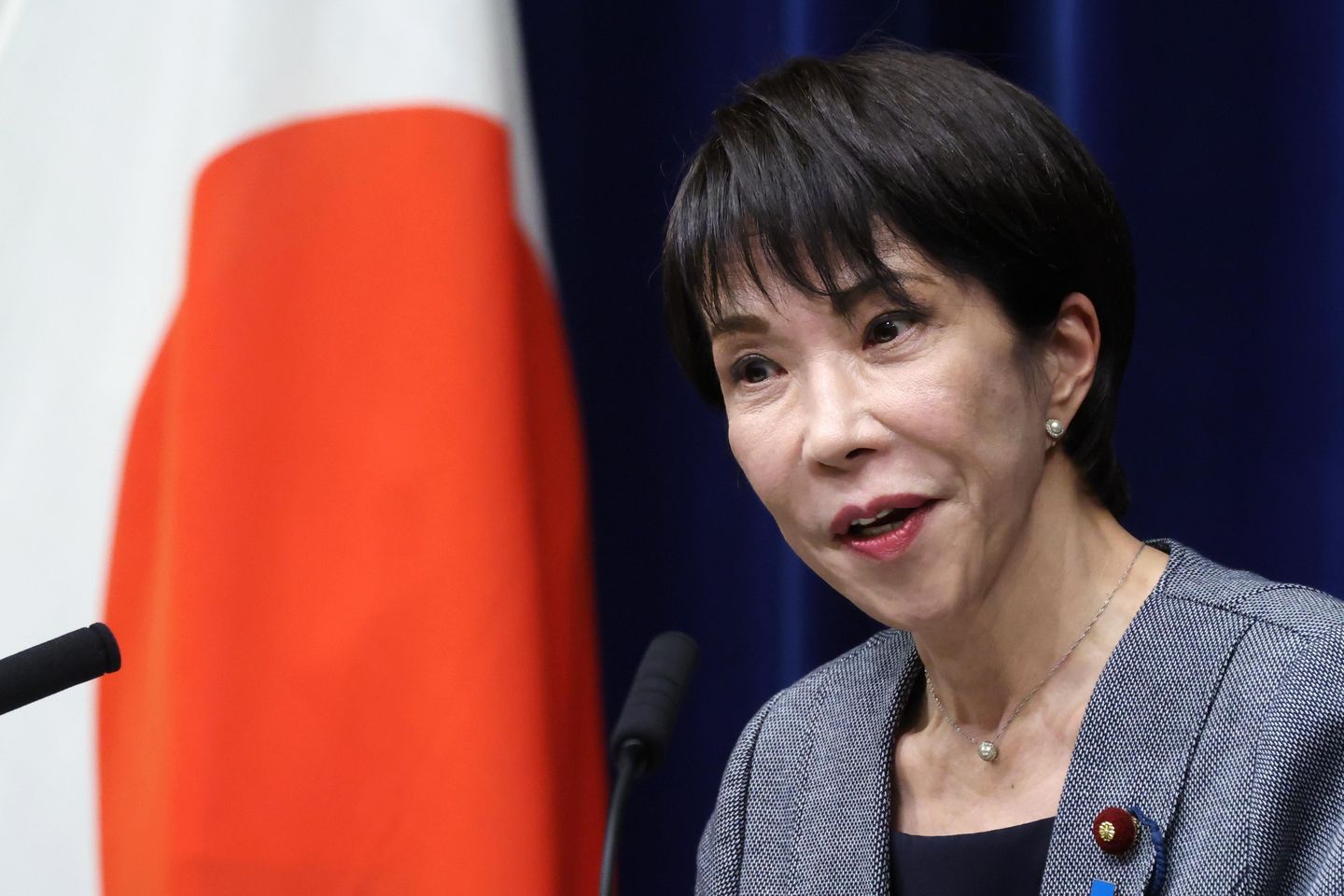
The developments follow a string of activities that have infuriated regional rival China since hawkish Japanese Prime Minister Sanae Takaichi took power in October.
Japan’s rising military confidence and expanding security footprints are enabled by a generational shift and the powerful legacy of Ms. Takaichi’s political mentor, former Prime Minister Shinzo Abe.
Japan’s National Security Council and Cabinet announced the lifting of a series of long-established limits on arms exports. Previously, military items authorized for export had been limited to rescue, transport, warning, surveillance and minesweeping equipment.
The revision would allow weapons to be provided “in special circumstances” to nations engaged in conflict.
On Saturday, Tokyo signed a deal with Canberra to supply 11 stealth frigates to Australia in the biggest arms deal in Japan’s postwar history.
The announced policy shift — which should have no difficulty passing the Diet, given Ms. Takaichi’s majority — is being cheered by Japanese allies in an Indo-Pacific increasingly concerned about China.
The Russia-Ukraine war has exposed capacity shortcomings among Western arms suppliers, and the Iran war in the Middle East is running down U.S. stocks of precision munitions.
Japan’s neighboring industrial power, South Korea, has helped fill holes by supplying NATO nations with divisions’ worth of armored vehicles, mobile howitzers and tactical rocketry.
Japan is noted for its excellence in diesel-electric submarines, missiles, air defense, mine hunting and overall naval shipbuilding.
Even so, as its Self-Defense Forces upgrade their capabilities, castoffs may make up the bulk of exports.
“For the next decade or so, the main expansion in Japan’s lethal arms exports will likely take the form of transferring used SDF equipment to countries like the Philippines and Vietnam, likely with funds from Japan’s Official Security Assistance program,” said Paul Midford, a specialist on Japanese foreign policy at Meiji Gakuin University.
Tokyo’s move is part of a broader strategy to strengthen regional security ties.
“No country can now safeguard its own peace and security alone, making it necessary to have partners that support each other in areas including defense equipment,” Ms. Takaichi said.
Island warfare masterclass
One of Japan’s key regional partnerships got a shot in the arm.
On Monday, the annual Philippine-U.S. “Balikatan” (“Shoulder to Shoulder”) drills kicked off across the Philippines. Troops from the two nations were joined by Australian, Canadian, French, New Zealand and Japanese units. Of the 17,000 troops conducting multidomain drills, 1,700 are from Japan.
Tokyo’s contingent includes two amphibious landing ships, a destroyer and soldiers with air defense and anti-ship missiles. Their training role, unlike in previous Balikatans, is not restricted to humanitarian assistance or disaster relief. It is combat.
The Japanese Defense Ministry said training will include amphibious operations, counter-landing responses, maritime strike, air and missile defense, cyberattack and response and airfield damage repair.
“We hope to deepen coordination and mutual understanding with other countries’ units,” Col. Takeshi Higuchi of the SDF Joint Staff told Japanese media NHK.
The destroyer JS Ikazuchi arrived in the Philippines via the Taiwan Strait on Friday. It predictably irked Beijing, which called the transit of the narrow passage “a deliberate provocation.”
Though the strait is an international waterway, China condemns its use by warships.
Infuriating Beijing — and stating support for democratic Taipei, which China claims — is a talent of Ms. Takaichi’s.
Samurai Sanae
In November, Ms. Takaichi said an attack on Taiwan would present an existential threat to Japan that would trigger SDF activation.
China responded with diplomatic insults, trade embargoes, renewed claims to Japan’s southern Ryukyu Islands and other pressure tactics.
Ms. Takaichi did not take a U-turn. Instead, she dispatched Defense Minister Shinjiro Koizumi to Yonaguni, the Japanese island closest to Taiwan, to inspect defenses.
Yonaguni is part of the Ryukyu Islands, which dominate key naval choke points northeast of Taiwan. The Ryukyus are considered vital to the democratic island’s defense.
As China massively builds out its fleet and the U.S. faces naval overstretch worldwide, Japan’s potential role in a Taiwan contingency is capturing attention.
In 2014-2015, Mr. Abe finessed a reinterpretation of Japan’s pacifist constitution, enabling the SDF to assist allies in conflict. Washington is a treaty ally, and Taipei enjoys wide affection in Japan.
Of the Indo-Pacific territories conquered by Imperial Japan before and during World War II, Taiwan is the only one that remembers occupation fondly. The island has been embraced by Japan’s right-wingers, including Abe.
Since constitutional reinterpretation, Japan has stood up assets ideal for archipelagic combat, including a marine brigade, two light F-35 aircraft carriers and near-silent attack submarines.
Wielding its largest-ever defense budget, Tokyo is obtaining a “counterstrike” force of long-range missiles, including 400 U.S.-made Tomahawks, and generating a drone-based littoral defense system, SHIELD.
Japan hosts the largest contingent of GIs outside the U.S., and its location makes it an ideal lily pad for defending Taiwan and enabling U.S. power projection in regional waterways and airways.
Quivers over the U.S.
As a mercurial U.S. administration pivots to the Western Hemisphere and battles Iran, questions are being asked quietly.
“Increasingly, doubts in Japan about the reliability of the U.S. as an ally are driving a push to achieve autonomous territorial defense by 2027,” Mr. Midford said.
Japan is casting a wide security net.
It has signed Reciprocal Access Agreements — treaties enabling seamless deployments of troops and weaponry with Australia, the Philippines and Britain — and is jointly developing its next-generation stealth fighter with Italy and Britain.
New national assertiveness
Ms. Takaichi’s record-breaking election landslide suggests Japan’s populace does not share the pacifist views of the post-1945 generation.
“No one is calling for real diplomacy, and that’s sad,” said Haruko Satoh of the Osaka School of International Public Policy, who is an expert on Japan’s regional relations.
“My theory is, if you get your ass kicked, it takes two generations to take a good hard look at what happened and why it happened,” said Lance Gatling, a Tokyo-based former officer with U.S. Forces Japan.
Bolstering this sense is an arc of threats to Japan’s north and west. China is expansive and assertive. North Korea continues testing weapons of mass destruction, and Russia is fighting a brutal war of conquest in Ukraine.
Japan sits at the far end of long supply lines that extend to the Middle East and to the Atlantic and Pacific oceans.
“I think the Japanese have more appreciation of the fragility of their economy and the importance of imported goods than the average American does,” Mr. Gatling said. “The new generation is less reticent to criticize China, ranging from rebukes to criticism to outright racism.”
The geographically sprawling, culturally diverse Indo-Pacific lacks a NATO-style security architecture. What exists are nonbinding agreements.
“The Quad” unites Australia, India, Japan and the U.S. in a security dialogue. The U.S. and Britain aim to offer Australia nuclear submarines under AUKUS. The IP4 (Australia, Japan, New Zealand and South Korea) enables dialogue with NATO.
As the global security environment deteriorates, new ideas appear.
“An Asian equivalent to NATO isn’t going to work,” Pacific Forum CEO David Santoro wrote Monday on X. “But I will say this: people who make that case are no longer laughed out of the room.”
In democratic East Asia, Japan, the biggest economy and most powerful naval force, could lead. One issue: Bloody baggage from World War II.
Canberra and Manila overlook it. Even in Seoul, the most outspoken regional democratic critic of Tokyo’s brutal past, it is losing heft.
Seoul’s liberal president, Lee Jae-myung, has ditched his anti-Japan rhetoric and retained the Tokyo-friendly policies of his conservative predecessor, Yoon Suk Yeol.
In a recent editorial headlined “Seoul-Tokyo cooperation essential in Indo-Pacific,” former Gen. Chun In-bum argued, “In a world of increasingly sophisticated military threats … the benefits of closer alignment with Japan to deter a primary security threat are clear.”
“Japan is well-positioned to be a natural leader,” said Mr. Gatling. “Who else? Nobody else can do it.”