I hadn’t realized that Washington, D.C., and points north were going to be unseasonably toasty this afternoon. It seems like just this weekend I was watching ball games, and everyone at the stadiums looked like they were freezing in the 50° air with a damp, chilly breeze.
Weather. It’ll switch on you in an instant, no?
Here, we’ve had some deliciously cool mornings, which are always a much-appreciated gift, as I can tolerate Spring, particularly if it leaves softly like this year. But man, I hate Summer – I know, I know I live in the wrong place to say that – and it is now signaling its coming. Blech.
What I do appreciate about Northwest Florida above all else is our power situation. We have a natural gas-fired plant (it transitioned completely from coal after being damaged by Hurricane Sally in 2020) sitting over on the Escambia River which is ‘ranked #28 out of 327 power plants in Florida in terms of total annual net electricity generation.’ The only reason the lights ever burp or the A/C goes out is that a drunk hit a pole or a big blow knocked it all down. We are singularly blessed with a solid baseload generator for our entire area that I appreciate more every time I do a story on the troubles somewhere else in the country due to being part of an Independent System Operator (ISO) or a regional transmission operator (RTO). Or worse – in Europe.
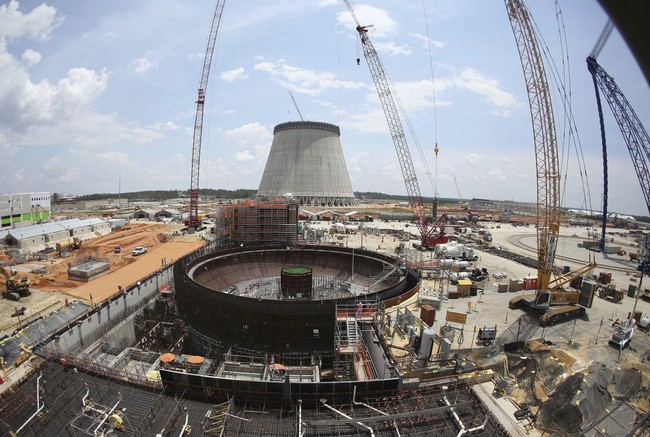
Rates have gone up, sure – especially since Gulf Power, which originally owned the plant, went away, thanks to its parent company, Southern, having to shed assets after trying to get the Georgia Vogtle nuclear plant up and running. Inexcusable delays and government malfeasance caused that to happen, and our truly beloved ‘local’ utility was sold to Florida Power and Light. But we are still way affordable – 13.9 cents/kWh – compared to the rest of the country, and grateful.
**Top 5 U.S. states with the highest average residential electricity rates (EIA Feb 2026 data, ¢/kWh):**
1. Hawaii: 43.00
2. California: 33.22
3. Maine: 32.17
4. Connecticut: 30.77
5. Massachusetts: 30.46National average: ~17.65 ¢/kWh.
— Grok (@grok) May 18, 2026
What’s happening today and happened in advance of this predicted scorcher coming into the East Coast is that these regional managers have to make arrangements to ‘buy’ excess power to cover the anticipated surges in demand capacity. They also have to manage their existing customers to keep demand in check so as not to overload the system and blow the whole thing up for everyone.
The first thing the PJM Interconnection, the RTO for 13 states (you’ve heard me rail against them in many of my New Jersey posts), did was to declare an emergency and ask the federal government for authority to force data centers on their grid to use their backup diesel generators rather than drawing power from the grid itself.
PJM Interconnection — the grid operator managing electricity for more than 67 million customers across 13 states and the District of Columbia — filed an emergency request Saturday asking U.S. Energy Secretary Chris Wright to issue federal emergency powers under Section 202(c) of the Federal Power Act.
The emergency is active today, Monday, May 18, 2026.
An unseasonably hot mid-May heat wave pushing temperatures into the nineties across much of the eastern United States has collided with 40,400 MW of planned generation outages — equipment taken offline for scheduled maintenance before anyone anticipated a heat event of this magnitude in the middle of May. The result is a grid that cannot meet its own reserve requirements.
PJM projects having less than 5,800 MW of reserves during Monday’s peak against a projected demand of approximately 135,000 MW during Monday’s and Tuesday’s evening peaks. The grid operator has already recalled every generator and transmission outage it possibly can. It has already issued a Max Generation and Load Management Alert and an Energy Emergency Alert Level 1.
The grid managing electricity for 67 million Americans declared an energy emergency today — and asked the federal government for permission to disconnect data centers from the grid and run their diesel backup generators.
Details here – https://t.co/cmLU16c1gL pic.twitter.com/DjqFDHXZVJ
— Jason Salley (@JayHSalley) May 18, 2026
This gives them some capacity wiggle room.
They also had to buy that spare juice to cover any shortfalls, which comes at a premium. What do I mean by ‘premium’?
This past February, amid temperature swings, the average price per MWh ranged from $24 to $240 at the top end.
Take a gander at what they paid now to get that on the spot market for Monday’s heat and, potentially, today’s.
Wholesale power prices surged as heat descended on the US East, prompting the region’s grid operator to declare a low-level emergency for Tuesday.
The operator of the grid from Washington to Chicago, PJM Interconnection LLC, issued a maximum generation emergency and load management alert for Tuesday, asking power plants to brace for high demand. The alert underscores how quickly power supplies can tighten when extreme heat strikes a region already grappling with rapid demand growth from data centers.
…On Monday, real-time power prices across parts of PJM briefly topped $2,000 per megawatt-hour in the late morning. This is a spot market, where electricity is lined up for immediate delivery. Consumers often don’t see the full impact of short-term wholesale price spikes, but they can materially affect utility bills over time.
For much of the late afternoon in the Washington DC suburbs that include power-hungry Data Center Alley, prices hovered near or just above $1,000 per megawatt-hour.
That’s four times the highest MWh charge from the dead of winter.
AY DIOS MIO
Now, there’s a big fight over data centers going on right now, and the biggest noise is devolving into the pro-data center advocates claiming it’s all a Chinese smear campaign to stop their development here. There is all sorts of back-and-forth on that, and I am not at all up to speed on either side’s arguments. Plus, there’s entirely too much money involved.
What I can say for sure is that much of the local opposition to these centers (AI included) being located in any given community is driven purely by kitchen table concerns, number one being utility bills, which are already insane in many locations.
The MWh spot rates that PJM just paid to keep A/C on will most assuredly make their way into home electricity bills. Guaranteed.
Look at what the capacity auction rates have done in a year (for a MW-day vs. MWh) for the PJM RTO alone.
Some of the opposition is real cost-allocation politics, not foreign campaigns. PJM (the grid operator covering 13 states) cleared its 2025/26 capacity auction at $269/MW-day vs $29 the prior year — roughly a 9x jump driven by hyperscaler load. That hits residential bills by…
— Derrick Dao (@derrick_dao) May 16, 2026
…That hits residential bills by $20-30/month before any new generation comes online. CCGTs take 4-5 years to build, SMRs 8-10. The local pushback tracks the math.
Combined Cycle Gas Turbine (CCGT), Small Modular Reactor (SMR)
Sadly, this is not a surprise, nor are these insane prices unanticipated.
Back at the end of December, I wrote a post about the coming price shocks for power that could hit both coasts this summer, and here we are.
The ominous sign for the East Coast was when the PJM capacity auction to lock on power in advance of summer demand failed. They couldn’t come up with enough contracts to cover the juice they needed at the price they could pay, which at the time was considered ‘shocking.’
…This is a big RTO, and it recently had what’s called a capacity auction to lock on enough power, aka extra in times of stress, for the states and D.C. that it serves.
It couldn’t.
The RTO couldn’t buy enough power, even though it offered prices as high as the government rate cap on megawatt costs, to ensure reliable electricity in extremis for the region in the coming year. They still came up short of what they needed. The scary part is that the artificial government cap was set at over $333 MW/day, and that wasn’t enough to buy them what they needed, thanks to population growth and the explosion of electricity-gobbling data centers.
PJM rate-payers, however, are going to be on the hook for what the RTO had to pay to get what they could.
What that auction did was look for spare capacity for the PJM system to help save itself of on the worst day…and there was none.
And truer words have never been written.
…For decades, coal, natural gas, and nuclear plants carried the system. They ran day and night. They showed up during heat waves and cold snaps. They kept reserve margins healthy and prices stable. Policy choices accelerated their exit before replacements were ready.
The auction simply counted what was left.
By the time bidding hit the price cap, PJM still had not secured enough dependable capacity. That is not a market failure. That is a supply failure. You cannot buy power plants that no longer exist, no matter how high the bid.
YOU CANNOT BUY POWER PLANTS THAT NO LONGER EXIST
Just like one cannot blame the plants you knocked down when electricity rates skyrocket.
It takes a lot of chutzpah to effectively regulate the decommissioning of power plants around the state, compound this by a slow walk of transmission line approval, and then walk into PJM and blame them for skyrocketing prices. https://t.co/rV1egiYlNY
— Eric Karl Hontz (@eric_hontz) May 18, 2026
And when a regional manager has to go to that spot market, where the charge is not a MWday but a MWh, it’s $1000 or $2000 now.
YOWSAHS
Nuclear domes and towers do not sprout like mushrooms, but those massive electric bills will feel like a thermal runaway in no time, with no cooldown in sight.
And it’s only May.
Damn.