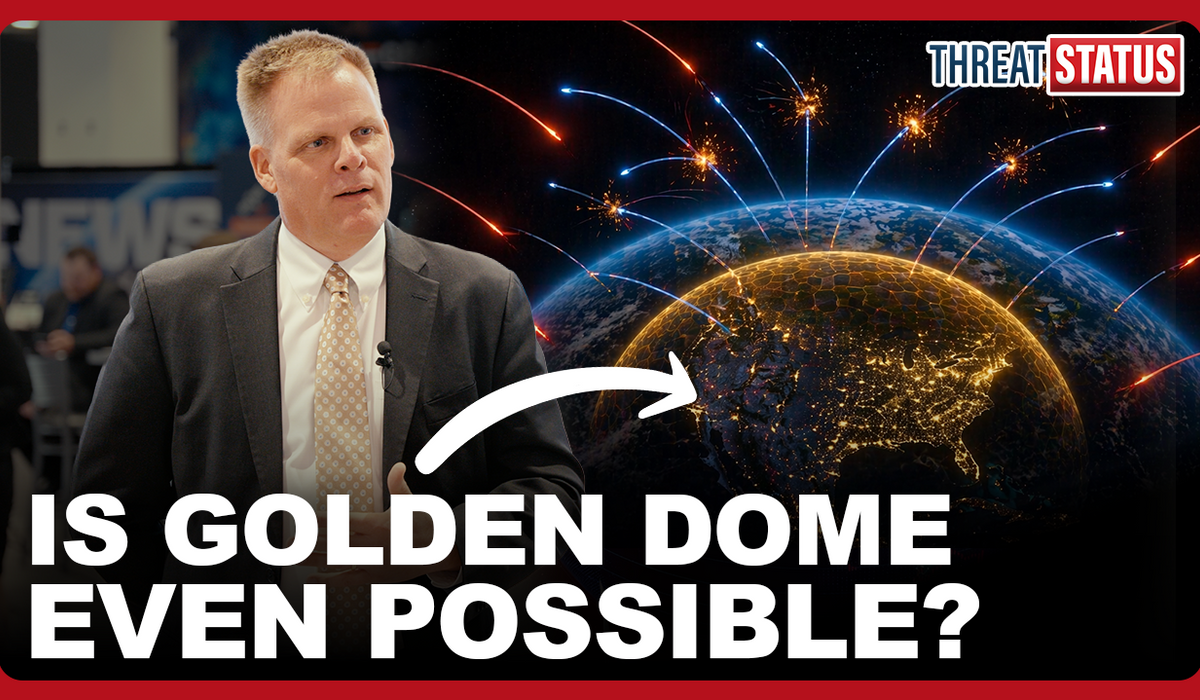
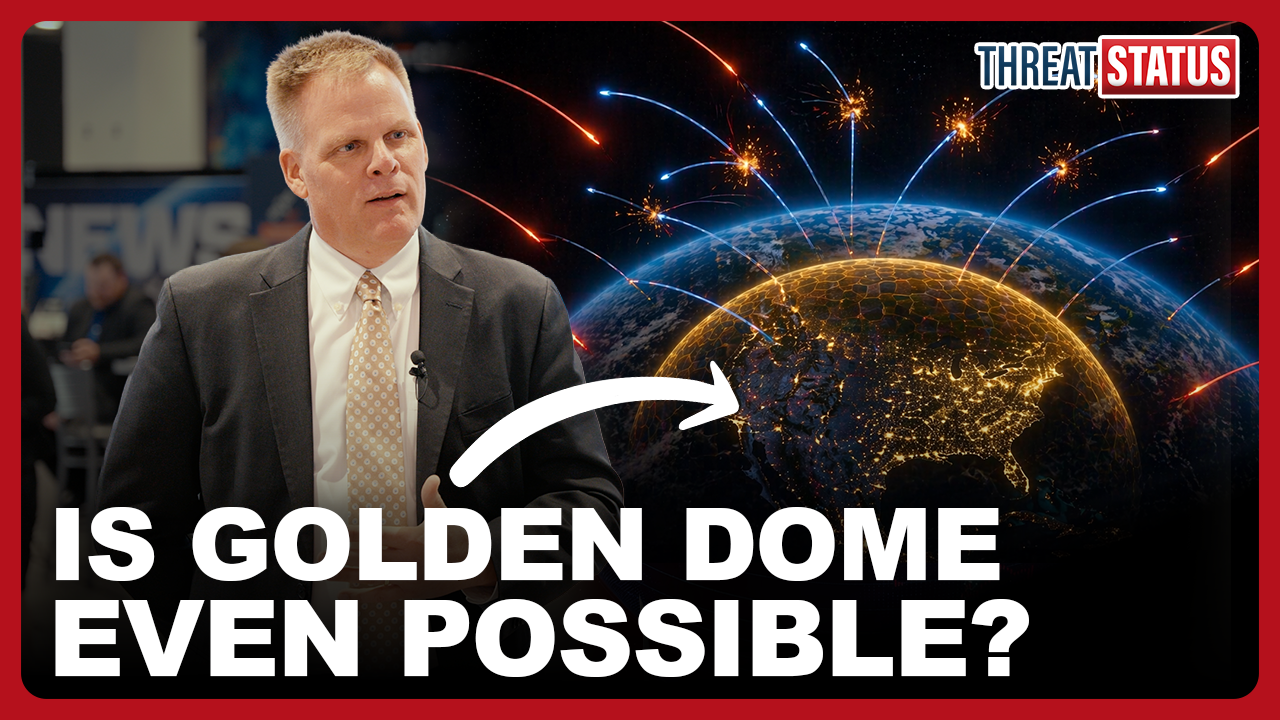
Is the Golden Dome on track? Washington Times National Security Correspondent Ben Wolfgang is joined by L3 Harris Space Systems president Jeff Hanke to break down the technical challenges, the accelerated launch timelines, and why he believes the 2028 goal is achievable.
[WOLFGANG] We are here on the floor of the Space Symposium Conference in Colorado Springs. I’m here with Jeff Hanke, the president of Space Systems for L3 Harris.
Golden Dome, needless to say, is one of the hottest topics here at Space Symposium. And one of the questions that I keep hearing from folks is whether we’re on track to meet the president’s timeline — laid out three years to have a Golden Dome up and running. From your vantage point at L3 Harris, where are we on that? Are we going to have something by 2028?
[HANKE] I do believe that we’ll be able to achieve that milestone, specifically at L3 Harris. You know, industry can do a lot to prepare for these sort of deadlines and make sure that, you know, we are doing everything we can with our supply base to be ready to meet an incredibly accelerated launch timeline. But I think if you looked at the sort of things L3 Harris has been doing in the past, we have been cutting those launch timelines on every successive program. So I know the old days of having a five to seven year launch window was kind of the norm.
We’re not living in that world anymore. We’re living in the two to three year launch window. So hey, if the president’s going to challenge us through his executive order to get more capability on order faster, you know, industry is ready to do that. We’re ready to get engaged and go as fast as he wants us to go.
[WOLFGANG] Do you think that time frame is going to get compressed even further as time goes on here?
[HANKE] I sure hope not, because there’s some certain things that you start to get into — physics.
[WOLFGANG] Yeah.
[HANKE] The actual time it takes to make something, the actual time it takes to design something, if you want to change. You know, there’s ways to short-circuit the timeline, but at some point you do get to unobtainium — you can’t go any faster.
[WOLFGANG] So without getting into some classified territory that I know you can’t talk about here — but there’s a lot of questions about the architecture of the Golden Dome and what it’s going to look like. Do you have clarity inside L3 Harris in terms of what that’s going to be?
[HANKE] Yes, we do.
[WOLFGANG] Is there anything you can offer about those details right now?
[HANKE] No, I cannot.
[WOLFGANG] This is going to seem like a very big and broad question, but everybody’s wondering…
[HANKE] If you want to take a step back — I mean, really, you can look at the documents that are public about what is the charter for General Guetlein and his team to do. It’s really to defend the homeland and all of the elements that that takes. So I mean, in a classified sense, the classified things are the technical performance of the many programs that it constitutes. That’s the stuff you just can’t defend. But I think there’s enough out in the public environment for people to know what it’s going to take to defend us.
[WOLFGANG] So — modern missile warning, missile defense. This is going to sound like an incredibly 101-level question for somebody in your position. But I think that people need to know this and need to think about it in these terms. Why is it so important as a national security priority for the United States right now in 2026?
[HANKE] So first off, missile warning, missile defense — we used to think about this back in the old days of just a single nuclear missile coming inbound. A nuclear missile has a nice round trajectory. A parabola — comes up, comes down. That’s fantastic.
Today, when you think about missile warning, missile defense, the largest threat to the United States — it would be that catastrophic thermonuclear war scenario. But the vehicles today are not just a single parabola sort of design. Hypersonic ballistic missiles are inbound threats to us that actually maneuver in space. So the problem is astronomically harder to solve, to be able to defend against that sort of incoming threat.
And we’re not sure if an incoming threat comes from a rogue nation, some sort of third party, some sort of insurgent organization — finally gets their hands on some sort of thing. It can come from anywhere, right? But the reality is that complicates the problem. So General Guetlein and his team have to understand all of the possible threats and how do you do it. For us, normal Americans who sleep in their beds at night — it’s the terrible night you never want to talk about, right?
But the beauty of the United States and our strategic deterrence is all the money and all the effort and everything that is put forward on the Golden Dome is so that folks across America don’t have to worry about it. Sleep peacefully in your bed at night knowing that there’s people who have already thought about this, already resourced this, already have a significant enough deterrence in place that there will be nobody who has to worry about this on a day-to-day basis.
[WOLFGANG] From your perspective at L3 Harris, are all the pieces, the technological pieces, sort of there already? Or is some of this building the car as you’re driving it, to put the entire Golden Dome together?
[HANKE] I think it’s a little of both. I think many of the pieces already exist. It’s stitching them together into a single architecture that’s a challenge to do, and something that, you know, General Guetlein and his team will do. But there is obviously additional capability that will be developed as part of this that folks like L3 Harris — and some of the things we’ve done in missile warning, missile defense — are ready to do that.