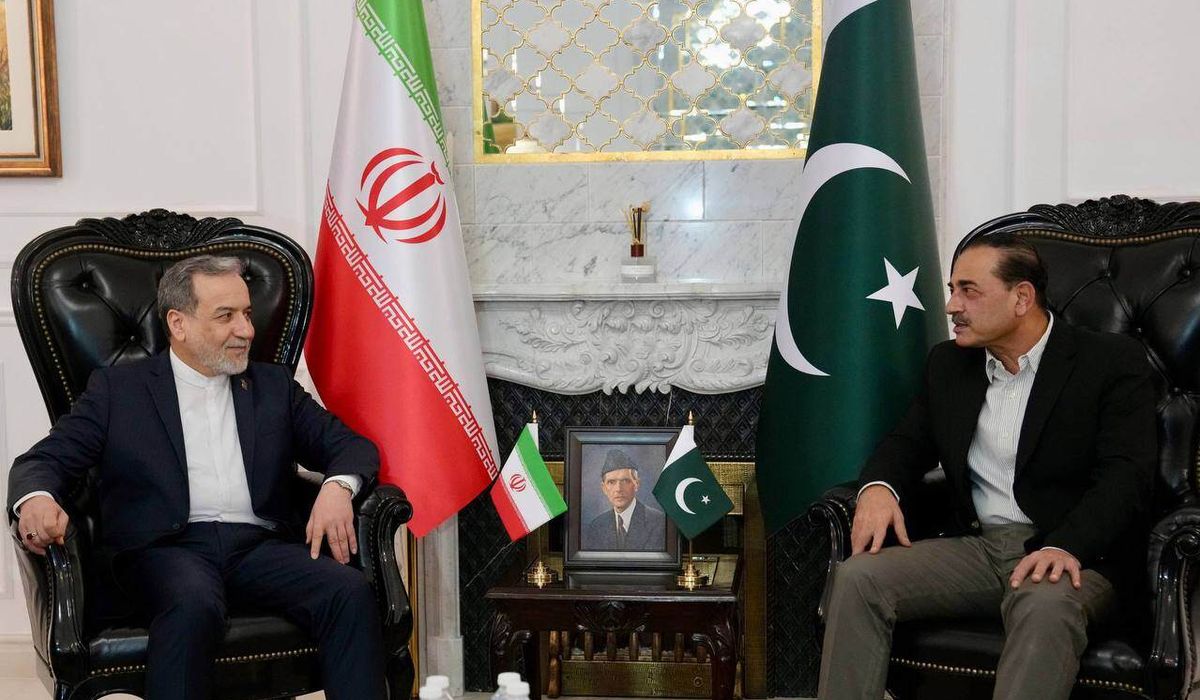
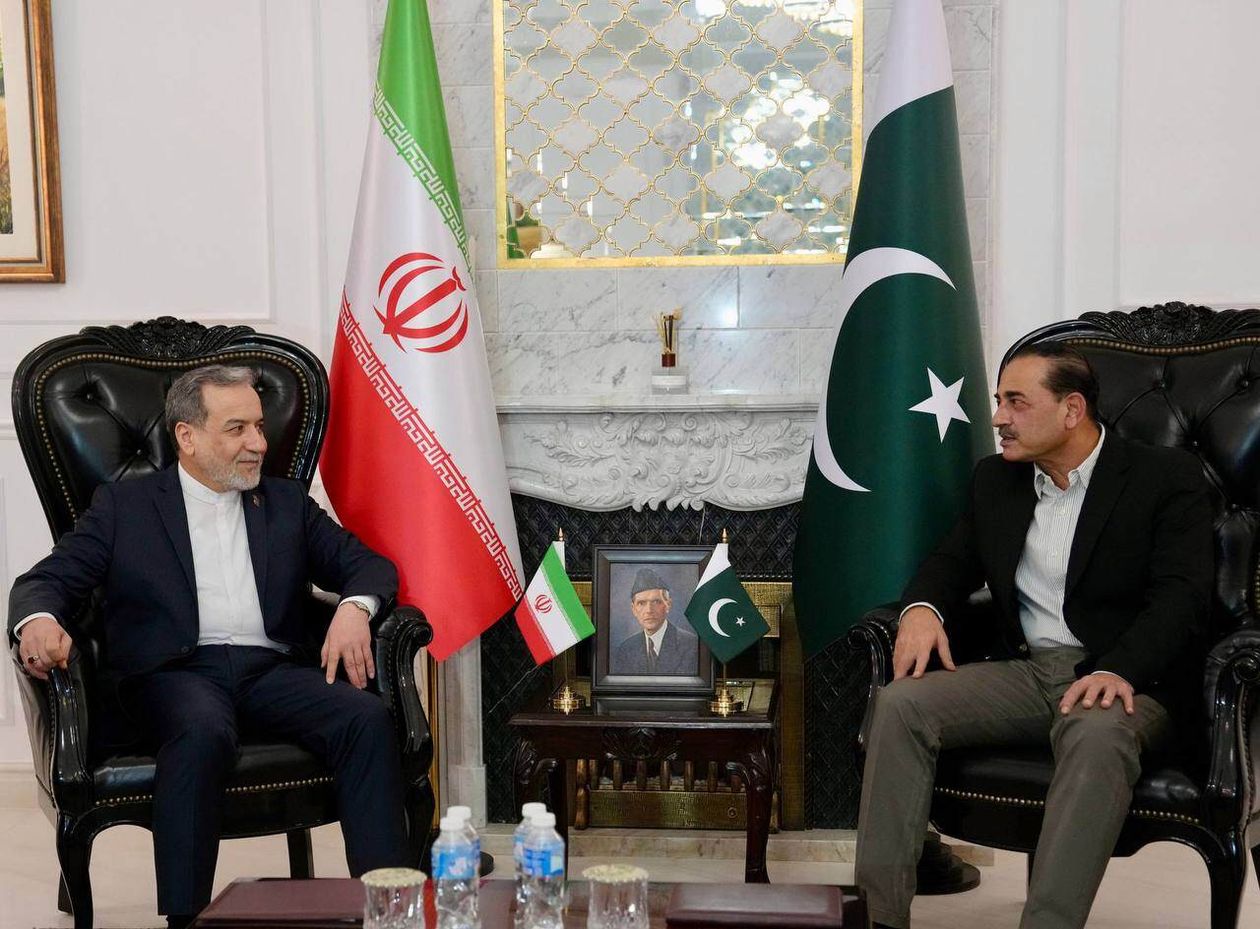
Iran’s Foreign Minister Abbas Araghchi returned to Islamabad on Sunday for another round of high-level meetings with Pakistani government officials one day after President Trump told his negotiating team to stay home.
Mr. Trump dismissed a trip to Islamabad by presidential envoy Steve Witkoff and son-in-law Jared Kushner as a “waste of time.” He said there had been a power vacuum inside Iran’s leadership since the start of Operation Epic Fury, the joint U.S.-Israeli air campaign against the Islamic republic.
“There is tremendous infighting and confusion within their leadership,” Mr. Trump said Saturday on Truth Social. “Nobody knows who is in charge, including them.”
Mr. Araghchi said the visit to Pakistan had been “very fruitful.” He said he shared Tehran’s position on a framework to end the conflict with Washington.
Pakistan has been acting as a mediator in the on-again, off-again talks.
“Have yet to see if the U.S. is truly serious about diplomacy,” Mr. Araghchi said on X.
He is expected to travel to Russia after the brief stop in Pakistan.
“No meeting is planned to take place [in Pakistan] between Iran and the U.S.,” Iranian Foreign Ministry spokesman Esmaeil Baqaei said on X. “Foreign Minister Araghchi will be meeting with Pakistani high-level officials in concert with their ongoing mediation and good offices for ending the American-imposed war of aggression.
Iran’s envoy to the U.N. office in Switzerland said negotiations with Washington won’t proceed until the U.S. lifts its naval blockade on Iranian ports. Ambassador Ali Bahreini said it was a “significant breach” of the two-week ceasefire agreed to by both countries on April 8.
“Tehran is not seeking negotiations merely to give the ‘other side’ time to prepare for further aggression,” Mr. Bahreini said Sunday, according to Iran’s state-owned Tasnim news agency.
Mr. Trump said over the weekend that the U.S. “holds all the cards” and his administration won’t negotiate until Tehran makes further concessions.
Washington is demanding that Iran cease all uranium enrichment, dismantle the country’s centrifuges and allow the U.S. to remove existing stockpiles.
He also wants Iran’s ballistic missile and drone programs to be dismantled and has made the opening of the Strait of Hormuz a prerequisite for halting naval actions.
A top Iranian army officer on Sunday said the U.S. was attempting to dictate the terms of any talks over the Strait of Hormuz. Brig. Gen. Mohammad Jafar Assadi, the deputy commander of the Iranian military headquarters, insisted that it wouldn’t happen.
“The Strait of Hormuz belongs to the regional countries, and the Americans have no right to even comment on that,” he said. “Regional issues are by no means U.S. business.”
The war between the U.S. and Iran was the main theme of last week’s meeting in Cyprus of top European officials. European Council president Antonio Costa said that while the ceasefire was a good-faith effort, more EU countries must help find a solution.
“The European Union is not part of the conflict, but we will be part of the solution,” Mr. Costa said. “Real peace can only be achieved by defending international law in a consistent and principled way.”
Mr. Costa said European Union priorities haven’t changed since the fighting began. The first step is to restore freedom of navigation in the Strait of Hormuz. All parties should also work towards a “stable and lasting ceasefire” that could pave the way to sustainable peace in the region.
“And finally, there cannot be a stable Middle East with a nuclear-armed Iran,” Mr. Costa said. “The European Union will continue to contribute to this objective, as it has in the past.”
German Chancellor Friedrich Merz set a hawkish tone at the meeting on Cyprus. He said Iran was playing for time, so pressure from Europe should be turned up.
“If a comprehensive agreement is to be reached, then we are also prepared to end the sanctions gradually. But we are not there yet,” Mr. Merz said.
Germany’s position is that there must be a swift and clear agreement on freedom of navigation in the Strait of Hormuz, Mr. Merz said.
“We are prepared to contribute to such a process of securing the Strait of Hormuz, subject to three conditions: the war must be over; there must be a legal basis and a mandate from [the German parliament], and finally, there must be a sound overall political and military strategy in place before we can take such a step,” he said.
Last week, U.N. Secretary General Antonio Guterres welcomed the extension of the Pakistan-brokered ceasefire but warned that it remained “extremely fragile.”
On Saturday, he appointed French diplomat Jean Arnault as his personal envoy on Middle East conflicts. He was recently spotted in Muscat, Oman, at the same time Mr. Araghchi was there.
He is attempting to set up a secondary diplomatic back channel between Tehran and Washington because the main talks in Islamabad have reached a stalemate, according to European media reports.