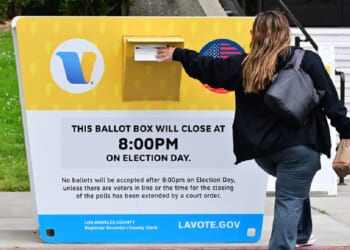
Amid the ongoing protests and violent clashes, the legislative assembly of Pakistan-occupied Kashmir (PoK) is set to head to elections today (July 27). Elections for 45 contesting seats in PoK are to be held in three phases till August 10.
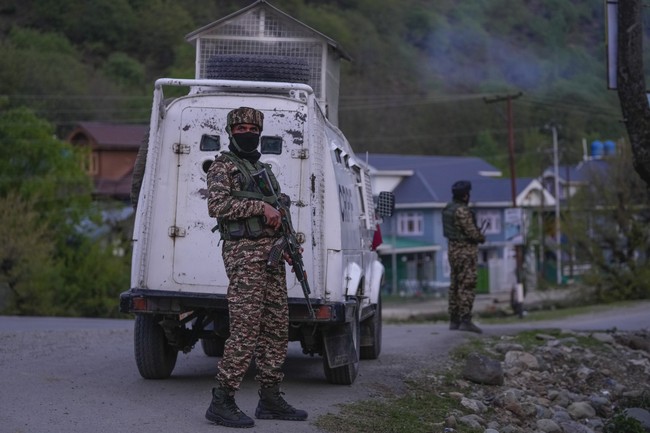
According to local reports, Pakistan’s Punjab province has deployed 14,000 police personnel in the region for security duty in anticipation of violence during the polling.
Meanwhile, Pakistan continues its sweeping crackdown on PoK through an internet shutdown and mass arbitrary arrests.
The crackdown is in response to protests by the grassroots movement, Jammu Kashmir Joint Awami Action Committee (JKJAAC), also known as the Joint Awami Action Committee (JAAC). It occurred after negotiations with Pakistan’s government failed on 30 May regarding the composition of the region’s legislature.
On July 17, the United Nations called for impartial investigations into dozens of reported killings in the region. A brief by the UN said:
Dozens of people, mostly protesters but also law enforcement personnel, have reportedly been killed since June ahead of the vote for the Legislative Assembly on 27 July.
The protests have been led by the Joint Awami Action Committee (JAAC), a movement whose members include traders, students and lawyers.
The group has been banned under anti-terrorism laws for allegedly threatening public order and security, and several of its leaders have been arrested.
UN human rights office (OHCHR) spokesperson, Jeremy Laurence, said that the crackdown raised concerns over fundamental freedoms:
The criminalization of a civil society organization and imposition of strict limitations on gatherings raise serious concerns about infringements on the rights to freedom of expression, peaceful assembly and association.
Laurence also highlighted the High Commissioner’s call to restore full internet access to the region. He urged meaningful and inclusive political dialogue to address underlying issues and grievances.
Pakistan’s latest crackdown began on June 5, when Pakistani authorities announced upcoming elections in Jammu and Kashmir.
Locals expressed opposition to the regional government’s reservation of 12 assembly seats for refugees living outside the territory. Activists argue that allocating nearly a quarter of the legislative seats to individuals residing elsewhere in Pakistan dilutes the political representation of the local populace.
The Pakistani federal government maintains tight control over Kashmir’s local elections. Locals say that legislative measures are regularly used to manipulate regional politics and keep the Kashmiri locals fully dependent on Islamabad.
JKJAAC thus spearheaded a region-wide strike and protest movement. While initial demonstrations focused primarily on the reservation of legislative seats, the civil rights movement quickly expanded. They now demand fundamental constitutional rights and relief from structural economic hardships (such as skyrocketing utility prices and poor access to food and medical infrastructure).
In response to the growing civil dissent, Pakistani authorities initiated an aggressive security campaign to suppress the movement. On June 5, the authorities issued an advisory that “outsiders” avoid travelling to the region between June 5 to June 20. They further instructed visitors, particularly tourists, to leave immediately. It was also reported that federal paramilitary troops were deployed.
On the same day, regional authorities formally banned the JKJAAC, classifying the grassroots advocacy group as a “proscribed organization” under local anti-terrorism laws. Two days later, the police raided and sealed the organization’s central office in Muzaffarabad city.
Security forces have executed mass arbitrary arrests, detaining hundreds of activists and civilians. Authorities filed sedition charges against prominent protest leaders and issued a 10-million-rupee bounty for their apprehension.
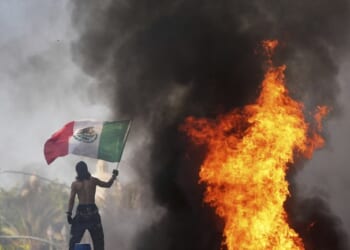
Clashes between heavily deployed paramilitary forces and demonstrators have turned deadly. Human rights monitors have confirmed civilian and security personnel fatalities resulting from the use of live ammunition.
The government has imposed a blanket communication blackout that includes prolonged internet and phone service shutdowns. This severely limits media coverage and isolates regional communication from external human rights monitors.
Activists working with the JKJAAC outside Jammu and Kashmir say that these actions have effectively “sealed” the region, making the flow of information originating from inside extremely limited.
Those reporting on the protests are also targeted by authorities. On June 5, local journalist Sohrab Barkat was arrested under sections 20 (defamation) and 26-A (fake and false information) of the 2016 Prevention of Electronic Crimes Act for allegedly “promoting” and “endorsing” the JKJAAC through his YouTube channel.
The modern conflict in Kashmir dates back to 79 years ago when Kashmir was invaded by Pakistan during the partition of India. In 1947, British-ruled India was partitioned into two nations: the secular Republic of India and the Islamic Republic of Pakistan.
At the time, the princely state of Jammu and Kashmir was led by Hari Singh, who was Hindu. Singh had initially hoped to stay independent (though that was not an option) and later decided India was the better home for his people.
After Pakistan invaded, the UN urged that the people of Kashmir hold a vote, with the precondition that Pakistani forces withdraw. As Pakistani troops never withdrew, such a vote never happened. Therefore, Pakistan continues to occupy a portion of the former Princely State of Jammu and Kashmir (Gilgit-Baltistan and Pakistan-occupied Kashmir referred to as “Azad Kashmir” by Pakistan).
The rest of Kashmir is part of India (since 2019, it has been officially called the Union Territory of Jammu and Kashmir). Had the agreement between Singh, who led Kashmir at the time of partition, and the newly formed Republic of India been respected by Pakistan, all of that land would be part of India today.
Under Pakistan’s rule, Kashmir’s history has largely been shaped by turmoil, proxy warfare, political subjugation, human rights violations, suppression of dissent and economic exploitation.
For instance, the regions of Jammu and Kashmir and Gilgit-Baltistan produce the bulk of Pakistan’s hydroelectricity. However, local populations face severe power shortages and inflated electricity tariffs, sparking widespread civil unrest. Despite revenue generated from local tourism and natural resources, federal funding for roads, health facilities, and basic infrastructure remains vastly disproportionate.
Since 1989, Pakistan’s military and intelligence services (ISI) have created, armed, and funded radical Islamic proxy groups to fight against Indian forces.
Secular, pro-independence local Kashmiri groups like the Jammu and Kashmir Liberation Front (JKLF) were systemically marginalized or eliminated by Pakistan in favor of hardline Islamic groups like Hizbul Mujahideen and Lashkar-e-Taiba to serve Islamabad’s geopolitical goals.
Meanwhile, according to local reports, at least 38 Kashmiri individuals have been missing since the crackdown. Yet, the available data remains incomplete, with efforts continuing to gather information on other individuals who have also allegedly been forcibly disappeared from various areas.
Local sources report that an internet shutdown lasting more than 40 days in the region has made it difficult to obtain complete and timely information from different districts. The Awami Action Committee and other circles reportedly hope that once internet access is restored, more verified details will emerge, which will be made public after confirmation.
A prominent leader of the public movement, Shaukat Nawaz Mir, for instance, was allegedly arrested by security forces. However, he has not appeared before any court, nor has his presence been reported at any police station.
More recently, a student leader from Pakistan-occupied Kashmir has reportedly been subjected to enforced disappearance after being taken into custody in Lahore.
Mujeeb Akbar, Deputy Secretary General of the Jammu Kashmir National Students Federation (JKNSF), was allegedly detained on July 17 from his flat. According to his wife, Faiza Khan, several men arrived at their residence and took Akbar away.
A spokesperson for the Jammu Kashmir National Students Federation (JKNSF) issued a statement calling for Akbar’s immediate and unconditional release. The federation said that several political and social activists from Jammu and Kashmir had previously been subjected to enforced disappearances in Islamabad and other cities across Pakistan.
To this day, massive civil rights movements in Kashmir led by groups such as the JKJAAC have faced severe government crackdowns. Demonstrators demanding basic food supplies and fair electricity pricing have been met with police brutality, lethal force, and mass detentions under anti-terrorism laws.
Human rights organizations, including Amnesty International, have condemned the Pakistani state’s tactics, warning that branding a peaceful civil society body as a terrorist organization while sealing off the region constitutes an unlawful violation of fundamental freedoms.
On June 9, Amnesty issued a statement:
“The alarming escalation of violence, including deaths of protesters, raises serious questions. The authorities must conduct an independent inquiry into allegations of the extrajudicial killing of Shahzeb Habib, a thorough and independent investigation into unlawful killings of protesters in Rawalakot and also investigate the alleged deaths of police officers. Those responsible must be held to account in line with international human rights standards,” said Isabelle Lassee, Amnesty International’s Acting Regional Director for South Asia.
“Pakistani authorities must take immediate steps to deescalate the situation and practice restraint and strict adherence to international standards on the use of force, and only use force as a last resort, and in line with the principles of necessity and proportionality. Ahead of the upcoming regional elections, it is imperative that Pakistan facilitates peaceful assemblies and does not restrict the right to freedom of association. This should start by lifting the unlawful ban on JKJAAC.”
Editor’s Note: Do you enjoy PJ Media’s conservative reporting that takes on the radical left and woke media? Support our work so that we can continue to bring you the truth.
Join PJ Media VIP and use promo code FIGHT to receive 60% off your membership.