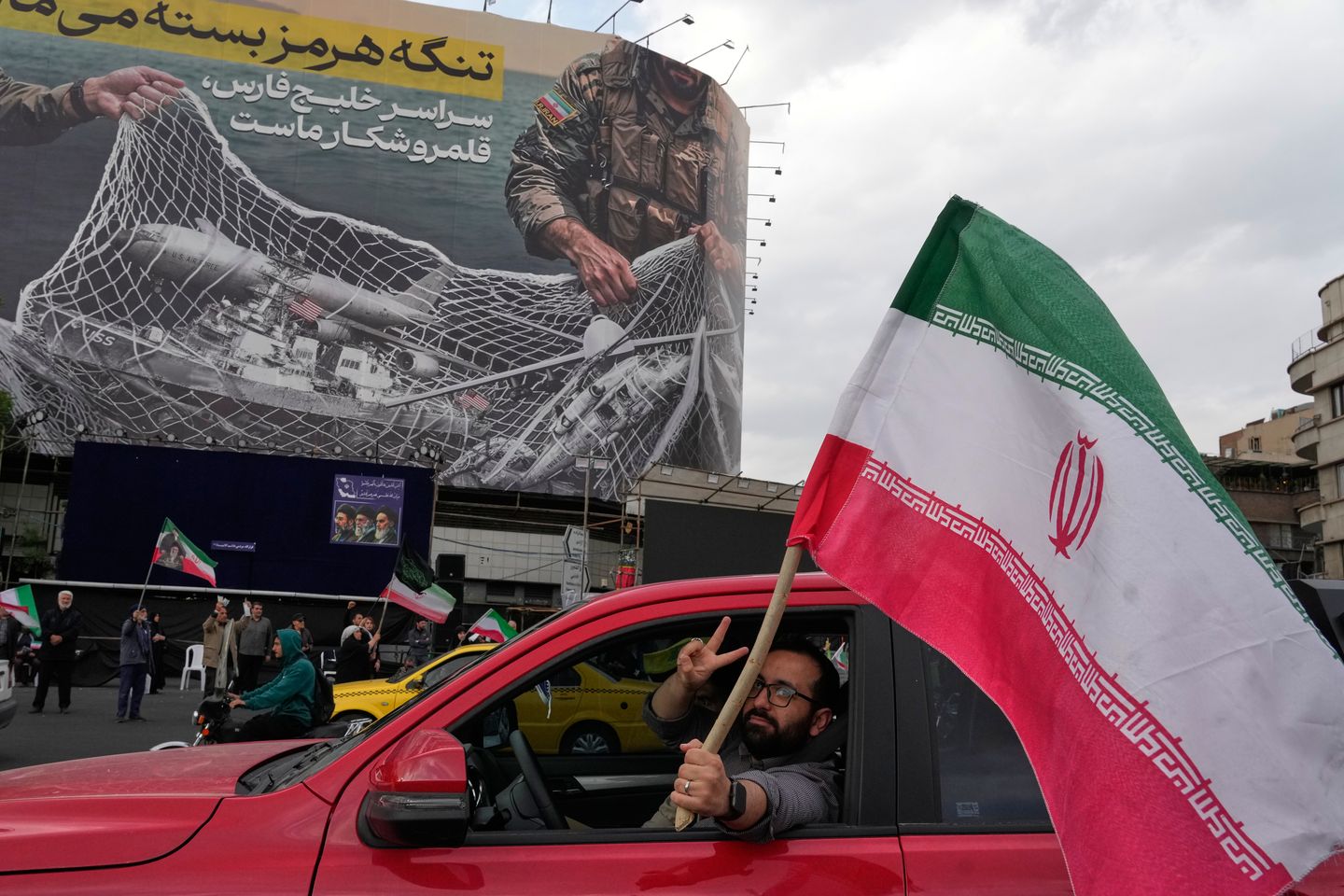
The Trump administration ramped up pressure on Tehran on Monday with a comprehensive U.S. naval blockade of Iranian ports, but the Islamic republic’s prewar preparation could give the regime significant economic staying power.
President Trump said the U.S. would not hesitate to attack Iranian ships that attempt to break the blockade, which took effect Monday morning despite an ongoing ceasefire announced last week. Mr. Trump said the strategy is designed to force Tehran to relinquish control of the Strait of Hormuz.
“We can’t let a country extort the world, because that’s what they’re doing,” Mr. Trump said at the White House.
Iran has taken several steps to ease the economic pain, both before and after the U.S. and Israel began their assault on Feb. 28. It ramped up its oil exports, is using a shadow fleet of tankers, and is charging ships that want to transit the strait, among other measures.
Tehran announced in early March that the Strait of Hormuz, the vital waterway connecting the Gulf of Oman and the Persian Gulf, would be closed to all naval vessels linked to the U.S. or Israel in response to the outbreak of war. At least 20% of the world’s oil travels through the strait each year, and its closure has driven Brent crude oil prices above $110 per barrel at times over the past month.
Vice President J.D. Vance, Special Envoy Steve Witkoff and Mr. Trump’s son-in-law Jared Kushner traveled to Pakistan over the weekend for high-stakes talks with Iranian officials to negotiate a reopening of the strait and possible limits on Iran’s nuclear program. The talks ended without an agreement, and Mr. Trump announced plans for the blockade on Sunday.
Mr. Trump said the strategy would force Iran to reconsider its nuclear ambitions and potentially abandon them during future negotiations. Mr. Trump insisted that Iran wants to make a deal “very badly,” but he did not say whether or when talks would resume.
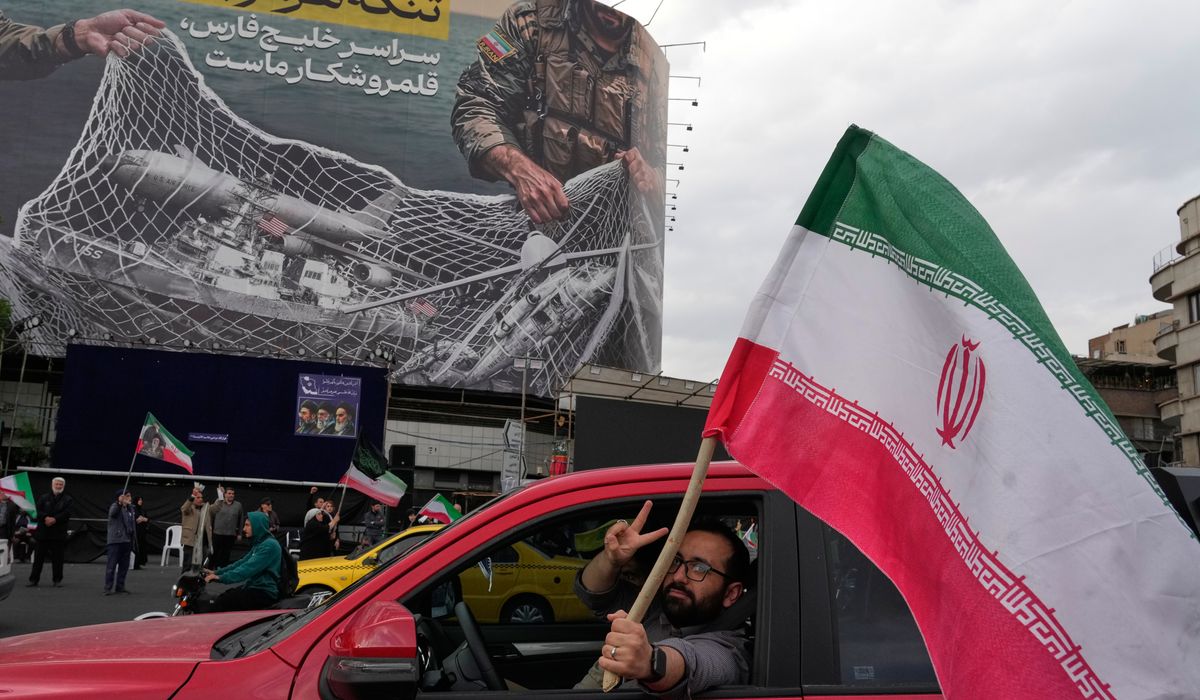
Iran has responded to the blockade with open defiance, signaling confidence that it can outlast the economic pressure before the Trump administration loses the political will to maintain it.
“With the so-called ‘blockade,’ soon you’ll be nostalgic for $4-$5 gas,” Mohammad Bagher Ghalibaf, Iran’s parliamentary speaker and participant in the peace talks in Pakistan, posted on X on Sunday, alongside a picture of higher-than-average gas prices across the Washington region.
Iran’s preparations for a U.S. naval blockade may have bought significant time.
Before the war began on Feb. 28, Iran ramped up exports to about 2.16 million barrels a day, the highest export rate since 2018, according to data and analytics company Kpler, with more than 90% bound for China.
After the war started, Iran continued exporting oil through a network of “shadow tankers,” or vessels used to transport sanctioned cargo. United Against Nuclear Iran, a U.S.-based advocacy organization focused on preventing Iran from achieving nuclear weapons, has tracked at least 37 Iranian oil loadings since the start of the war, representing more than 46 million barrels of oil.
A loading confirms only that a tanker took on oil at an Iranian terminal, not that the cargo successfully transited the Strait of Hormuz. Many of Iran’s shadow fleet vessels reportedly switch off their automatic identification signals before transiting the strait, making it difficult to determine how much Iranian oil remains locked in the Persian Gulf or is on the open sea bound for China.
At least 29 tankers carrying Iranian oil, primarily crude, are operating inside the Persian Gulf, according to UANI data published last week.
A U.S. naval blockade can stop only oil transiting out of Iranian ports, not exports already en route to China or other buyers.
UANI also reported spotting nearly 100 Iranian-linked shadow vessels near the Malaysian coast in April. Analysts expected them to conduct ship-to-ship transfers before proceeding to Chinese ports.
Ships linked to Malaysia, China, Egypt, South Korea and India have reportedly also paid the touted $2 million fee to Iranian authorities to safely transit the strait, potentially providing the regime with a modest income.
“This Iranian regime is far more able, willing to absorb pain than the U.S. is. If you put pressure on them through a blockade, they are going to, as they have been saying in recent hours, retaliate in kind. If Iranian ports aren’t open, no port in the region is open,” said Alex Vatanka, senior fellow and the founding director of the Iran program at the Middle East Institute in Washington.
The blockade’s proponents counter that the worst of Iran’s economic leverage has already been felt and that the U.S. strategy will now impose far more severe consequences on Tehran.
“The U.S. naval blockade of the Strait of Hormuz will cost Iran approximately $435 million a day in combined economic damage. Being unable to offload its oil, Iran will be forced to shut down its oil wells, leading to permanent damage. The blockade makes continued resistance economically impossible,” Miad Maleki, senior fellow at the Foundation for the Defense of Democracies, a Washington think tank that has long advocated a hard line on Iran, wrote in a recent report.
The lack of oil revenue is likely to crush Iranian imports from China, Turkey and other trading partners, which could spark another devaluation crisis for Iran’s rial.
A previous devaluation crisis helped spark mass protests calling for regime change in January. The protests were brutally crushed by security forces. Some human rights organizations reported that tens of thousands of civilians were killed during the crackdown, though an intense and ongoing internet blackout has made independent verification difficult.
The blockade follows more than a month of U.S. and Israeli airstrikes on Iran that have devastated the Islamic republic’s army, navy, air force and internal security apparatus. U.S. Central Command reported last week that the joint force had struck at more than 13,000 targets across Iran, severely degrading Tehran’s force projection.
Iran has nonetheless maintained its ability to launch intermittent strikes on energy infrastructure across the Gulf region. In the lead-up to the two-week ceasefire announced last week, Iranian missiles and drones struck targets in the United Arab Emirates, Kuwait, Bahrain, Saudi Arabia and Qatar.